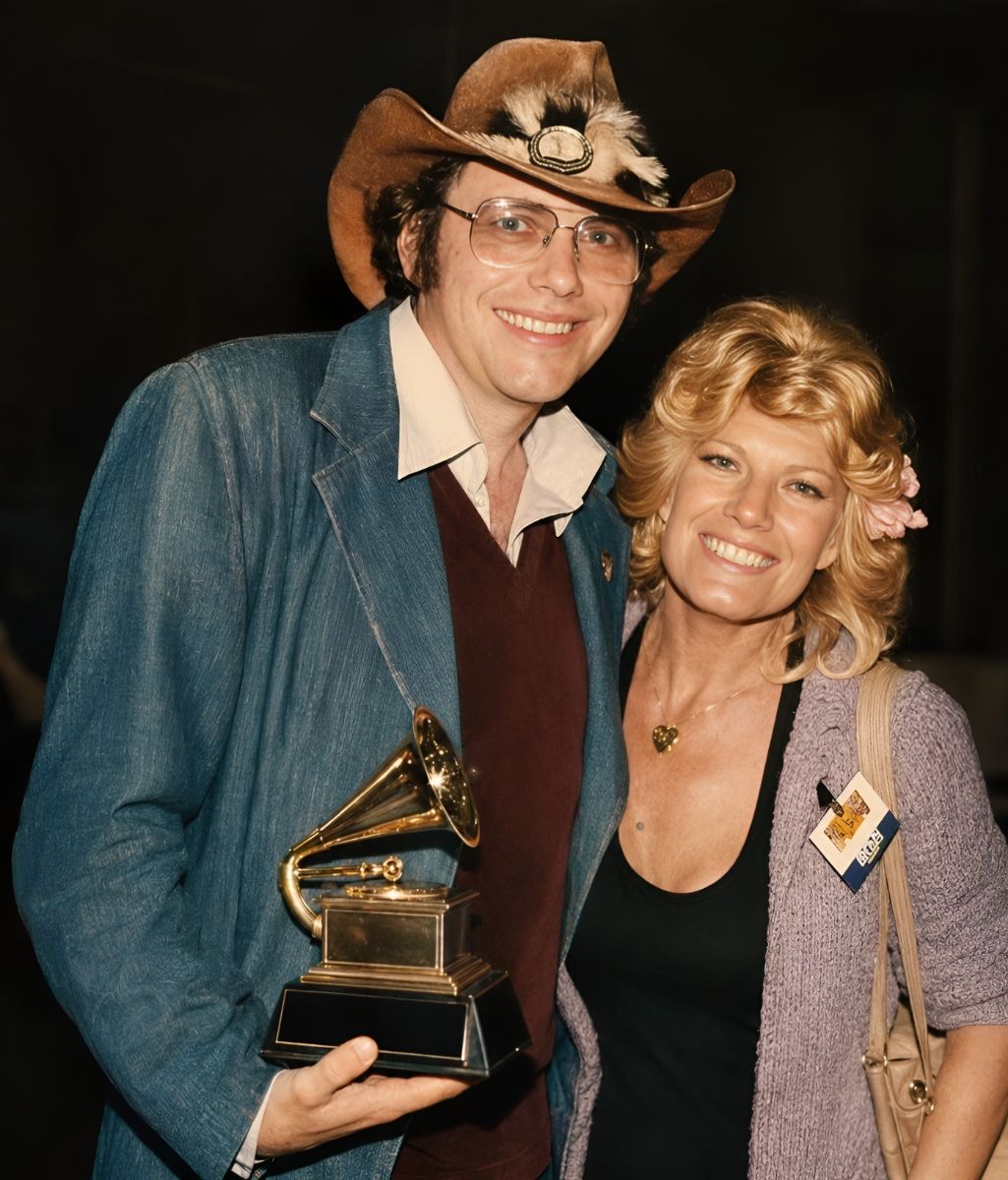
By 1964, Bobby Bare’s life had changed dramatically. After years of uncertainty in the music business, “Detroit City” had finally established him as an important new voice in country music. But that year brought Bobby two very different milestones — one the public could celebrate with him, and another that unfolded quietly away from the stage. He received the greatest industry recognition of his young career, while at home he began a relationship that would remain part of his life for more than six decades.
The first story began with “Detroit City.” Written by Danny Dill and Mel Tillis, the song followed a man living far from home who wrote letters making his life sound better than it really was. Bare’s restrained, conversational delivery captured the loneliness beneath the story, helping the recording reach the country Top 10 while also crossing into the pop market.
Then came the 1964 Grammy Awards, where Bobby Bare won Best Country & Western Recording for “Detroit City.” It would remain his only Grammy victory, making the moment particularly important in his long career. For a singer who had spent years trying to find his place in the business, the award confirmed that Nashville — and the wider music industry — was finally paying attention.
There was also something deeply appropriate about the song that brought him that recognition. Bobby had lost his mother when he was only five and experienced a difficult childhood afterward. “Detroit City” was not autobiographical, but its themes of separation, loneliness, and longing for home belonged to emotional territory he understood well.
Yet while Bobby’s professional life was reaching a new level, something equally important was happening far from the awards and recording studios. In 1964, Bobby married Jeannie Sterling. Unlike the Grammy, nobody could have known at the time just how significant that decision would become.
Jeannie already had a daughter, Cari Jean, from an earlier marriage, and Bobby adopted her after they married. It was a deeply personal decision that revealed another side of the young singer whose name was suddenly appearing on charts and awards. Bobby and Jeannie would later expand their family, including welcoming Bobby Bare Jr., who eventually followed his own path into music.
As Bobby’s career continued to evolve, Jeannie largely remained outside the celebrity spotlight. The years ahead brought constant touring, new records, changing musical trends, and some of the most adventurous work of Bare’s career. He pushed for greater creative freedom in Nashville, developed his celebrated partnership with Shel Silverstein, and eventually scored his only solo country No. 1 with “Marie Laveau.”
Through all those changes, the two milestones of 1964 followed Bobby in very different ways. The Grammy became a permanent symbol of professional achievement, preserved in biographies and country music history. His marriage to Jeannie became something quieter but far longer lasting, continuing through decades in which the Nashville world around them changed almost beyond recognition.
The contrast is particularly striking because so many Bobby Bare songs dealt with people who were lonely, displaced, or searching for somewhere they belonged. The man who became famous singing about troubled homes was quietly building a remarkably enduring one of his own.
Nearly five decades after that pivotal year, Bobby received another major recognition when he was inducted into the Country Music Hall of Fame in 2013. By then, “Detroit City” was a country classic, and Bare had accumulated a catalog stretching across generations. Yet the marriage that began during his breakthrough era had endured alongside the career.
Looking back, 1964 gave Bobby Bare two completely different measures of success. One happened beneath the bright lights when “Detroit City” brought him a Grammy and confirmed that he had arrived as a country star. The other began quietly when he married Jeannie and became part of a family whose story would continue long after that awards ceremony was forgotten.
In 1964, Bobby Bare gained an honor that confirmed he had arrived — and a relationship that would remain long after the applause faded. One became part of country music history, while the other became part of the life he went home to when the music stopped.