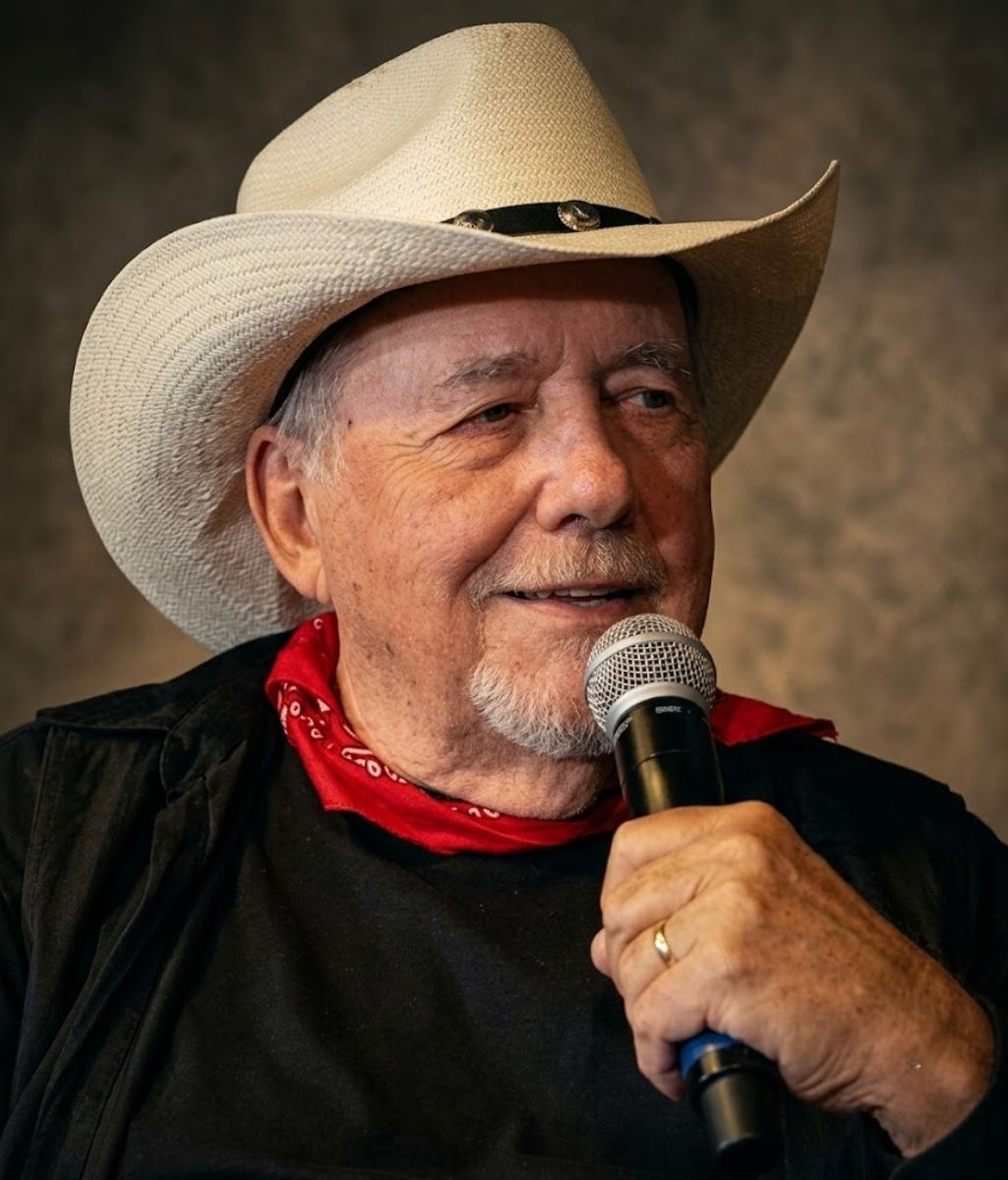
Before Bobby Bare became one of country music’s most respected voices, “The All-American Boy” gave him a remarkable introduction to fame: America was hearing his voice while the record itself told listeners they were hearing someone else.
Long before Bobby Bare became a country music legend, before decades of recordings established him as one of Nashville’s most distinctive storytellers, his voice was already traveling across America under circumstances almost too strange to believe. In 1958, Bare recorded “The All-American Boy,” a clever song inspired by the rapidly changing world of early rock and roll. Bare wrote the song with his friend Bill Parsons, and its story playfully echoed the rise of a young singer who becomes successful, only to have military service interrupt the dream just as fame arrives. The timing was especially meaningful because Bare himself was preparing to enter the U.S. Army. He recorded the song before leaving, probably expecting that whatever happened next would at least happen under his own name. Instead, a record-label decision created one of the most unusual episodes of his early career.
When “The All-American Boy” was released by Fraternity Records, the label credited the performance to Bill Parsons, even though the voice on the record belonged to Bobby Bare. The exact circumstances have been retold in different ways over the years, but the result was unmistakable: Bare’s voice was on a record carrying another man’s name. Then something happened that made the situation even stranger. The song began attracting serious attention. What might have disappeared as an obscure novelty record instead climbed the American charts, eventually becoming a major hit and reaching No. 2 on the Billboard Hot 100 in early 1959. Bare was serving in the military while his own performance was being heard by millions of listeners who had little reason to know the singer they were hearing was actually Bobby Bare.
Imagine what that must have meant for a young performer still trying to establish himself. Most musicians dream of hearing their first major record on the radio and watching their name become familiar alongside it. Bare experienced something almost backward. The voice became famous before the singer did. Radio listeners could recognize the song. Record buyers could take it home. Yet the label pointed them toward Bill Parsons rather than the man actually delivering the vocal. It was the kind of confusion that might have permanently derailed another young artist, especially in an era when a hit record could define how the industry viewed a performer. For Bare, however, it became an extraordinary first chapter rather than the end of the story.
The success of the song also placed Parsons in an unusual position. Because his name appeared on the record, he became publicly associated with a hit he had helped write but had not actually sung. Accounts of the period describe Parsons appearing in connection with the song and lip-syncing to Bare’s recorded vocal, creating the surreal image of one man standing before an audience while another man’s voice came through the speakers. Today, when artist credits can be checked almost instantly, such a situation seems difficult to imagine. In the late 1950s, however, record labels, radio, television appearances, and printed information carried enormous influence over what listeners believed. If the label said Bill Parsons was the singer, many people simply had no reason to question it.
There was another fascinating connection waiting just beyond the record itself. Parsons later became associated with the touring world surrounding Buddy Holly, where he crossed paths with a young Waylon Jennings. Jennings was still years away from becoming one of the defining figures of outlaw country, and Bare himself had not yet grown into the Nashville artist generations would come to know. Looking back, these connections make the episode feel like a snapshot of American music at a moment when several future legends were still young men moving through the uncertain world of touring, recording, radio, and rock and roll. Before their names became history, their paths were already beginning to cross.
For Bobby Bare, “The All-American Boy” was particularly fitting because his career would never remain confined to one simple musical identity. He emerged during the rockabilly and early rock-and-roll years, later established himself firmly in country music, and eventually became known for choosing songs and projects with a strong sense of independence. His relaxed delivery and conversational storytelling would become unmistakable. Yet on one of the earliest records to bring that voice to a national audience, listeners were not even given his name. There is a certain irony in that beginning. One of country music’s most recognizable storytellers first reached millions while his identity remained hidden in plain sight.
The record also captured something distinctive about Bare that would follow him throughout his career: his ability to tell a story without making it feel forced. “The All-American Boy” was playful and rooted in the cultural moment surrounding rock-and-roll stardom and military service, but Bare delivered it with the natural timing of someone speaking directly to the listener. That conversational quality would later become central to his country recordings. Whether the material was humorous, reflective, unusual, or deeply emotional, Bare had a way of allowing the words to remain at the center. The storytelling voice that listeners would eventually recognize as uniquely Bobby Bare was already there—they simply did not know whose voice it was.
What could have become a lasting source of frustration instead became one of the most fascinating stories attached to Bare’s early years. He returned from military service and continued pursuing music rather than allowing one mislabeled success to define him. In the years that followed, audiences finally learned the name behind the voice. Songs such as “Detroit City” and “500 Miles Away from Home” helped establish him as a major country performer, while his willingness to embrace exceptional songwriting and unconventional material gave his career a character that could never be reduced to one accidental hit. Eventually, Bobby Bare would receive recognition far beyond anything the young man behind “The All-American Boy” could have known was coming.
That later success makes the story even more remarkable. Many performers spend years trying to get strangers to recognize their names. Bare had already reached the upper levels of the pop charts before much of America realized Bobby Bare was the man they were hearing. His first taste of national success arrived disguised as somebody else’s record, during a period when he was away from the music business and serving his country. There was no carefully designed introduction, no perfect launch, and no opportunity for him to stand in front of the audience and claim the moment as it happened.
Decades later, the strange release of “The All-American Boy” remains more than a curious piece of music trivia. It reveals how unpredictable a recording career could be during the early days of rock and roll, when a label decision could change the identity attached to a voice almost overnight. More importantly, it offers a remarkable glimpse of Bobby Bare before the legend was fully formed. The voice was already there. The storytelling instinct was already there. The audience was already listening. Only the name was missing.
And perhaps that is what makes the story so unforgettable. Before Nashville knew Bobby Bare as a major country artist, before generations of listeners associated that relaxed voice with some of country music’s most memorable stories, millions had already heard him without realizing who he was. A mistake that could have become merely an unfortunate footnote instead became the opening scene of an extraordinary career. Bobby Bare did not receive his proper introduction the first time America heard him—but eventually, the world learned the name behind the voice, and it never forgot it