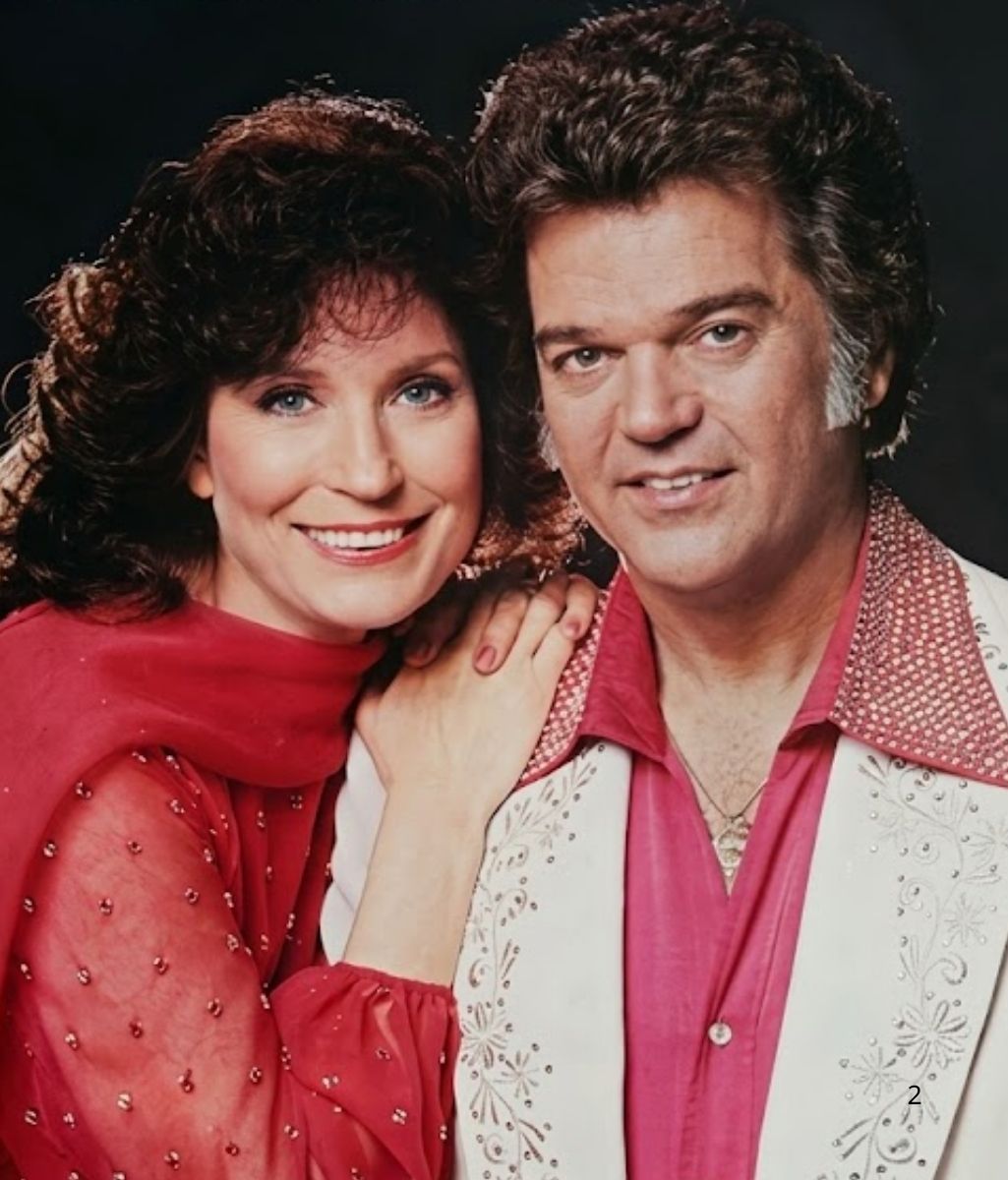
Two difficult journeys created two country legends—but when Conway and Loretta sang together, their connection became so convincing that audiences kept talking about it for decades.
Long before Conway Twitty and Loretta Lynn became one of country music’s most unforgettable partnerships, they were two people traveling very different roads toward Nashville history. Conway had already experienced the excitement of rock-and-roll stardom before making the risky decision to reinvent himself as a country singer. Loretta emerged from humble Appalachian beginnings with a voice shaped by hardship, family, determination, and the realities of working-class life. Separately, they became extraordinary artists. Together, they created something neither could have manufactured: a musical chemistry so natural that generations of fans wondered whether the emotions they heard in those songs could possibly have been only performance.
Conway’s transformation was remarkable. Born Harold Lloyd Jenkins, he found international success in 1958 with “It’s Only Make Believe,” establishing himself as a major rock-and-roll performer. Success at that level could have convinced him to remain exactly where he was, but Conway wanted something different. He was drawn toward country music and eventually pursued it despite the uncertainty of changing direction after becoming famous. It proved to be one of the defining decisions of his life. With his deep voice and intimate delivery, Conway developed into a master of emotional country ballads. “Hello Darlin’” became one of his signature recordings, and his ability to make a lyric sound like a private confession helped turn him into one of country music’s most recognizable stars.
Loretta’s rise was rooted in another America entirely. Born in Butcher Hollow, Kentucky, she came from an Appalachian world far removed from the glamour eventually surrounding her career. Those beginnings became a source of strength rather than something she tried to erase. Loretta wrote and sang about ordinary people facing ordinary problems: money, family, marriage, motherhood, disappointment, pride, and survival. Her directness gave a powerful voice to experiences many listeners recognized from their own homes and communities. She did not need to imagine the struggles behind country music’s stories—she understood the world those stories came from. That honesty helped make her one of the most important voices of her generation.
When Conway and Loretta began recording together in the early 1970s, their differences somehow became their greatest advantage. Songs such as “After the Fire Is Gone,” “Lead Me On,” “Louisiana Woman, Mississippi Man,” and “As Soon as I Hang Up the Phone” allowed them to create something closer to conversation than conventional duet singing. Conway could deliver a line with quiet longing, and Loretta could answer with warmth, humor, frustration, or strength. Their performances sounded spontaneous even when every note had been carefully prepared. They did not simply sing beside one another; they made listeners feel as though they were overhearing two people living through the story.
That realism inevitably created questions. Fans watched their performances, noticed the playful exchanges and comfortable familiarity, and heard them sing songs filled with longing and complicated emotions. Over time, speculation grew about whether their famous chemistry represented something beyond friendship and professional collaboration. Yet there is no need to turn speculation into fact to understand why audiences were fascinated. Conway and Loretta’s ability to inhabit a song was powerful enough to blur the line between storytelling and reality in the minds of listeners. The enduring mystery was not proof of a hidden romance; it was evidence of just how convincing they could be together.
Their partnership became one of the defining duet successes of country music, but neither artist depended on the other for greatness. Conway built an enormous catalog and became famous for an unmistakable style that could turn romantic longing into something intensely personal. Loretta became a groundbreaking songwriter and performer whose honesty challenged expectations about what women in country music could say openly. They were already formidable individuals, which made their partnership even stronger. When two artists with such distinct identities met in the same song, neither disappeared behind the other.
Behind their success, however, were lives far more complicated than the photographs and stage lights suggested. Both experienced personal difficulties, family pressures, business complications, disputes, and painful losses while maintaining demanding careers. Their experiences reflected one of country music’s oldest truths: success does not remove hardship from a person’s life. If anything, those difficult chapters may help explain why their performances carried such emotional weight. They knew that songs about disappointment, perseverance, memory, and loss were not abstract ideas. The lives behind the voices had known triumph, but they had also known what it meant to endure.
Conway’s death in 1993 at only 59 years old ended the possibility of another Conway-and-Loretta performance, but it could not end the partnership listeners remembered. Loretta continued her remarkable career for decades, becoming an enduring symbol of authenticity in country music until her death in 2022 at age 90. By then, the musical world had changed dramatically, but their recordings had survived those changes. Longtime listeners continued returning to them, while younger audiences discovered performances made years before they were born.
That may be the clearest measure of what Conway Twitty and Loretta Lynn achieved together. Their music never depended entirely on its era. The production belonged to another time, but the emotions did not. Longing still feels like longing. Heartbreak still hurts. Humor still breaks tension. Two voices telling a believable story can still stop a listener regardless of the year printed on the record.
Today, the speculation surrounding Conway and Loretta is only a small part of a much larger legacy. What truly remains are the songs, the performances, and that unmistakable moment when one voice answered the other. Conway brought tenderness and longing; Loretta brought honesty and fire. Together, they created a sound that felt less like a duet and more like a conversation audiences were privileged to hear.
Their lives were complicated. Their careers were extraordinary. Their partnership became legendary. And decades after Conway and Loretta last stood together, those old recordings can still make it feel as though neither voice ever really left the room.