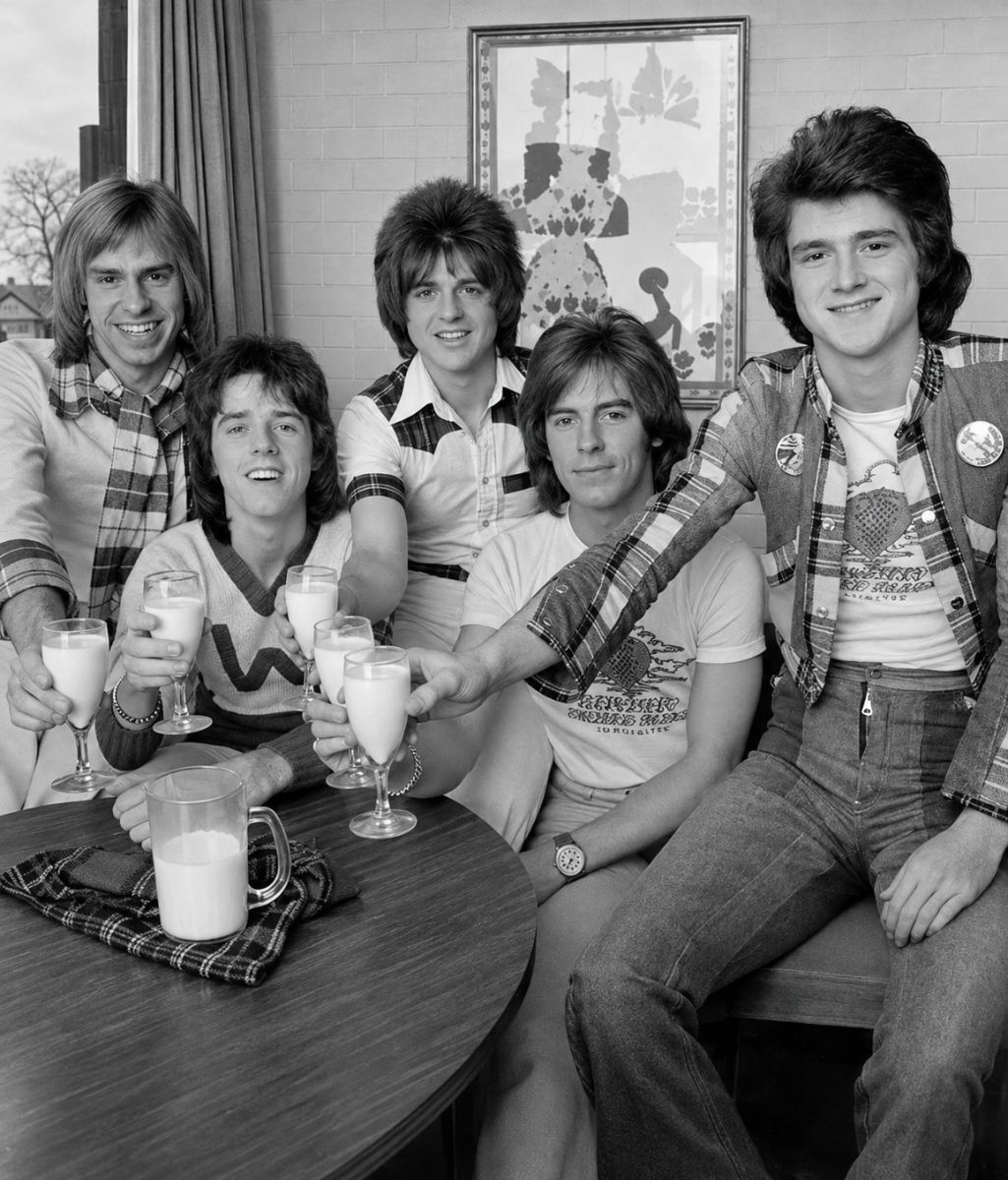
To millions of teenagers in the 1970s, The Bay City Rollers represented pure excitement.
There were tartan scarves, screaming crowds, smiling faces and songs such as “Saturday Night,” “Bye Bye Baby,” and “Shang-a-Lang.” At the height of “Rollermania,” the Scottish group became one of the biggest teen sensations in the world, with fans treating them less like an ordinary pop band and more like the center of an entire youth movement.
But the image sold to the public was only one version of the story.
Behind the bright clothes and carefully managed smiles stood Tam Paton, the manager who helped shape the group’s image and exercised enormous control over the young musicians around him. Former members and others who later spoke publicly described a world in which Paton could influence who remained in the band, how members behaved and even how their careers were allowed to develop.
Years later, far darker allegations emerged.
Former members and other men accused Paton of sexual abuse, coercion and manipulation. The 2023 ITV documentary Secrets of the Bay City Rollers brought together testimony from former band members and survivors who described abusive behavior behind the scenes, including claims that Paton used his power over young men who believed their future in music depended on staying close to him.
Paton’s later criminal record made those stories impossible to dismiss as mere industry gossip. In 1982, he was jailed after admitting sexual offences involving teenage boys. Decades later, survivors continued giving evidence about abuse connected to his circle, and in 2026 the Scottish Child Abuse Inquiry heard testimony alleging that Paton had been involved in a wider network of exploitation. Those later allegations remain testimony before an inquiry rather than a final judicial finding, but they added another disturbing layer to a story already marked by documented abuse.
The damage was not only personal.
Money became another source of bitterness.
Although the Bay City Rollers had sold millions of records and generated enormous revenue during their peak, former members spent years arguing that they had not received the money they believed they were owed. A long-running royalty dispute eventually led several former members to pursue legal action, while stories of poor financial management became part of the band’s legacy.
That contrast is what makes the Bay City Rollers’ story so unsettling.
The public saw a group designed to represent innocence, fun and youthful freedom. Behind that image, former members later described pressure, manipulation, financial confusion and experiences that some carried with them for decades.
Even the band’s rise itself now looks different in hindsight.
The screaming crowds were real.
The hits were real.
The affection from fans was real.
But so was the system around them, and that system was not nearly as carefree as the television appearances and magazine covers made it appear.
For the men inside the band, fame did not necessarily mean control. At times, it meant exactly the opposite.
As the years passed, the Bay City Rollers became more than a nostalgia act remembered for tartan trousers and catchy choruses. Their history also became a warning about what can happen when very young performers enter an industry controlled by older people with far more power, money and influence.
That does not erase the joy the music gave millions of fans.
But it changes the meaning of the photographs.
Those smiling faces were part of a real phenomenon, yet some of the people behind them were living through experiences audiences knew nothing about.
The Bay City Rollers rose as symbols of teenage happiness, but behind Rollermania was a story of control, exploitation and loss that took decades to fully emerge. The songs still bring back memories, but the truth behind them is far darker than most fans ever imagined.