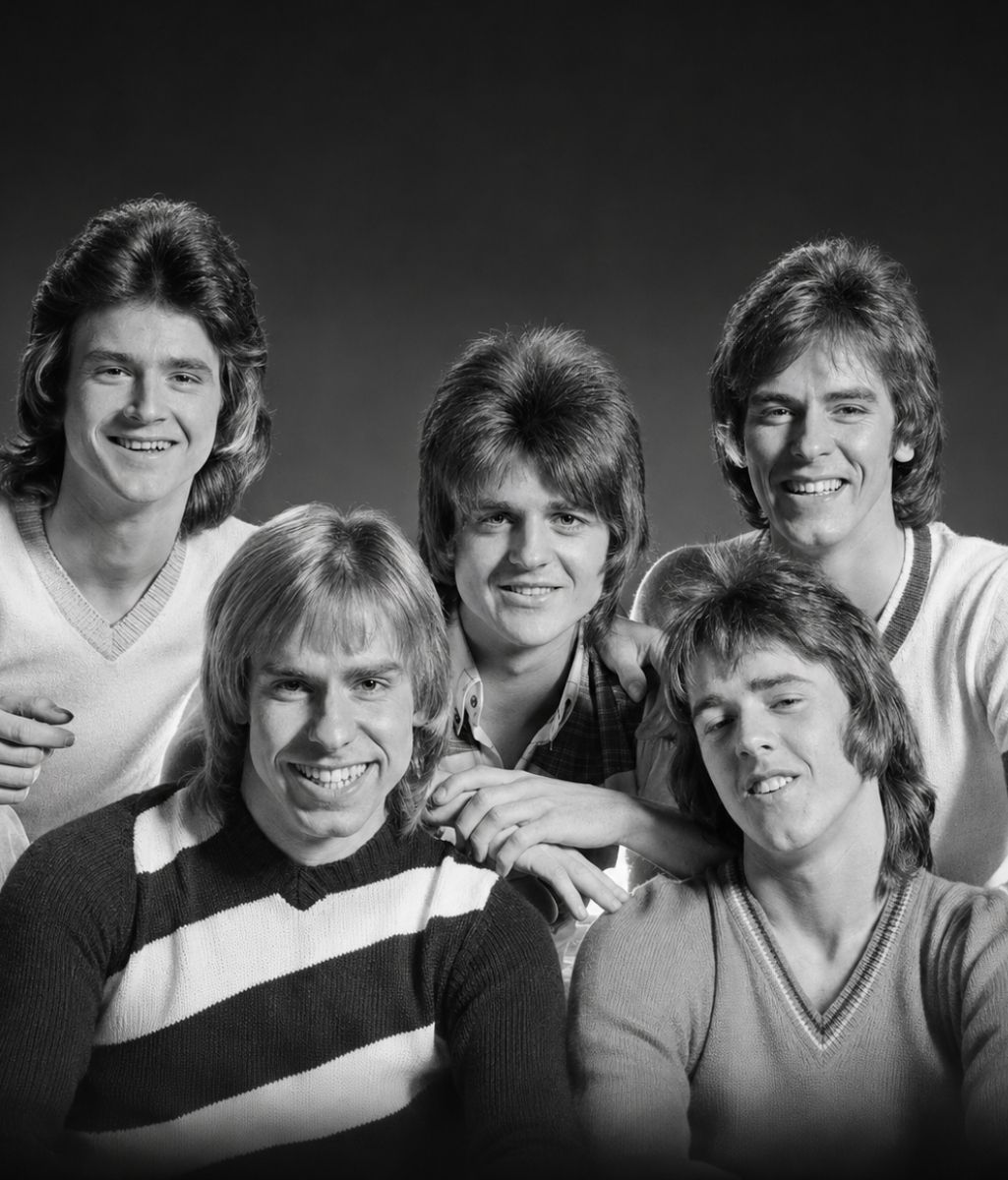
By the beginning of 1975, Bay City Rollers were already one of Britain’s hottest young groups, but behind the screaming crowds, the band had become increasingly frustrated with the way their records were being made.
They wanted more control.
Under their previous production team, the Rollers had not always been allowed to play their own instruments on the hit records carrying their name. Guitarists Eric Faulkner and Stuart “Woody” Wood wanted the band to become more involved in writing and recording rather than simply being treated as faces at the front of a carefully controlled pop machine.
That disagreement eventually led to a change.
Producer Phil Wainman was brought in, and one of the first major songs recorded under the new arrangement was “Bye Bye Baby.”
The song itself was not new. Written by Bob Gaudio and Bob Crewe, it had already been recorded by the Four Seasons a decade earlier. But the Bay City Rollers transformed it into something unmistakably their own, replacing the smoother 1960s feel with pounding drums, bright harmonies and the kind of stomping rhythm that perfectly matched the energy of Rollermania.
For the band, there was another important difference.
This time, they actually played on the record.
Manager Tam Paton later said that “Bye Bye Baby” was the first major Rollers hit to feature the group’s own instrumental performances, something their earlier producers had resisted. That seemingly small change mattered because the members had been fighting to prove they were musicians, not merely teenage faces chosen to sell records.
Then the song exploded.
Released in early 1975, “Bye Bye Baby” reached No. 1 in the United Kingdom and stayed there for six weeks. It became the biggest-selling British single of the year, reportedly moving tens of thousands of copies every day at the height of its success.
Rollermania moved into another gear.
Teenagers wore tartan scarves, television appearances drew enormous audiences and concerts sometimes became so chaotic that police struggled to control the crowds. For fans, it looked like the Bay City Rollers had reached the dream every young band wanted.
Behind that success, however, the story was becoming much less glamorous.
Years later, former members repeatedly said that despite selling millions of records, they received far less money than they believed their success should have produced. Derek Longmuir bluntly recalled that the group had been financially exploited, while disputes over royalties and earnings continued long after the band’s biggest years were over.
There was also enormous pressure to keep the machine moving.
The group toured constantly, recorded new material, appeared on television and faced crowds whose excitement sometimes became dangerous. During the height of Rollermania, Les McKeown was involved in a fatal road accident in which a 76-year-old woman died. McKeown later recalled being in shock, yet he rejoined the tour the following day.
That detail says much about the machinery surrounding the group.
There was always another show.
Another appearance.
Another record to sell.
From the outside, “Bye Bye Baby” represents one of the happiest moments in Bay City Rollers history. It was a joyous No. 1 single performed by young men who seemed to have the world at their feet.
But knowing what happened behind the scenes changes the picture.
The Rollers finally gained more control over the music they were making, and the result became one of the biggest hits of 1975. Yet even while “Bye Bye Baby” was conquering Britain, the men behind the tartan were discovering that selling millions of records did not necessarily mean controlling their careers, their money or even their own lives.