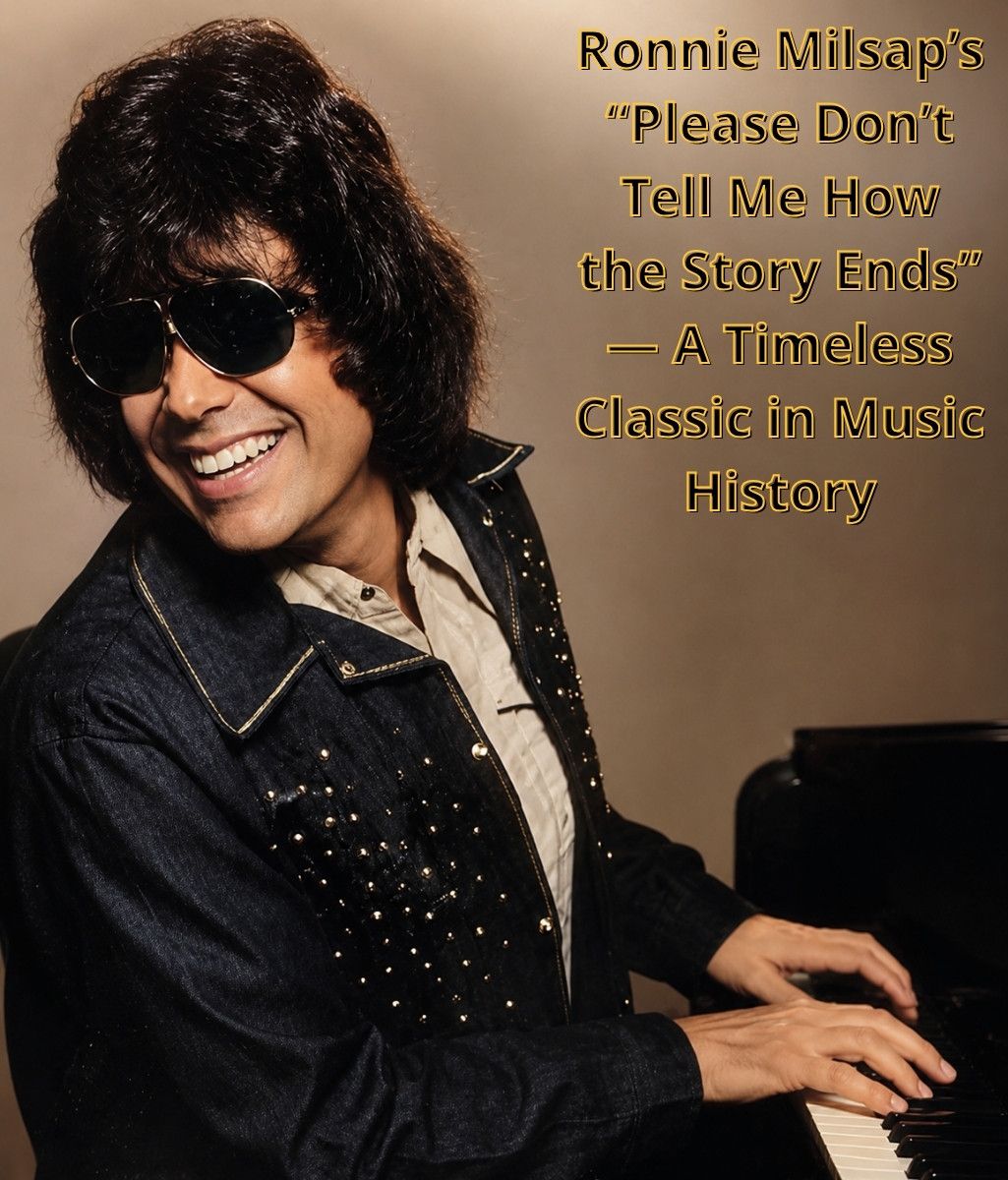
WHEN A SILENT HEARTBREAK BECOMES AN IMMORTAL MELODY — How Ronnie Milsap Turned Kris Kristofferson’s Gentle Ballad Into One of Country Music’s Most Enduring Love Songs
When Ronnie Milsap recorded “Please Don’t Tell Me How the Story Ends” in 1974, he wasn’t simply interpreting another country ballad. Written by the legendary Kris Kristofferson, the song became a deeply moving meditation on love, time, and the quiet fear of knowing that every beautiful moment must eventually come to an end. More than fifty years later, its emotional power remains as timeless as ever.
Some songs break your heart with dramatic goodbyes.
Others whisper so softly that you don’t realize how deeply they’ve touched you until long after the final note has faded.
That is the quiet magic of “Please Don’t Tell Me How the Story Ends.”
Originally written by Kris Kristofferson, one of America’s greatest songwriters, the composition is remarkable for what it doesn’t say as much as for what it does. Rather than focusing on anger, regret, or betrayal, Kristofferson wrote about something far more universal—the fragile hope of people who know that happiness may not last forever but desperately want to remain inside the moment a little longer.
It is a song about love.
But even more than that, it is a song about time.
When Ronnie Milsap entered the studio to record the song for his 1974 album Pure Love, he brought something uniquely his own to Kristofferson’s deeply personal lyrics. Blessed with one of country music’s most distinctive voices, Milsap possessed an extraordinary ability to communicate emotion without ever needing to raise his voice. His warm, velvety delivery invited listeners into the story rather than simply performing it for them.
Combined with his graceful piano playing and understated arrangement, the result was breathtaking.
Instead of overwhelming the listener with dramatic production, Milsap allowed every lyric to breathe. Each note seemed to linger just long enough to capture the bittersweet feeling of knowing that life’s happiest moments often pass far too quickly.
That emotional honesty became the song’s greatest strength.
On its surface, “Please Don’t Tell Me How the Story Ends” tells the story of two people cherishing their time together while quietly fearing the inevitable goodbye. There are no elaborate plot twists or theatrical declarations. The heartbreak exists in the uncertainty itself—in the unspoken awareness that every beautiful chapter eventually reaches its final page.
Yet listeners have always found something much larger within those gentle lyrics.
For many, the song speaks not only about romantic love but about life itself. Every person eventually experiences moments they wish could last forever—a family gathering that ends too soon, an unforgettable conversation, a child’s laughter, or a quiet evening spent with someone they deeply love. We know those moments cannot be preserved forever, yet part of us still wishes time would slow down just a little.
That universal feeling is what has allowed the song to endure across generations.
For Ronnie Milsap, whose career was built on emotional authenticity, the recording became another shining example of his remarkable gift for storytelling. Throughout his extraordinary career, Milsap consistently chose songs that explored love, hope, vulnerability, and resilience with uncommon sincerity. Whether singing joyful celebrations or quiet heartbreak, he possessed the rare ability to make every listener feel as though he were singing directly to them.
“Please Don’t Tell Me How the Story Ends” perfectly showcased that gift.
The recording earned widespread praise and became one of the defining performances of Milsap’s early career, further establishing him as one of country music’s most expressive vocalists. His interpretation also introduced many listeners to the brilliance of Kris Kristofferson’s songwriting, proving that truly great songs can find new emotional depth through different voices.
More than five decades have passed since that unforgettable recording.
The world has changed. Musical styles have evolved. Generations have come and gone.
Yet whenever Ronnie Milsap’s gentle voice begins singing those opening lines, something remarkable still happens.
The noise of everyday life seems to fade.
Listeners are transported back to quiet evenings, long drives beneath open skies, slow dances with someone they loved, or memories they have carried for decades. The song becomes more than music—it becomes a companion to the moments we treasure most.
Perhaps that is why it continues to resonate so deeply.
It reminds us that life is precious not because it lasts forever, but because it doesn’t. The sweetest chapters are often the ones we cannot hold onto forever, making them all the more beautiful while they are here.
Today, “Please Don’t Tell Me How the Story Ends” remains one of Ronnie Milsap’s most cherished recordings and one of Kris Kristofferson’s finest compositions. Together, these two legendary artists created something that transcends generations—a song that speaks softly but leaves an unforgettable mark on the heart.
Its message is as meaningful today as it was in 1974: sometimes the greatest act of love is not asking how the story will end, but simply cherishing every page while it is still being written.