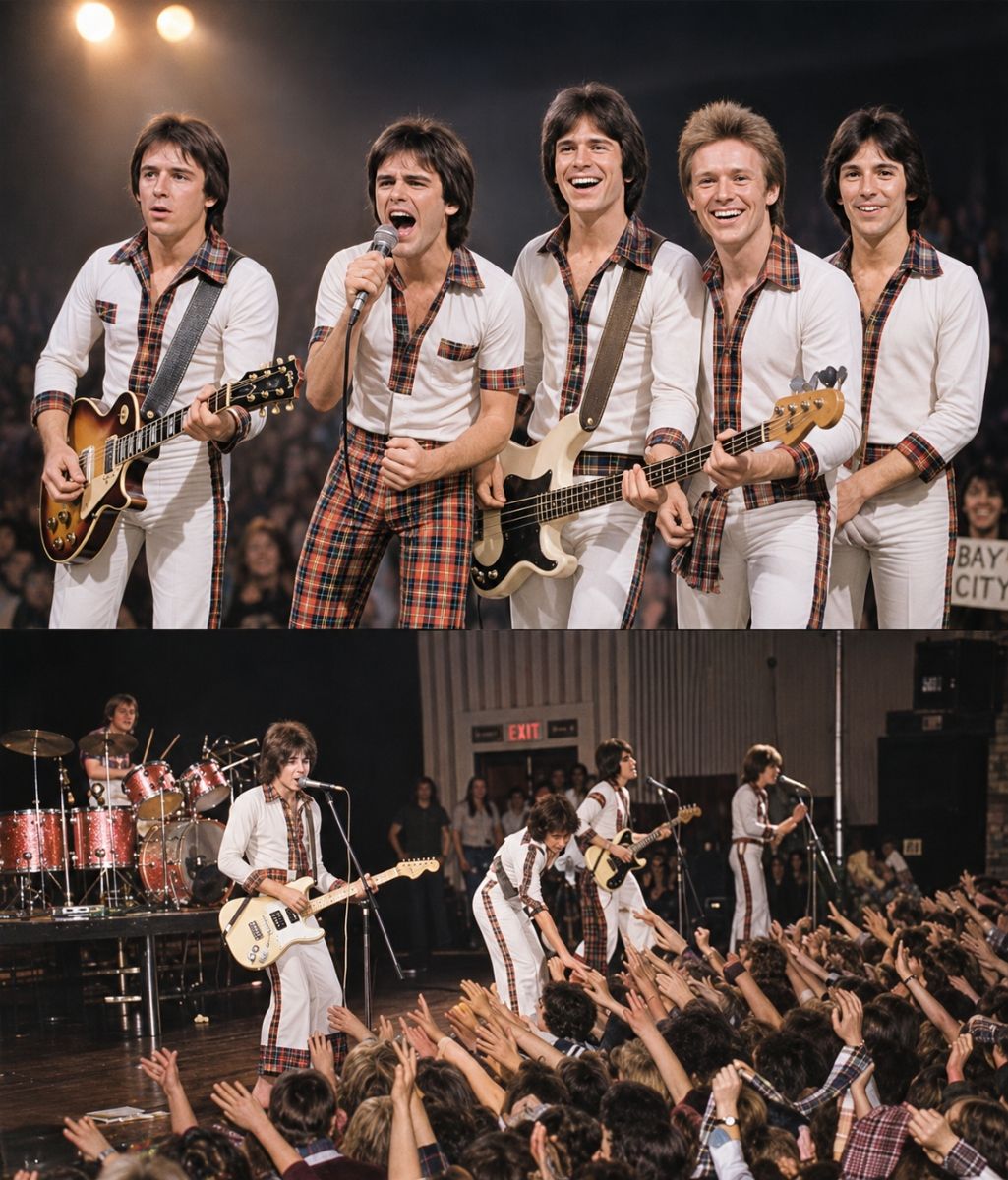
For years, the Bay City Rollers were remembered as one of the brightest pop stories of the 1970s.
There were tartan scarves, screaming teenagers, catchy songs and the kind of hysteria that made “Rollermania” feel like a cultural event rather than simply a successful band. To the public, the Rollers seemed to represent youth, fun and innocence.
But long after the crowds went home, former members began telling a very different story.
At the center of many of those accounts was the band’s manager, Tam Paton, a man who had enormous influence over who joined the group, how they behaved and how their careers developed. For years, stories circulated about the way he treated young musicians around him. Some sounded so extreme that many people dismissed them as bitterness, exaggeration or the kind of rumors that often follow famous bands.
Then more details began to emerge.
In 1982, Paton was jailed after admitting sexual offences involving teenage boys. That conviction was already part of the public record, but it would take decades before the wider picture described by former members and survivors became more visible.
One of the most disturbing accounts came from former Roller Pat McGlynn.
McGlynn later said that what should have been the greatest opportunity of his young life quickly became a nightmare. He alleged that Paton sexually assaulted him after he joined the band, and his testimony eventually became part of the 2023 ITV documentary Secrets of the Bay City Rollers. The program also included other survivors who described manipulation, coercion and abuse connected to Paton and the world around him.
The documentary changed the way many people looked at the group’s history.
What had once been treated as scattered accusations now appeared as part of a much larger pattern described by multiple people. The Guardian called the documentary one of the most disturbing accounts of abuse imaginable, noting that the bright public image of the band had concealed a far darker environment behind the scenes.
The damage did not end with abuse allegations.
Money became another source of anger and confusion. Former members spent years claiming that they had never received the royalties they believed they were owed from the group’s enormous commercial success. At one point, reports suggested that tens of millions of pounds in unpaid royalties were in dispute, leading to a legal battle that lasted for years.
For some members, the emotional consequences lasted much longer.
Les McKeown, one of the band’s most recognizable singers, struggled for years with addiction and anger. His family later said that they came to understand some of that pain differently after he publicly discussed abuse connected to his past. His son described him as a man who never truly found peace.
Even decades later, the story continued to develop.
In 2026, the Scottish Child Abuse Inquiry heard testimony from a former care-home resident who alleged that Paton had been involved in a wider network of abuse in Edinburgh. That testimony remains an allegation presented to an inquiry rather than a final court finding, but it added another disturbing layer to a history that had already been documented through Paton’s earlier conviction and multiple survivor accounts.
That is what makes the Bay City Rollers’ story so difficult to separate from the music now.
The songs still sound cheerful.
The old photographs still show smiling young men surrounded by screaming fans.
But behind those images were stories that some people carried silently for years before they were finally able to speak publicly.
The most shocking part was not that rumors existed. It was that, over time, enough evidence, testimony and documented history emerged to show that some of the darkest stories surrounding the Bay City Rollers were not simply rumors at all.