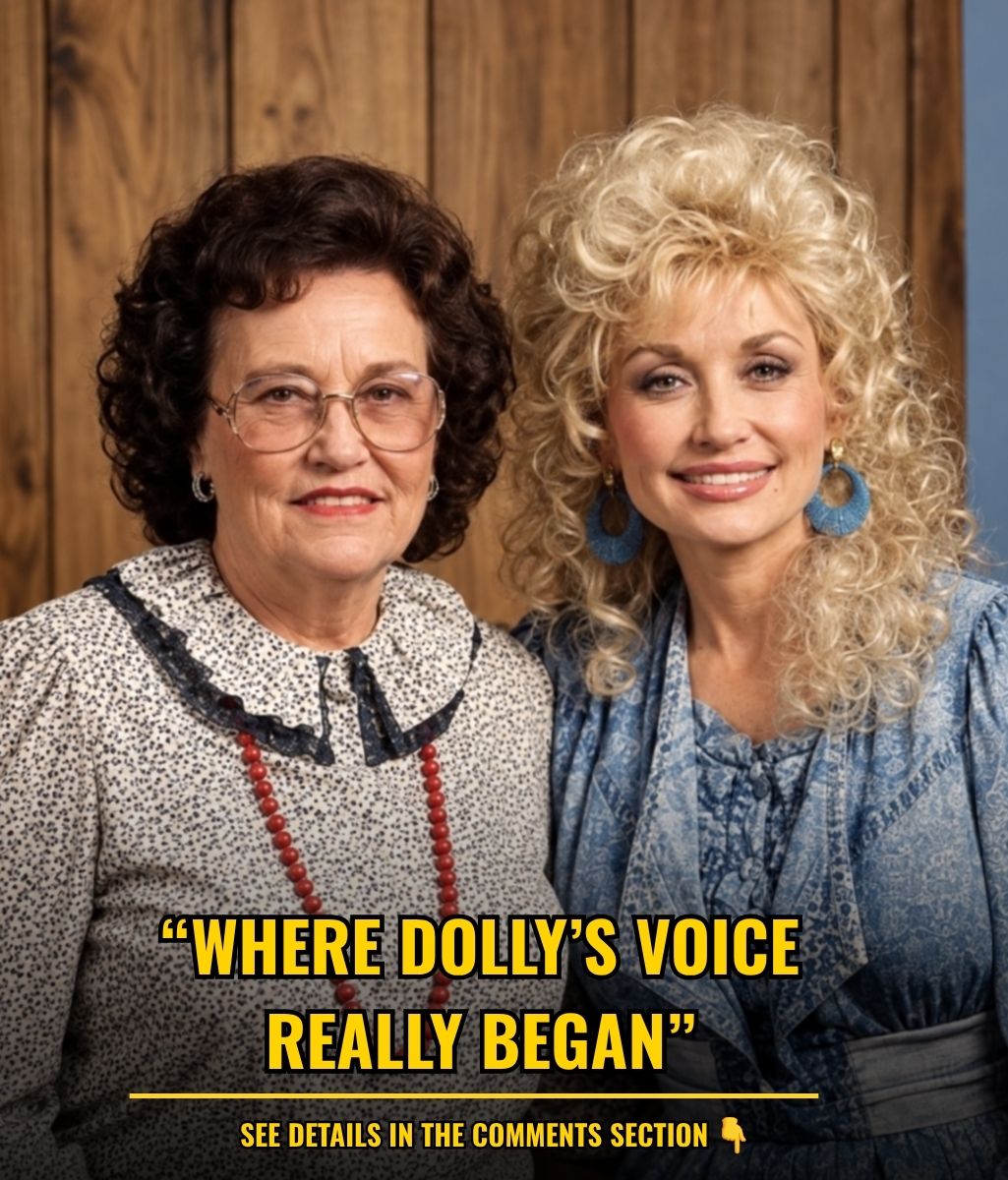
Long before Dolly Parton became one of the most recognizable singers in the world, music already filled the small East Tennessee home where she grew up. Much of that music came through her mother, Avie Lee Owens Parton, a woman who raised 12 children in difficult circumstances while also passing down songs, stories, faith, and a love of performance that would eventually shape Dolly’s entire life.
Avie Lee was not simply the mother of a future superstar. Family histories remember her as someone who sang and played guitar herself, and Dolly often credited her mother with recognizing her creative instincts early. Even before Dolly was old enough for school, she was making up songs, finding rhymes, and turning ordinary sounds around her into music. Avie Lee noticed that gift and encouraged it rather than treating it as childish play.
That influence stayed with Dolly even after Nashville transformed her life.
The world eventually knew Dolly through “Jolene,” “9 to 5,” “I Will Always Love You,” and dozens of other songs, but some of her most personal work continued reaching backward toward the home she had shared with her parents and siblings. “Coat of Many Colors” became one of the clearest examples. Dolly based it on the childhood memory of Avie Lee sewing scraps of fabric together to make her daughter a coat, then surrounding that act of necessity with enough love and storytelling to turn poverty into something Dolly could remember with pride.
That was one of Avie Lee’s greatest gifts to her daughter.
She taught Dolly that hardship did not have to remain only hardship.
It could become a story.
And a story could become a song.
The Parton household had very little money, but it contained an unusually rich musical environment. Church hymns, mountain songs, family harmonies, and stories passed from one generation to another surrounded the children. Avie Lee came from a musical family herself; her father, the Rev. Jake Owens, was a fiddler and songwriter. That meant Dolly’s later songwriting success did not emerge from nowhere. It grew from a culture in which music was woven into ordinary family life long before anyone imagined Grammys, television appearances, or sold-out concerts.
As Dolly became famous, she repeatedly returned to that inheritance.
She could move into pop music, Hollywood, television, and business, but the emotional center of many of her songs remained remarkably close to home. Mothers, fathers, siblings, poverty, faith, childhood, and the mountains continued appearing in her writing because those were the subjects that had formed her before fame arrived.
Avie Lee remained part of that story until her death on December 5, 2003, at age 80. Her obituary listed Dolly and Carl Dean among the surviving children and spouses, along with the large Parton family Avie Lee had spent a lifetime raising.
By then, Dolly had already spent decades telling the world how important her mother had been.
The connection went beyond “Coat of Many Colors.” Avie Lee represented a whole way of hearing the world. Dolly grew up around a mother who understood melody, storytelling, humor, faith, and the emotional power of simple words. Those same qualities later became trademarks of Dolly’s songwriting.
That is why the older family songs and hymns connected to Avie Lee carry such weight.
They were not merely nostalgic songs Dolly happened to remember from childhood. They belonged to the musical language she learned before she had a career, before she had an audience, and before she understood that songwriting would eventually become the central thread running through her life.
Even decades later, Dolly often spoke about her parents as the foundation beneath everything she accomplished. Her father, Robert Lee Parton Sr., inspired the Imagination Library because he had never learned to read or write. Her mother inspired songs, stories, faith, and a way of seeing dignity inside ordinary family life. Together, they became two of the strongest forces behind the public figure the world eventually knew.
For fans, that makes Avie Lee’s story especially moving.
Dolly Parton eventually became a woman whose songs were sung by people around the world, yet her earliest audience was much smaller. It was family. It was siblings. It was a mother who understood that the little girl making up rhymes around the house had something worth encouraging.
Years later, when Dolly sang about home, poverty, love, faith, or family, she was still drawing from that same source.
Before there was Nashville, before there were rhinestones, and before millions knew her name, there was Avie Lee Parton teaching her daughter that ordinary life could become music. And in many ways, every deeply personal song Dolly wrote afterward still carried a little of her mother’s voice inside it.