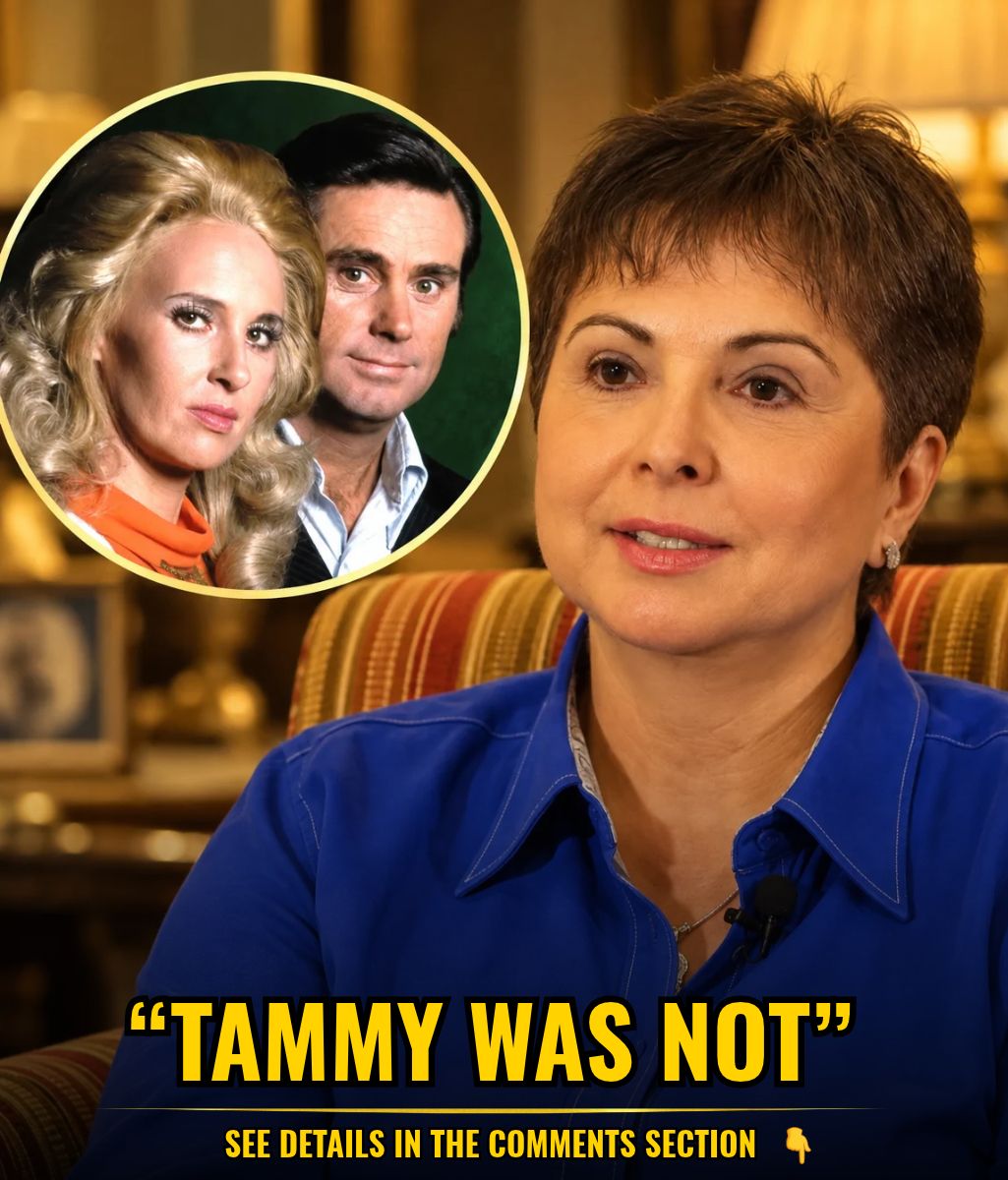
For decades, the names George Jones and Tammy Wynette seemed impossible to separate. Their marriage ended in divorce, but their voices remained permanently connected through songs such as “Golden Ring,” “We’re Gonna Hold On,” and “Two Story House.” Even after both moved on with their lives, fans continued wondering whether Tammy’s place in George’s heart ever created tension with the woman who eventually became his wife and remained beside him for more than three decades.
The answer from Nancy Jones was surprisingly different from the rivalry many people imagined.
Nancy has said openly that she was never jealous of Tammy and considered her a wonderful woman. Rather than trying to erase George’s past, Nancy understood that Tammy represented an important chapter of his personal life and musical history. She eventually became involved in helping George repair his relationship with his former wife, believing that the years of anger and hurt between them did not need to define how their story ended.
That decision mattered because George and Tammy’s relationship had been extraordinarily complicated. They married in 1969 and became country music royalty almost immediately, but George’s drinking and increasingly unstable behavior placed enormous pressure on the marriage. Their divorce became final in 1975, yet the emotional and musical connection never completely disappeared. They continued recording together, and the public remained fascinated by the contrast between the heartbreak in their private lives and the effortless harmony they could still create onstage.
When Nancy entered George’s life in the early 1980s, she was not simply stepping into a marriage. She was entering a history filled with addiction, broken relationships and memories that country fans already knew by heart. Instead of demanding that George forget Tammy, Nancy eventually encouraged him to make peace with that past.
That choice produced an unexpected relationship of its own.
Nancy later said that getting George and Tammy back on better terms allowed her to know Tammy personally, and once that happened, she genuinely came to love her. In later recollections, Nancy even described Tammy as one of her friends outside the complicated connection they shared through George.
By the 1990s, George and Tammy were working together again. Their 1995 album One and the tour that followed reunited two voices country music fans had never stopped wanting to hear together. Nancy remembered that the reunion was not always peaceful behind the scenes, because George and Tammy could still argue fiercely even while sounding perfectly matched once they walked onto the stage. Yet Nancy believed the reconciliation mattered because it allowed both of them to close a chapter that had remained unfinished for years.
When Tammy died in 1998, George spoke about losing someone who had once been his wife but had eventually become his friend again. Nancy shared that grief rather than treating Tammy’s death as the disappearance of an old rival. She said she would miss Tammy deeply and recognized that country music had lost one of its defining voices.
Years later, Nancy remained determined not to rewrite that history. When discussing plans for a film about George’s life, she insisted that Tammy had to be treated fairly because she had been such an important part of his story. Nancy said she wanted an honest portrayal, including George’s own mistakes during their marriage, rather than a version designed to protect his reputation.
That may be the most surprising truth behind the three people whose lives became so closely connected.
Nancy Jones did not need to compete with Tammy Wynette because she understood that loving George in the present did not require erasing the woman who had shared such an important part of his past. Instead, she helped two former partners find enough peace to sing together again and, in the process, formed her own friendship with Tammy.
Fans may have expected jealousy between George Jones’ wife and his legendary former partner, but Nancy’s memories reveal something far more human: acceptance, forgiveness, and the understanding that one great love story does not have to erase another.