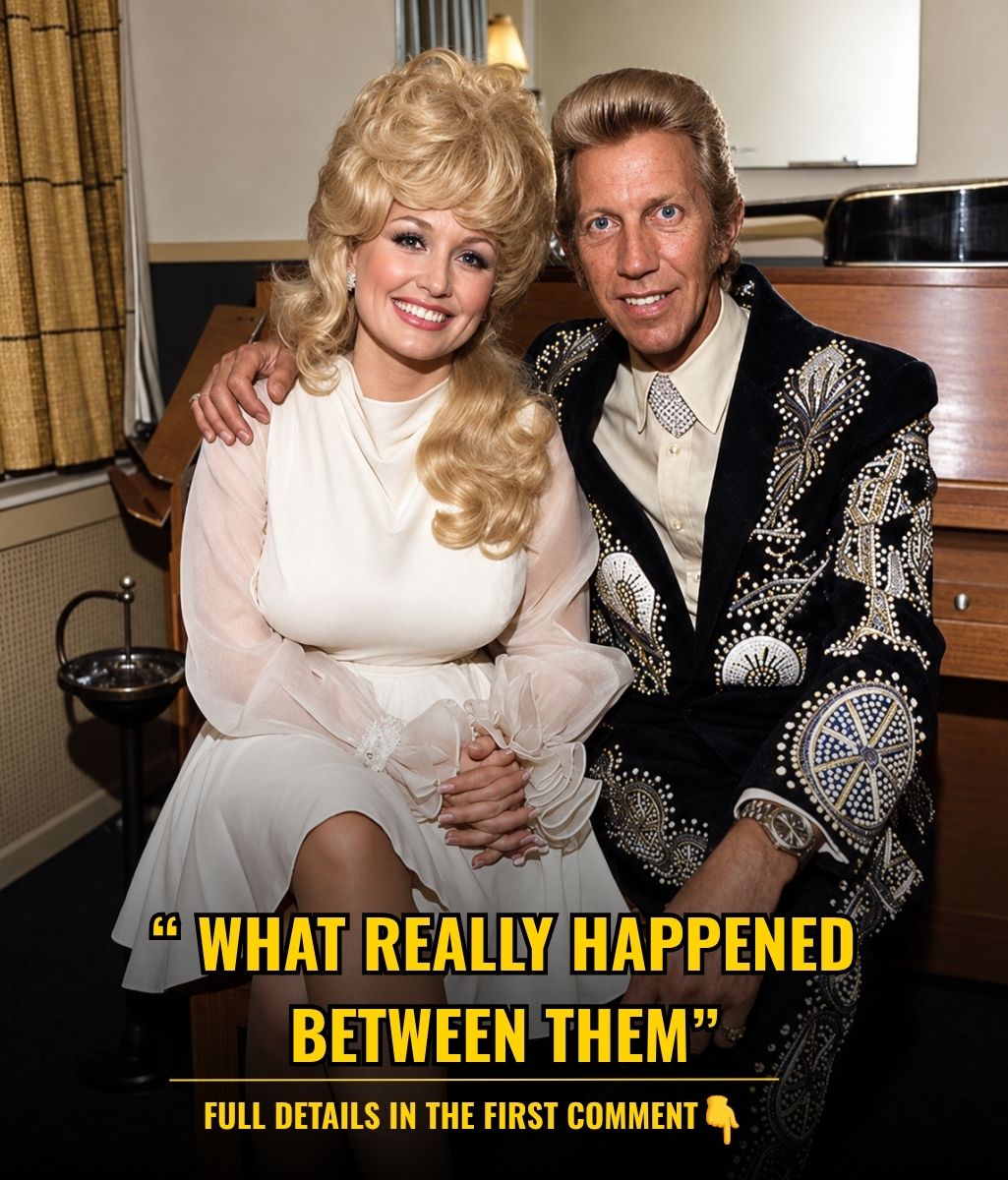
For seven years, Dolly Parton and Porter Wagoner were one of the most recognizable partnerships in country music. They sang together on television, recorded hit duets, toured, argued, reconciled, and built a professional relationship that helped transform Dolly from a promising young Nashville songwriter into a national star. Yet behind the smiles and matching stage outfits was a bond far more complicated than many fans realized, and one of Dolly’s most famous songs was born directly from the moment she finally decided she had to leave.
Dolly joined The Porter Wagoner Show in 1967, replacing singer Norma Jean and stepping into a television program that already had a large country audience. The opportunity changed her career almost immediately. Porter gave Dolly national exposure, a regular television platform, touring opportunities, and a duet partner whose name carried enormous weight in Nashville. Their musical chemistry worked, and over the years they recorded a long run of albums and singles together, eventually scoring their only No. 1 duet as a pair with “Please Don’t Stop Loving Me” in 1974.
But Dolly had never intended to remain someone else’s duet partner forever. She had arrived in Nashville with dreams of becoming a songwriter and solo artist in her own right, and as her confidence and success grew, so did her desire for independence. By the early 1970s, the relationship between Dolly and Porter had become increasingly strained. Porter had helped create the platform from which Dolly rose, but Dolly increasingly felt that staying on the show was preventing her from becoming the artist she believed she could be.
That tension made leaving extraordinarily difficult. Dolly was grateful to Porter, personally and professionally, but she also knew she could not build the rest of her career around his television show. According to Dolly’s official biography, after seven years on the program she finally made the decision in 1974 to strike out on her own, and the departure caused significant friction between them.
What happened next became one of the defining moments of Dolly’s career.
Rather than trying to explain everything through an argument, Dolly wrote a song.
That song was “I Will Always Love You.”
Today, millions of listeners hear the title and assume it must have been written about a romantic relationship. Whitney Houston’s enormous 1992 version helped cement it as one of the most famous love songs in popular music, and the lyrics naturally sound intimate enough to fit a romantic farewell. But Dolly’s original intention was very different.
She wrote the song for Porter Wagoner.
It was her way of saying that leaving did not mean she hated him, forgot what he had done for her, or denied the affection and gratitude that remained between them. She simply needed to go. Dolly’s official album history describes “I Will Always Love You” as her public goodbye to Porter as she left his television show after seven years.
That truth completely changes the emotional meaning of the song.
Dolly was not writing about a failed romance. She was writing about one of the hardest professional separations of her life, a relationship in which gratitude, frustration, loyalty, ambition, affection, and independence had become almost impossible to separate. The song allowed her to say two things at once: I appreciate what you gave me, and I still have to leave.
According to stories Dolly later told, she sang the song privately for Porter before the separation was complete, and its emotional force reportedly affected him deeply. What mattered most, however, was that Dolly had finally found a way to communicate something that ordinary conversation had not solved. The songwriter inside her had done what arguments could not.
The decision proved pivotal. Once Dolly left the show, her solo career accelerated dramatically. She scored major hits, expanded her touring internationally, moved successfully into pop crossover, launched her own television program, and by 1978 had been named CMA Entertainer of the Year. The years immediately after leaving Porter confirmed that her instinct had been right: Dolly needed the freedom to become something larger than the role she had occupied on his show.
Yet the story did not end with permanent bitterness. Dolly and Porter eventually repaired much of their relationship and worked together again over the years. Whatever tension surrounded the breakup, Dolly never erased Porter from the story of her success. She continued acknowledging how important he had been to her early career, while Porter ultimately witnessed the woman he had helped introduce to America become one of the biggest entertainers country music ever produced.
That reconciliation makes “I Will Always Love You” even more meaningful. The song was never designed to destroy the relationship. It was designed to leave without denying that something important had existed.
Decades later, Whitney Houston transformed Dolly’s composition into an international phenomenon for The Bodyguard. Houston’s version spent 14 weeks at No. 1 on the Billboard Hot 100, carrying a song born from a tense Nashville professional breakup into an entirely different cultural world.
But underneath the soaring vocals and romantic associations, the original story remained unchanged.
It was Dolly talking to Porter.
That may be the most surprising truth about their complicated bond. Porter Wagoner helped give Dolly the platform she needed, but eventually the greatest gift she could give herself was the courage to leave it. She did not walk away pretending the relationship had meant nothing, and she did not turn the breakup into a bitter attack.
She turned it into a song.
Dolly Parton’s most famous farewell was not originally written for a lover. It was written for the man who helped launch her career — and whom she had to leave behind in order to discover just how far she could go on her own.
That is why “I Will Always Love You” remains the perfect summary of Dolly and Porter’s complicated relationship: gratitude without surrender, affection without possession, and goodbye without hatred.