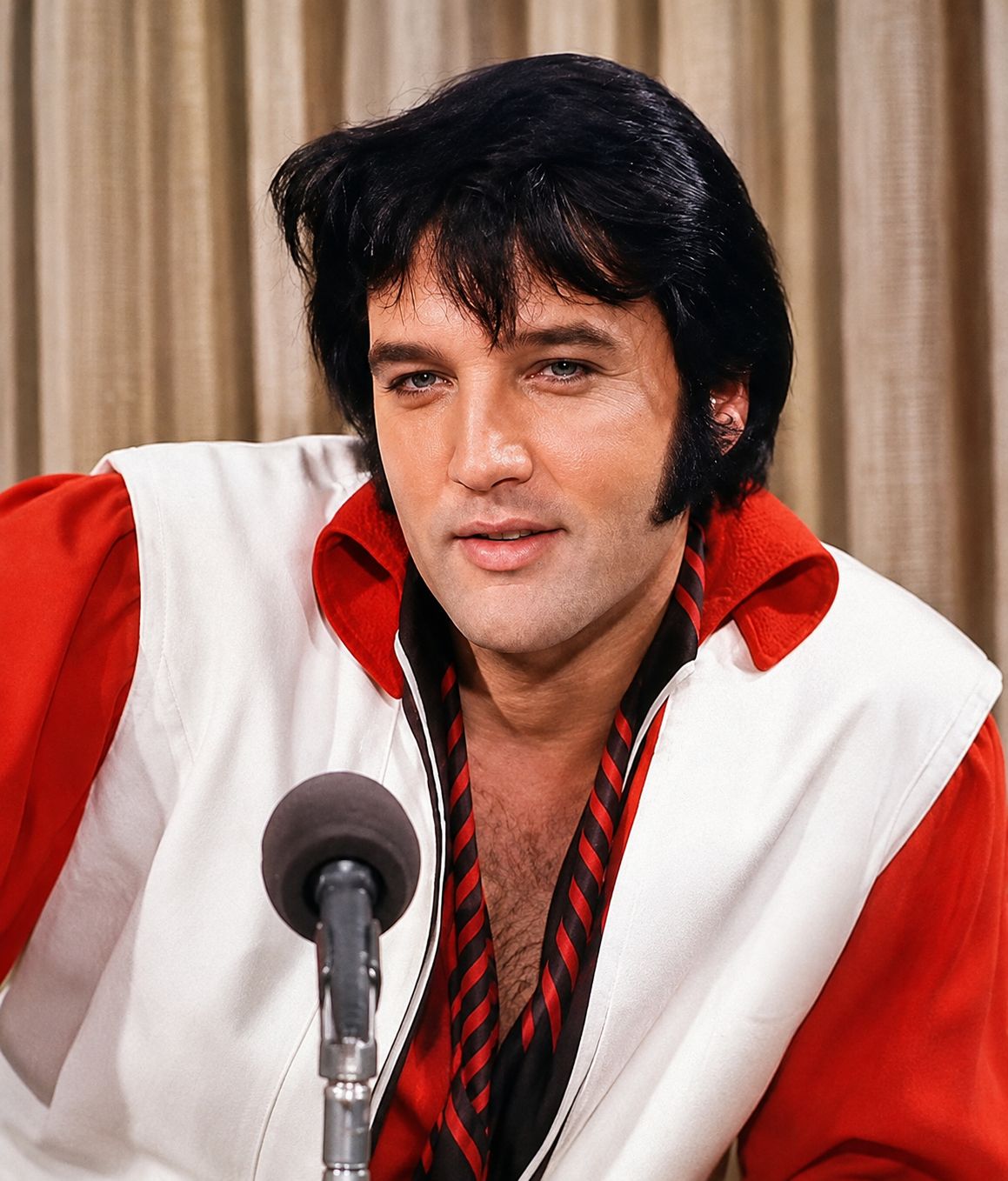
When Elvis Presley walked into Sun Records in Memphis during the early 1950s, he did not arrive as the inventor of rock ’n’ roll, and he was not the first artist to combine blues, gospel and country music. Those traditions had already been shaped by generations of Black musicians, Southern gospel singers, country performers and rhythm-and-blues pioneers. What Elvis did was take those sounds he had absorbed since childhood and bring them together in a way that reached an enormous new audience.
The moment that changed everything came on July 5, 1954.
Elvis was recording with guitarist Scotty Moore and bassist Bill Black at Sun when the formal session seemed to be going nowhere. During a break, Elvis began fooling around with Arthur “Big Boy” Crudup’s “That’s All Right,” playing it faster and with a completely different energy from the original blues recording. Sam Phillips heard what was happening and immediately asked the musicians to start again so he could capture it properly.
That spontaneous performance became Elvis’s first commercial single.
The other side of the record was equally revealing. Instead of choosing another blues song, Elvis and the musicians transformed Bill Monroe’s bluegrass standard “Blue Moon of Kentucky” into something quicker, looser and more rhythmic. One side of the record came from Black blues tradition, while the other came from white country and bluegrass, yet both suddenly sounded as though they belonged to the same new musical world.
Even Sam Phillips struggled to categorize what he was hearing.
That confusion was part of the magic.
The music did not sit comfortably inside the traditional divisions of American radio. It carried blues feeling, gospel intensity, country phrasing and a youthful rhythmic energy that would soon be called rockabilly and rock ’n’ roll. The Library of Congress later recognized Elvis’s Sun sessions as recordings that helped create the rock ’n’ roll era, preserving them in the National Recording Registry.
But the sound was only part of the revolution.
Elvis changed the way a young music star could look and move.
By 1956, after his contract had been sold to RCA Victor, songs such as “Heartbreak Hotel,” “Don’t Be Cruel” and “Hound Dog” had made him a national sensation. His television appearances brought the music directly into American living rooms, where teenagers saw something very different from the controlled pop performers their parents had grown up watching. Elvis moved his body with a freedom that delighted younger audiences and alarmed many adults, turning a musical change into a generational confrontation.
That reaction revealed how much more was happening than simply the arrival of another popular singer.
Elvis became one of the most visible figures bringing music deeply influenced by Black rhythm and blues into the mainstream white marketplace. That history has always been complicated because the Black artists whose work helped create rock ’n’ roll often received far less money, recognition and access to national audiences. Arthur Crudup, who wrote “That’s All Right,” is one important example. Elvis himself publicly acknowledged Crudup’s influence, recalling that he had listened to him while growing up in Mississippi.
Understanding that context does not diminish Elvis’s impact.
It explains it more accurately.
His gift was not inventing every ingredient. It was hearing connections between musical worlds that American culture often kept separated, then performing those influences with enough personality and instinct to make millions of young listeners hear them differently.
That approach also changed how artists after him imagined themselves.
Elvis was not confined to one sound. He could move from rock ’n’ roll to gospel, country ballads, blues and pop without treating those genres as completely separate identities. The Rock & Roll Hall of Fame describes his signature sound as a combination of blues grit, gospel soul and country twang, and lists artists ranging from The Beatles and Bob Dylan to Bruce Springsteen and David Bowie among those influenced by him.
John Lennon later said hearing “Heartbreak Hotel” changed his life.
That single reaction gives some sense of how far Elvis’s influence traveled. The teenager who had once listened to country, gospel and blues in Mississippi and Memphis eventually became one of the artists who inspired the musicians who would reshape popular music again in the 1960s.
His impact even extended beyond records.
The combination of music, clothing, television presence, hairstyle and performance helped create the modern idea of the rock star as a complete cultural identity. Before Elvis, singers could become celebrities. After Elvis, a musician could become a symbol of rebellion, sexuality, youth and generational change all at once.
That may be the part of his story that is easiest to overlook today.
Elvis Presley did not simply leave behind a collection of famous songs.
He helped change the relationship between music and youth culture, between performers and television, and between musical traditions that had previously been marketed to separate audiences.
The King did not create rock ’n’ roll by himself, but he became one of the most powerful forces in carrying it across cultural boundaries and into the center of popular life. Once Elvis stepped into that little Memphis studio and began singing “That’s All Right,” American music would never sound — or look — quite the same again.
Video
https://www.youtube.com/watch?v=GKdEwBpCXcs