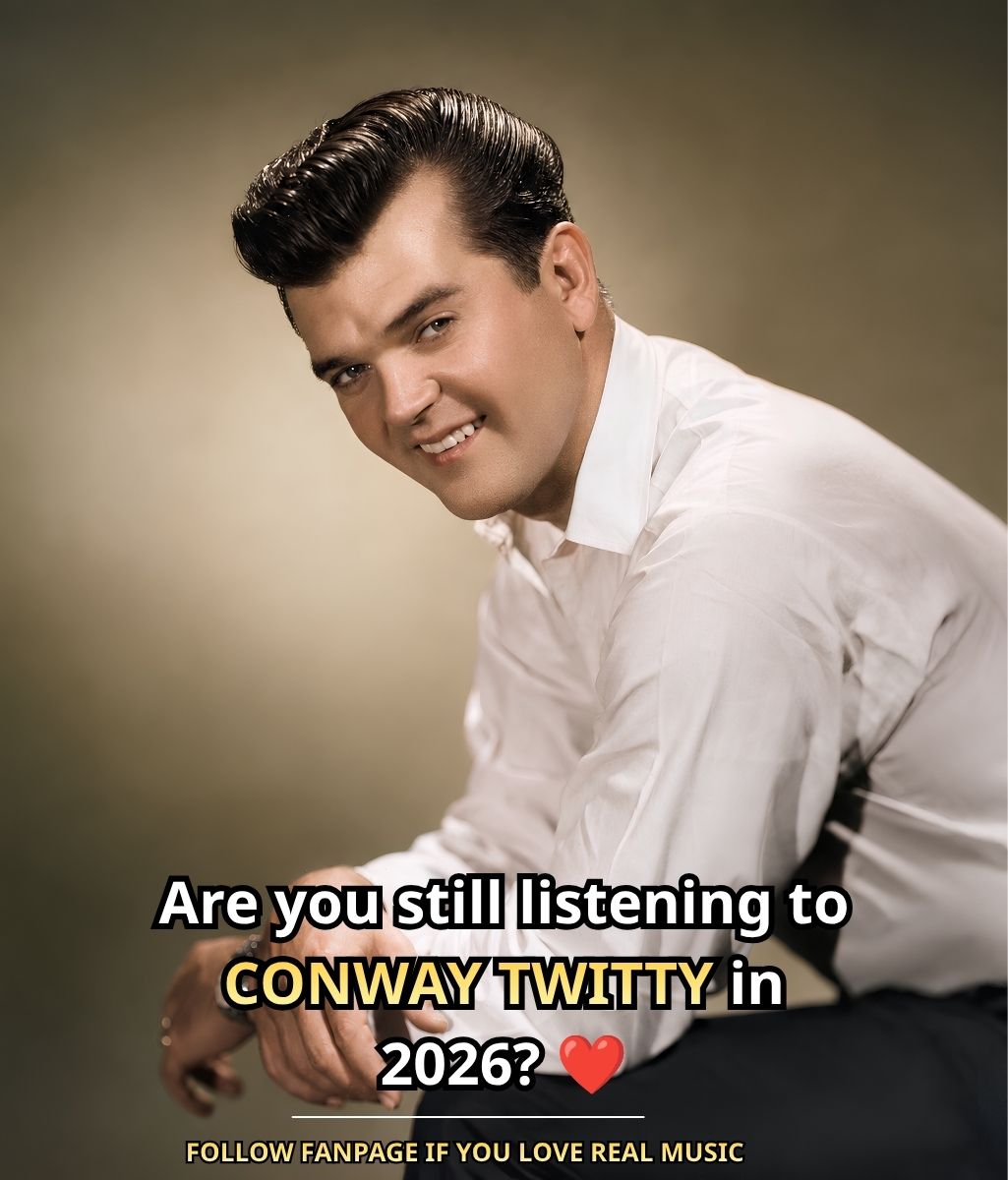
Long before Sun Studio, “It’s Only Make Believe,” 55 chart-topping records, and the Country Music Hall of Fame, Harold Lloyd Jenkins was already showing the talent, loyalty, and quiet generosity that would define Conway Twitty’s extraordinary life.
From the birth of rock and roll in Memphis to the highest levels of country music, Conway Twitty built a career that survived five decades of changing tastes. He began as a young singer influenced by the revolutionary sound coming from Sun Records, found international success as a rock-and-roll star, and then made the dangerous decision to rebuild himself in country music. By the end of his life, he had become one of the genre’s most successful and recognizable performers. Yet the fullest measure of his legacy cannot be found only in sales figures, awards, or chart records. It also survives in the memories of the people who knew him personally and in the hearts of listeners who felt they knew him through his songs.
Before the world knew Conway Twitty, there was Harold Lloyd Jenkins, born on September 1, 1933, in the rural Mississippi community of Friars Point. His childhood was far removed from the wealth and recognition that would eventually surround his career. His family later moved to Helena, Arkansas, where music, baseball, hard work, and responsibility became important parts of his early life. The official Conway Twitty biography describes his mother as the family’s primary provider while his father found irregular work as a Mississippi riverboat pilot. Life demanded maturity from Harold early, but it did not harden him or make him think only of himself. Even as a boy, he showed an instinct for helping the people around him.
Music entered his life almost immediately. At four years old, Harold received his first guitar, a modest Sears & Roebuck acoustic instrument. It was not the kind of guitar associated with luxury or professional ambition, but in his small hands it became the beginning of something remarkable. He demonstrated a natural ability and continued developing it as the family settled in Arkansas. By the time he was ten, he had organized his first group, the Phillips County Ramblers. At twelve, he was already performing on Helena radio station KFFA, an extraordinary step for a child who had started with little more than a mail-order guitar and an unmistakable musical gift.
Yet one of the most revealing details from those early years had nothing to do with music. Harold worked as a carhop, earning money in a world where every dollar mattered. A child with such obvious talent might have saved his wages for another guitar, better equipment, or something for himself. Instead, the official account of his life says that he used part of his earnings to purchase clothing and shoes for his brother and sister. It was a simple act, unlikely to appear in the glamorous summaries of a legendary entertainer’s career, but it revealed something essential. Before he could provide for a band, a company, or an audience, Harold was already trying to provide for his family.
That sense of responsibility remained beneath the famous stage name he later adopted. Conway’s career would eventually include recording, songwriting, producing, touring, business ventures, and efforts to encourage other performers. The Country Music Hall of Fame notes that he supported the early careers of artists including Vince Gill, Kathy Mattea, Naomi Judd, and Reba McEntire. His concern for writers and their work helped earn him the description “the best friend a song ever had.” The generosity visible in the boy buying shoes for his siblings did not disappear when success arrived; it expanded into a professional life in which Conway often noticed potential in people before the wider industry did.
His journey toward stardom was not direct. Harold was also a talented baseball player and attracted interest from the Philadelphia Phillies before military service interrupted that possibility. After leaving the armed forces, he heard the new sound associated with Elvis Presley and traveled to Sun Records in Memphis. His recordings there did not immediately make him famous, although Roy Orbison recorded Harold’s composition “Rockhouse.” The breakthrough came later, after Harold Lloyd Jenkins became Conway Twitty and recorded “It’s Only Make Believe,” released in 1958. The song transformed him into an international rock-and-roll star, but Conway eventually refused to remain trapped by his first success. He turned toward country music and began the difficult work of earning credibility in a different genre.
That reinvention became one of the boldest decisions of his career. Conway eventually recorded enduring country songs such as “Hello Darlin’,” “Fifteen Years Ago,” “Linda on My Mind,” “That’s My Job,” and “Goodbye Time.” He also formed one of country music’s most celebrated duet partnerships with Loretta Lynn. His emotionally controlled delivery, direct lyrics, and distinctive voice allowed him to connect with listeners without depending on elaborate performances or endless conversation. The Country Music Hall of Fame credits him with forty No. 1 country hits under its chart methodology, eleven of which he wrote himself, while Conway’s official organization counts 55 No. 1 records when solo and duet successes across the relevant charts are included. The differing totals reflect different counting methods, but both demonstrate the extraordinary scale of his career.
Conway died unexpectedly on June 5, 1993, after becoming ill while traveling from a performance in Branson, Missouri, toward Nashville’s Fan Fair. Six years later, in 1999, he was inducted into the Country Music Hall of Fame, country music’s highest honor. By then, the boy from Friars Point had completed a journey few could have imagined: from a four-year-old holding a Sears guitar to an artist whose voice had crossed from early rock and roll into country immortality.
But the most meaningful part of his story may still be the part no chart can measure. Before Conway Twitty learned how to command an arena, Harold Jenkins had learned how to care for the people beside him. Before the famous records, there was a boy working as a carhop. Before the expensive stage clothes, he was buying shoes for his siblings. Before millions knew his voice, his family already knew his character.
History remembers Conway Twitty as a Hall of Fame singer who conquered two musical worlds. Those closest to him remembered something even greater: the gifted Mississippi boy who rose to the top without completely leaving Harold Lloyd Jenkins behind.