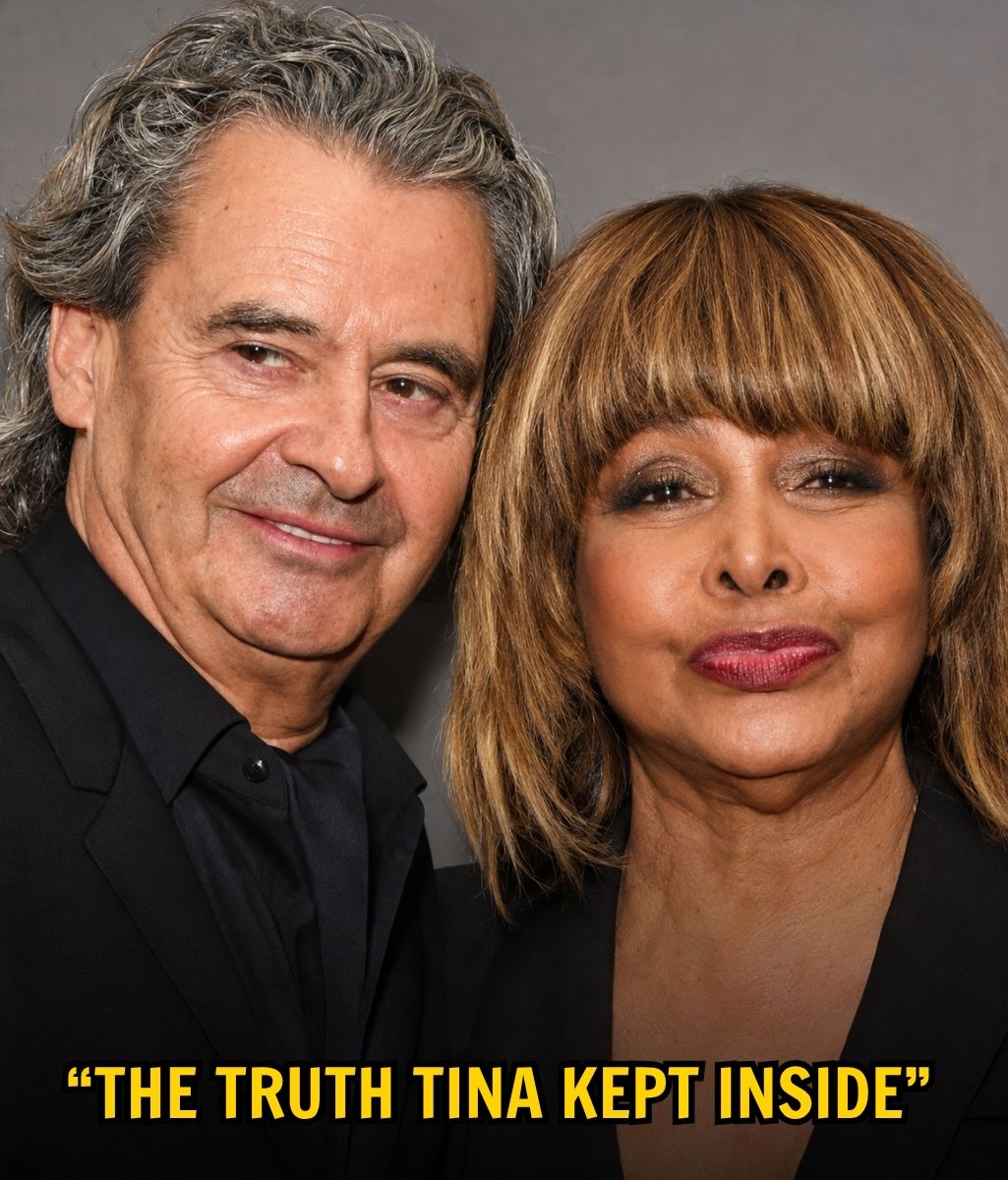
For decades, Tina Turner represented survival.
To millions of fans, she was the woman who escaped an abusive marriage, rebuilt a career almost from nothing and returned in the 1980s as one of the biggest stars in the world. She filled arenas, won Grammys and turned songs such as “What’s Love Got to Do With It,” “Private Dancer” and “The Best” into anthems of strength and independence.
From the outside, Tina Turner’s story seemed to have the perfect ending.
Years before her death at 83, however, Tina revealed that the reality was far more complicated.
In the 2021 documentary TINA, she spoke with unusual honesty about the emotional wounds she had carried long after leaving Ike Turner. Although decades had passed since their marriage ended, Tina explained that memories from that period could still return suddenly and painfully. The documentary’s directors said that when she thought about those years, the trauma sometimes came back through dreams and nightmares as though the events had happened much more recently.
That admission changed the way many people understood her famous comeback story.
The public had often treated Tina’s life as a simple tale of triumph: she survived, escaped, became successful and therefore left the pain behind. Tina herself understood that survival did not work that way.
She had escaped the situation, but she could not simply erase what had happened.
One of the most painful parts of her later life was that she was repeatedly asked to retell the story. Interviews, books, films and eventually the musical based on her life kept returning to the years with Ike. Tina knew that speaking openly could help other people, especially women experiencing abuse, but she also admitted that remembering those years continued to hurt her.
By the time the documentary was made, Tina was in her early eighties and living quietly in Switzerland with her husband, Erwin Bach.
She had found the kind of love and stability that had once seemed impossible.
Yet even with that happiness, she refused to pretend that everything from the past had disappeared.
In one of the documentary’s most striking reflections, Tina said that she had experienced an abusive life and that there was no other honest way to describe it. She also reflected that the good moments had not necessarily erased or outweighed everything painful that had happened before them.
That was not the statement fans expected from a woman who had become an international symbol of resilience.
Tina Turner had won.
She had rebuilt her name, achieved greater success as a solo artist than many people believed possible and eventually found a peaceful life far away from the chaos of her early career.
But winning did not rewrite history.
Instead, Tina said she had learned to approach the past through forgiveness.
For her, forgiveness did not mean pretending the abuse had never happened or excusing it. She described forgiveness as refusing to continue holding onto the pain because remaining trapped in anger meant continuing to suffer. In her final years, she increasingly spoke about letting go, moving forward and filling whatever time remained with love.
Her relationship with Erwin became an important part of that final chapter.
Tina had often wondered whether she would ever experience secure love after everything she had endured. Meeting Erwin in the 1980s eventually gave her something very different from the relationships that had shaped her younger years. They married in 2013, and Tina later spoke about the relationship with a warmth that contrasted sharply with the fear attached to her first marriage.
By 2021, however, Tina was also preparing to disappear from public life.
The documentary was conceived partly as a farewell. Erwin explained that Tina wanted to say goodbye to her American fans and finally close the public telling of her story. Tina herself wondered aloud how someone who had spent a lifetime performing could gradually bow out and simply go away.
There was something deeply revealing in that desire.
For much of her life, Tina Turner had belonged to audiences.
People wanted the songs, the performances and the inspirational story of the woman who had survived everything thrown at her. By the end, Tina seemed to want something far simpler.
She wanted peace.
Before her death in May 2023, she told The Guardian that she hoped to be remembered as the Queen of Rock ’n’ Roll and as a woman who showed others that they could pursue success on their own terms. She also offered a quieter lesson about life, saying that hers had been full but marked by sadness, and that she had learned to forgive, let go and continue moving forward.
That may be the heartbreaking truth behind Tina Turner’s extraordinary life.
Her comeback did not magically heal every wound. Fame did not erase trauma, awards could not undo the past, and decades of applause did not stop painful memories from returning.
What Tina ultimately achieved was something more difficult.
She learned that strength did not mean forgetting what happened. It meant refusing to let what happened control the rest of her life. Tina Turner carried the scars with her, but in the end, she chose love, forgiveness and peace over allowing those scars to define her final chapter.