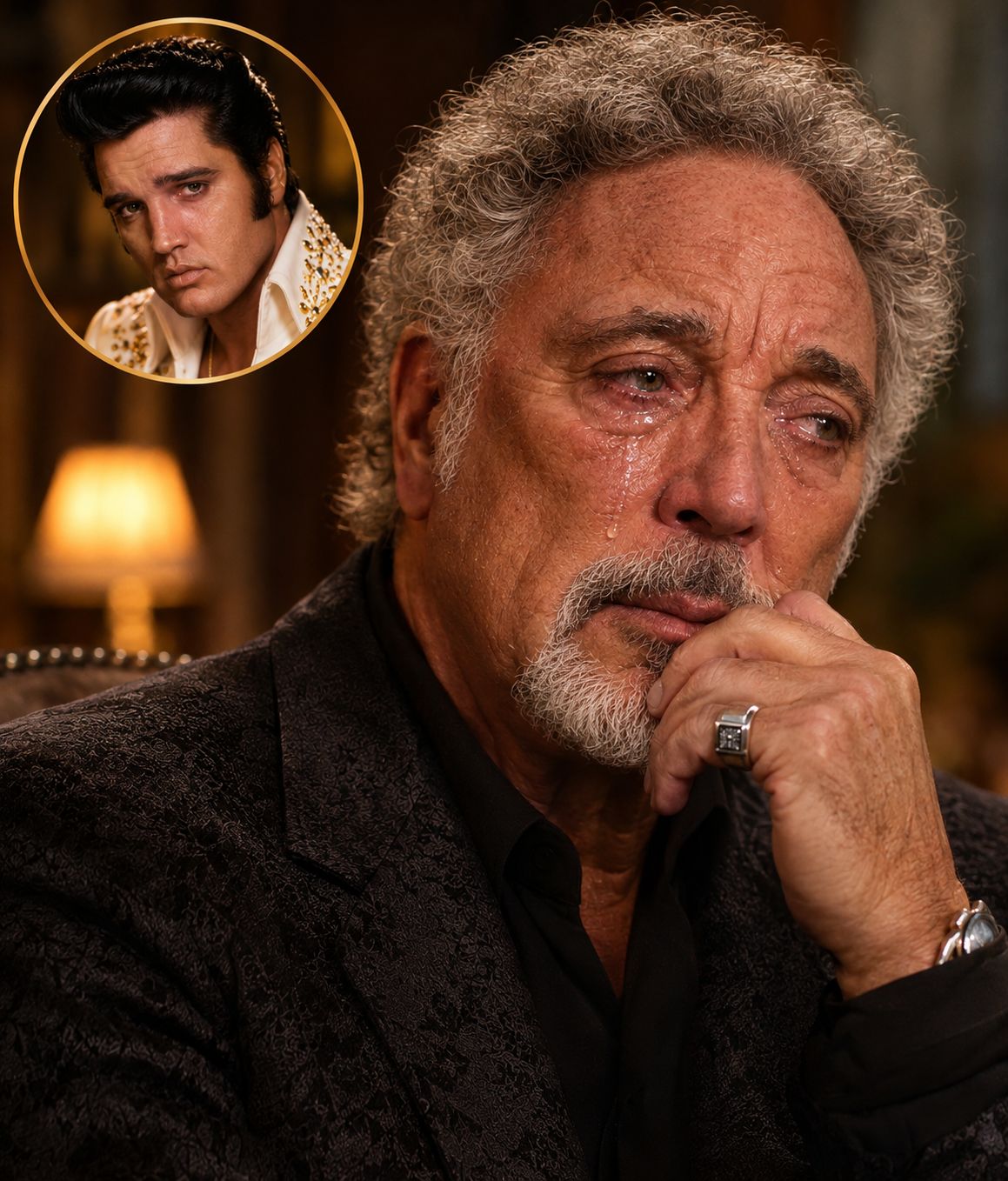
For most of his life, Tom Jones could tell stories about Elvis Presley with a smile. He remembered meeting his childhood idol at Paramount Studios in 1965, singing gospel songs with him late at night in Las Vegas and watching Elvis return to the stage with the confidence of a man who still had something to prove. Yet behind those memories was one regret Tom admitted had never completely disappeared.
He wished he had gone to see Elvis before it was too late.
Tom and Elvis had developed a genuine friendship during the years when both were major stars in Las Vegas. Elvis would visit Tom’s performances, and Tom later recalled that Elvis came to see him at the Flamingo in 1968 because he was considering returning to live performance himself. According to Tom, Elvis later told him that watching the show had helped give him confidence about making his own Vegas comeback.
Their friendship was not built only around show business.
Tom remembered evenings when they would sit together singing gospel music, a shared interest rooted in their very different childhoods in Wales and Mississippi. Elvis was surprised that Tom knew many of the same gospel songs, and those informal sessions became some of the memories Tom treasured most after Elvis was gone.
But during the final two years of Elvis’s life, they stopped seeing each other.
Tom knew Elvis had changed. He had gained weight, become increasingly isolated and was pushing people away, but Tom later admitted that he did not understand how serious the situation had become. At the time, he thought his friend was simply becoming less motivated. Only after Elvis died on August 16, 1977, did Tom begin looking back differently.
“The first thing that hit me after he died was I should have gone and seen him,” Tom later recalled.
That regret became even more painful because of something Priscilla Presley told him. According to Tom, Priscilla said that whenever he appeared, Elvis seemed to regain some of his old competitive energy. Tom wondered afterward whether visiting his friend might have given Elvis another spark, even if only temporarily. He never claimed that he could have saved Elvis, but the possibility that he might have helped in some small way stayed with him.
There was another missed opportunity between them as well.
Tom later said he would have loved to record a duet with Elvis. According to him, Elvis was open to collaborating, but Colonel Tom Parker kept him largely separated from other artists. Tom described that lost opportunity simply as “a shame,” because he believed Elvis would have enjoyed recording with other singers.
That unrealized duet is easy to imagine now, but the deeper regret was never really about a record.
It was about showing up.
Tom had known Elvis not merely as the King of Rock ’n’ Roll, but as a friend who could laugh, sing gospel until late at night and still become excited when another performer challenged him creatively. By the time Tom realized how badly that friend had been struggling, there was no opportunity left for another visit.
Decades later, Tom continued speaking about Elvis with affection rather than blame. He understood that no single friend could have controlled what happened in those final years, yet grief often leaves behind questions that logic cannot completely silence.
For Tom Jones, the painful memory was not that he failed to save Elvis Presley. It was that he never made that final visit — and for the rest of his life, he was left wondering what one more night of friendship might have meant.