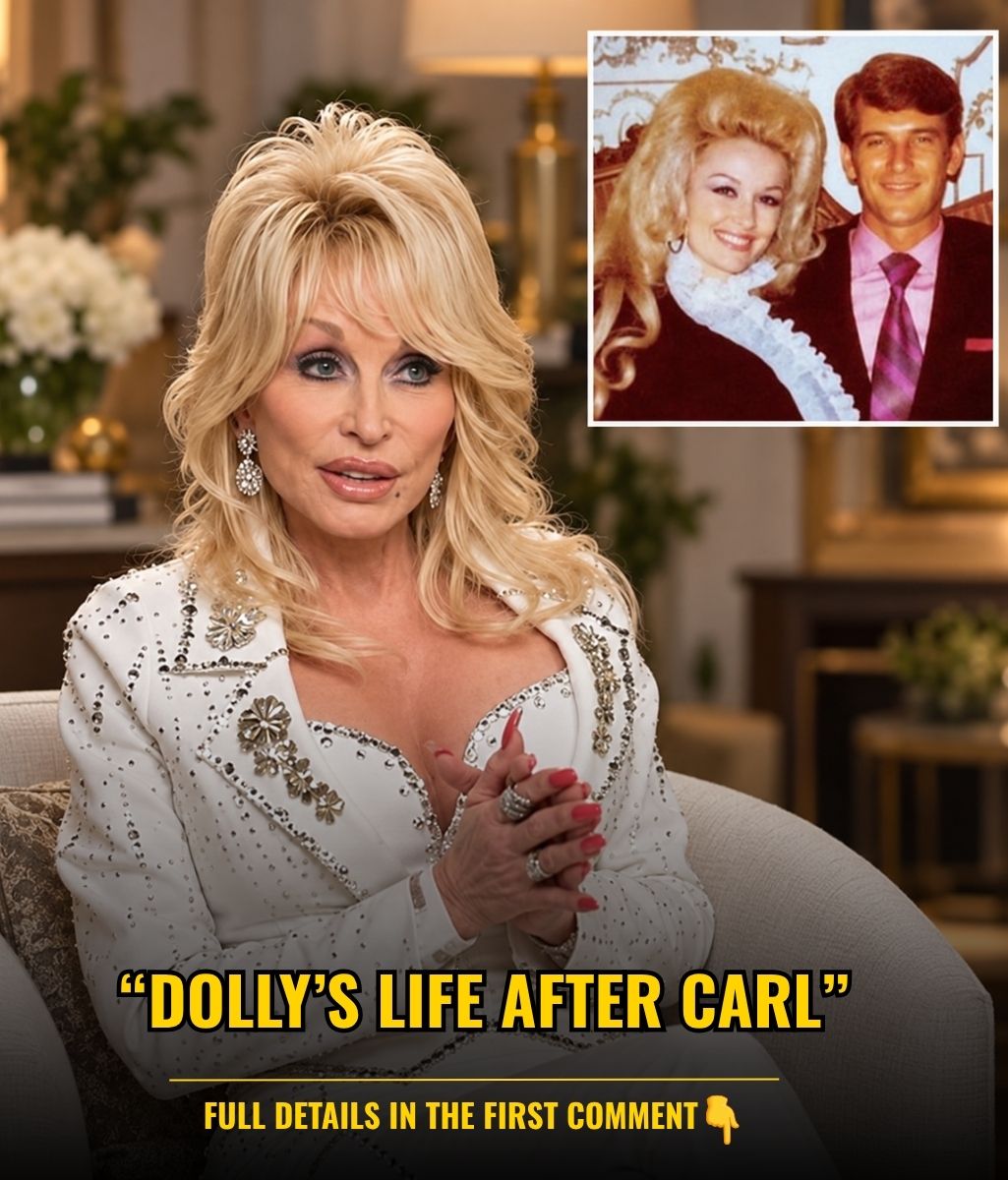
When Dolly Parton lost her husband Carl Dean in March 2025, she was not simply saying goodbye to the man she had been married to for 58 years. She was losing the person who had been part of her private life since she was 18 years old, long before “Jolene,” “9 to 5,” Dollywood, Hollywood, or any of the fame that eventually surrounded her. For a woman famous for turning heartbreak into songs and greeting almost every difficulty with humor, the months that followed revealed a much more vulnerable Dolly than fans were accustomed to seeing.
By the time Dolly turned 80, she was finally able to describe more clearly what grief had done to her. Speaking at Dollywood in March 2026, she admitted that losing Carl, combined with other health challenges, had left her “worn down and worn out.” She said she had reached a point where she needed to build herself back up spiritually, emotionally, and physically. It was a striking admission from someone whose public personality had always seemed almost impossible to exhaust.
Yet Dolly’s way of finding joy again was not to forget Carl or pretend that the loss no longer hurt. Instead, she gradually returned to the things that had always given her life structure: faith, work, humor, family memories and the projects she still wanted to complete. That approach had already become visible just days after Carl’s death, when Dolly surprised fans by appearing at the opening of Dollywood’s 40th season. She admitted she had already done plenty of crying and told the crowd, “I need to laugh. I need some fun.”
The remark sounded characteristically playful, but underneath it was a revealing philosophy about grief. Dolly was not suggesting that laughter erased sadness. She openly acknowledged that she still missed Carl and loved him deeply. What she seemed to recognize was that grief could not be allowed to take every remaining piece of joy with it. After nearly six decades together, continuing to live would require learning how to experience happiness without feeling that doing so somehow betrayed the person she had lost.
That adjustment was anything but easy. Dolly later described Carl’s death as a “big adjustment,” explaining that after spending almost 60 years together she had to relearn routines that had once involved both of them. Work helped because it gave her somewhere to place her attention and energy, but she also admitted that the emotional absence remained impossible to ignore.
Her Christian faith became another source of comfort. Dolly said she believed she would see Carl again and that she continued to find him in her memories, in her heart, and in the life they had built together. She understood that new plans had to be made, even though making them without Carl was one of the hardest parts of moving forward.
Perhaps the most surprising sign of how deeply grief affected Dolly appeared in her songwriting. Music had been her emotional language since childhood, yet in 2025 she admitted there were songs and ideas she could not finish because writing them would require entering feelings she was not yet ready to face. She still had creative ideas, but she said she could not afford to become that emotional at the time. For someone who had transformed heartbreak into songs throughout her career, temporarily stepping away from songwriting showed just how personal Carl’s death really was.
Still, music also became part of the healing. Only days after Carl died, Dolly released “If You Hadn’t Been There,” a deeply personal tribute to the husband who had quietly stood behind her for almost six decades. Dolly wrote that they had fallen in love when she was 18 and he was 23 and that, like all great love stories, theirs did not simply end because one person was gone.
That belief helps explain why Dolly’s later return to joy did not require leaving Carl behind. She could laugh at Dollywood and still miss him. She could return to work while continuing to grieve. She could make new plans while keeping nearly six decades of memories inside them. The joy was not a replacement for Carl; it was part of learning how to carry his absence without allowing it to erase everything that remained.
Even some of Dolly’s happiest memories of Carl were wonderfully ordinary. He preferred privacy and famously avoided celebrity life, sometimes visiting Dollywood like any other guest. Dolly recalled that Carl would even buy his own ticket and stand in line, refusing special treatment simply because he was married to Dolly Parton. The story still made her laugh after his death, preserving the stubbornly independent man she had loved rather than reducing him only to the tragedy of losing him.
That may be what fans did not expect about Dolly’s journey through grief. She did not announce some dramatic new beginning or claim she had finally “moved on.” Her version of healing was much smaller and more human. It meant taking care of herself again, letting people help her, returning to work, laughing when something was funny, holding onto faith and accepting that moments of happiness could exist beside enormous sadness.
By 80, Dolly could look back and admit that grief had affected her body, spirit and creativity more profoundly than many fans had realized. But she could also say that she was rebuilding. She had not stopped loving Carl, and she had not discovered some magical way to stop missing him. She had simply begun learning how to live in a world where their love remained even though he no longer physically did.
Perhaps that was Dolly Parton’s most unexpected way of finding joy after losing Carl Dean: she did not try to escape the grief. She carried it with her, made room beside it for laughter, faith and purpose, and slowly began building a life around the love that was still there.