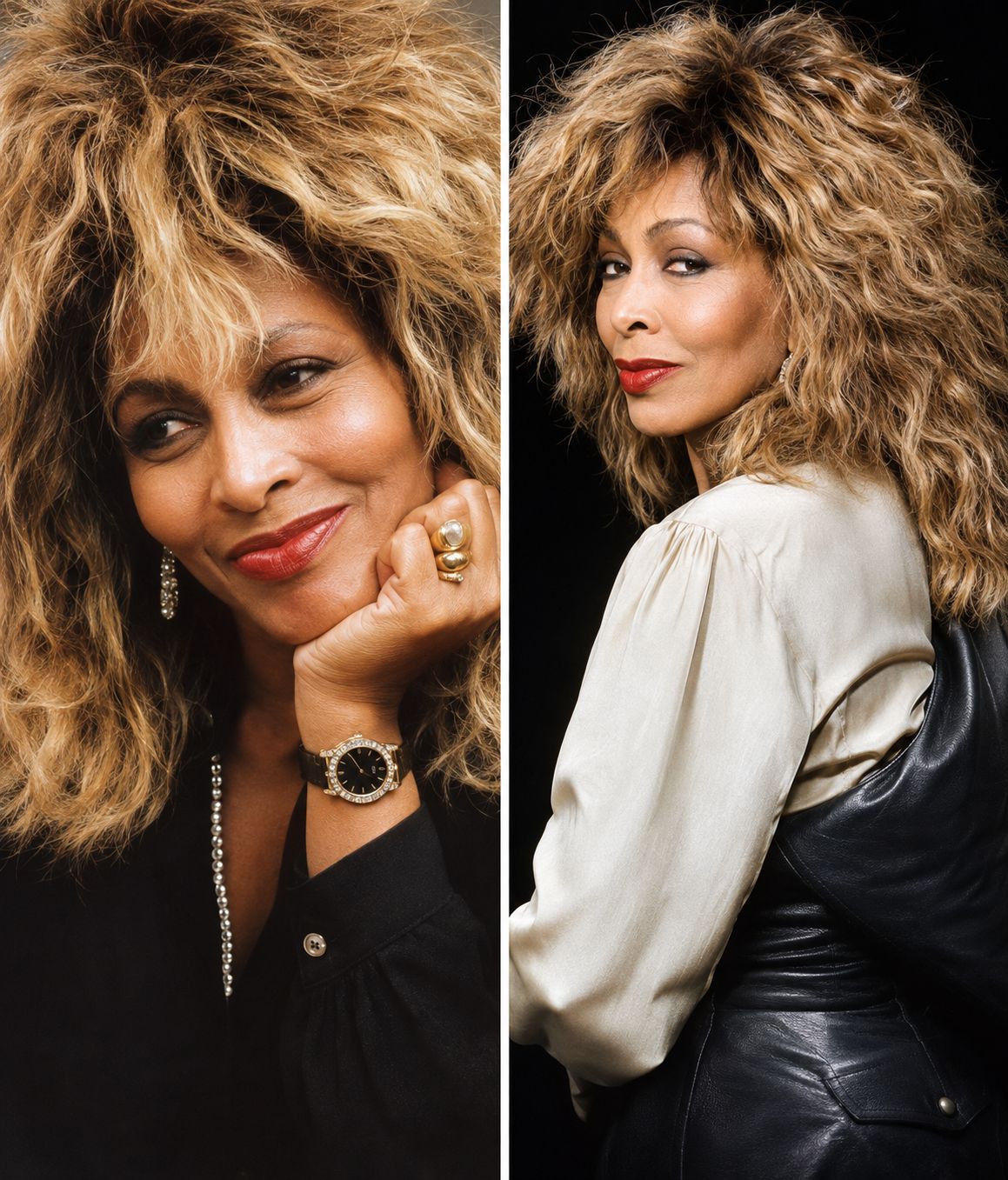
For more than half a century, “Proud Mary” has been so closely associated with Tina Turner that many casual listeners forget the song did not begin with her.
The original was written by John Fogerty and recorded by Creedence Clearwater Revival, becoming a major hit in 1969. It was already a successful rock song before Tina ever touched it, which makes what happened next even more remarkable. Instead of simply covering the record, Ike and Tina Turner completely rebuilt it, turning a relaxed roots-rock song into one of the most explosive live performances in popular music history.
The transformation began with contrast.
The Ike & Tina Turner arrangement opened slowly, almost seductively, with Tina warning the audience that they were going to begin the song “nice and easy” before eventually doing it “rough.” The performance then shifted dramatically into a faster, harder-driving mixture of rock, soul, funk and gospel energy, supported by horns, rhythm and the relentless movement of the Ikettes.
That sudden change became the entire identity of the performance.
Tina understood how to build anticipation before releasing everything at once. Audiences knew the explosive section was coming, yet the transition still felt thrilling every time she performed it. Contemporary accounts from her concerts described crowds already standing because they knew what was about to happen once the slow introduction ended.
The record was released as a single in 1971 and quickly proved that the radical rearrangement had worked.
Ike and Tina Turner’s “Proud Mary” reached No. 4 on the Billboard Hot 100 and No. 5 on the R&B chart, becoming their biggest American pop hit. The following year, the recording won the Grammy Award for Best R&B Vocal Performance by a Group.
What happened afterward is where the story becomes even more surprising.
Although the recording had originally belonged to the Ike & Tina Turner Revue, Tina never abandoned it after leaving Ike.
When she rebuilt her career as a solo artist, “Proud Mary” remained part of her concerts. She performed it throughout the following decades, re-recorded it in 1993 for the soundtrack to What’s Love Got to Do with It, and continued performing it during her final tours.
Gradually, the song’s public identity shifted.
John Fogerty had written it.
Creedence Clearwater Revival had made it a hit.
But Tina Turner had transformed it so completely that generations of listeners began thinking of “Proud Mary” as a Tina Turner song.
The extent of that transformation was captured in an extraordinary story involving Bob Dylan and John Fogerty.
For years, Fogerty avoided performing his old Creedence songs because of a bitter publishing dispute. During a performance in 1987, however, the crowd began requesting “Proud Mary.” According to Fogerty, Dylan looked at him and warned that if he refused to play it, people were eventually going to believe the song belonged to Tina Turner.
The joke contained an uncomfortable amount of truth.
Tina had not merely covered Fogerty’s composition.
She had changed the way people heard it.
Her performance added theatrical pacing, gospel intensity, soul phrasing and a physical style that made the song almost impossible to separate from her stage presence. One later description of Tina’s concerts noted that the slow opening created anticipation before the performance erupted into the kind of spectacle that became one of her trademarks.
There is also a deeper irony in the song’s history.
At the time “Proud Mary” became one of Ike and Tina’s greatest successes, Tina’s private life was far less triumphant than the public understood. She later described years of violence and control inside her marriage to Ike. By 1976, she had finally fled the relationship and begun the difficult process of rebuilding her life and career independently.
Yet she kept singing “Proud Mary.”
That choice gave the song a different emotional meaning as the years passed.
A performance that had once represented the power of the Ike & Tina Turner Revue slowly became something Tina carried forward on her own. The song survived the marriage, survived the breakup of the act and eventually became a symbol of Tina Turner rather than the partnership that had first recorded it.
That may be the real untold story behind “Proud Mary.”
The surprise is not that Tina Turner secretly wrote the song, because she did not.
The surprise is that an artist can sometimes take another person’s composition and transform it so completely that the performance itself becomes part of musical history.
John Fogerty created “Proud Mary,” but Tina Turner gave it another life. More than fifty years later, the slow opening, the sudden explosion and Tina’s unforgettable stage presence remain so powerful that the song still feels almost impossible to imagine without her.