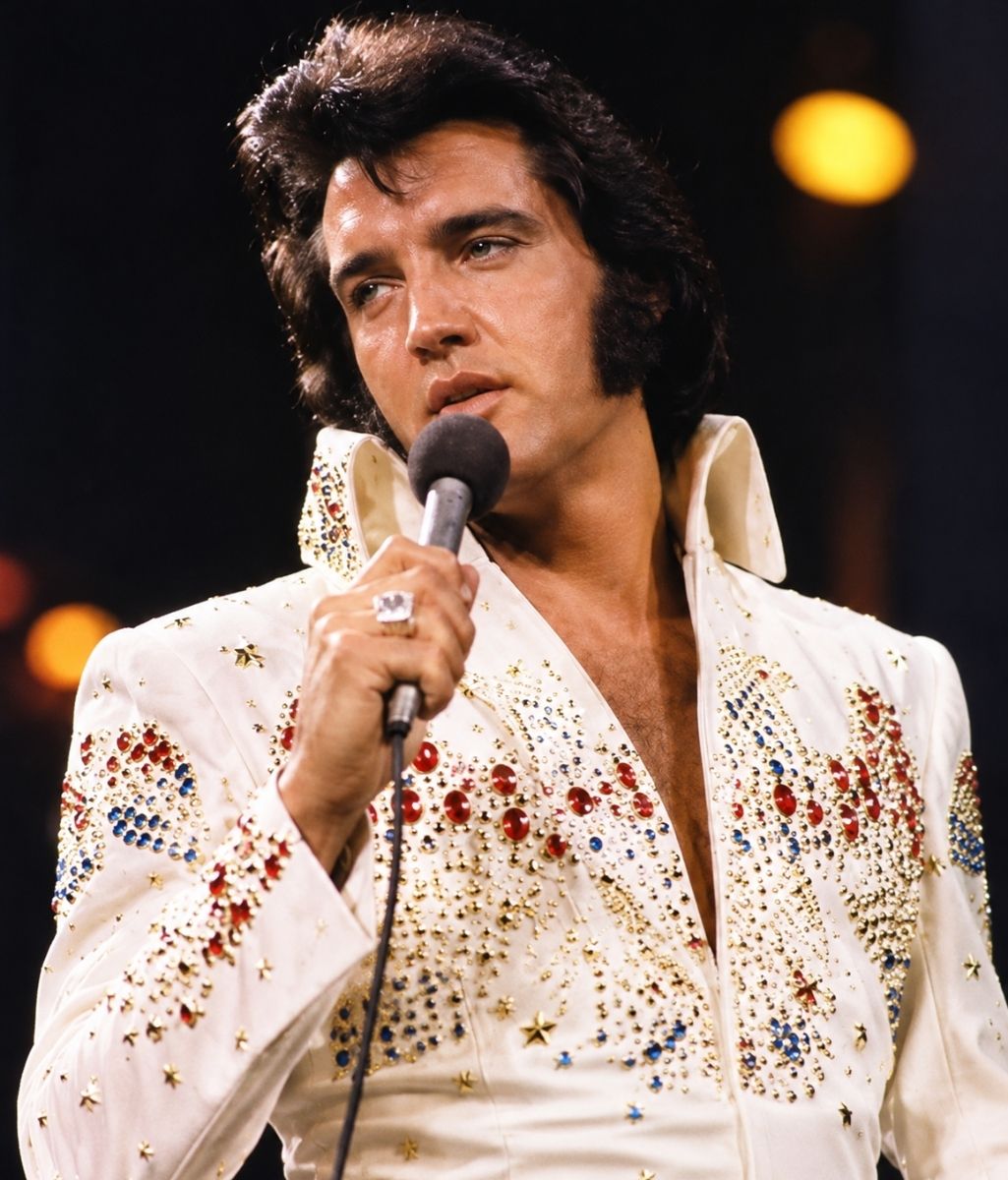
By 1972, Elvis Presley had already spent years proving that he could turn almost any song into something unmistakably his own.
He had survived changing musical trends, a long Hollywood period, and the uncertainty that followed before his celebrated return to live performance at the end of the 1960s. By the early 1970s, Elvis was once again filling showrooms and arenas, but his recording sessions were increasingly shaped by mood, exhaustion, and the complicated pressures of a life that had become almost impossible to separate from fame.
That was the atmosphere surrounding “Burning Love.”
Written by Dennis Linde, the song arrived with a hard-driving rhythm and an energy that sounded much closer to the explosive rock-and-roll Elvis of earlier years than to the more reflective material he had been recording at the time. Yet according to people who were there, Elvis was not immediately enthusiastic.
Jerry Schilling later explained that Elvis did not actually hate the song, despite the dramatic version of the story that has circulated for years. The problem was simpler and more revealing: Elvis was not in the mood for an upbeat rock song and did not seem especially interested in recording it.
That hesitation mattered because the people around him believed the song had enormous potential.
They kept encouraging him to give it a chance.
Eventually, Elvis agreed to record it.
Once he did, the song became something entirely different from the demo he had first heard.
Elvis brought a forceful vocal performance that gave “Burning Love” an urgency and physical energy perfectly suited to his stage persona. The arrangement pushed forward relentlessly, and the famous refrain gave audiences something immediate to remember. It sounded fresh enough for 1972, but it also carried the confidence and swagger that had defined Elvis at his best.
The public responded almost immediately.
Released as a single in 1972, “Burning Love” climbed to No. 2 on the Billboard Hot 100, becoming one of Elvis Presley’s biggest hits of the decade and his highest-charting single in the United States since “Suspicious Minds” had reached No. 1 in 1969.
The irony was difficult to miss.
A song Elvis had not been particularly eager to record became one of the strongest commercial successes of his later career.
That success also gave the record a special place in Elvis history.
By the early 1970s, the music business had changed dramatically from the world Elvis had first conquered in the 1950s. Younger rock acts dominated the charts, and Elvis was no longer automatically treated as the center of contemporary popular music.
“Burning Love” proved that he could still compete.
It also became an important part of his live shows.
Audiences responded to its speed and excitement, and the song gave Elvis another opportunity to reconnect with the harder-edged rock sound that had made him famous. Onstage, it sounded less like a reluctant recording choice and more like something that had always belonged to him.
That transformation is what makes the story so fascinating.
Elvis Presley had recorded hundreds of songs by that point, and not every one of them arrived at exactly the right emotional moment. Sometimes the performer and the material had to find each other slowly.
“Burning Love” was one of those songs.
Elvis may not have been eager to record it when it first appeared in front of him, but once he committed to the performance, he gave the song the intensity it needed.
More than fifty years later, it remains one of the defining recordings of his final decade.
Elvis Presley did not need to love a song immediately in order to make it unforgettable. “Burning Love” proved that sometimes the song an artist nearly leaves behind can become the one audiences refuse to forget.