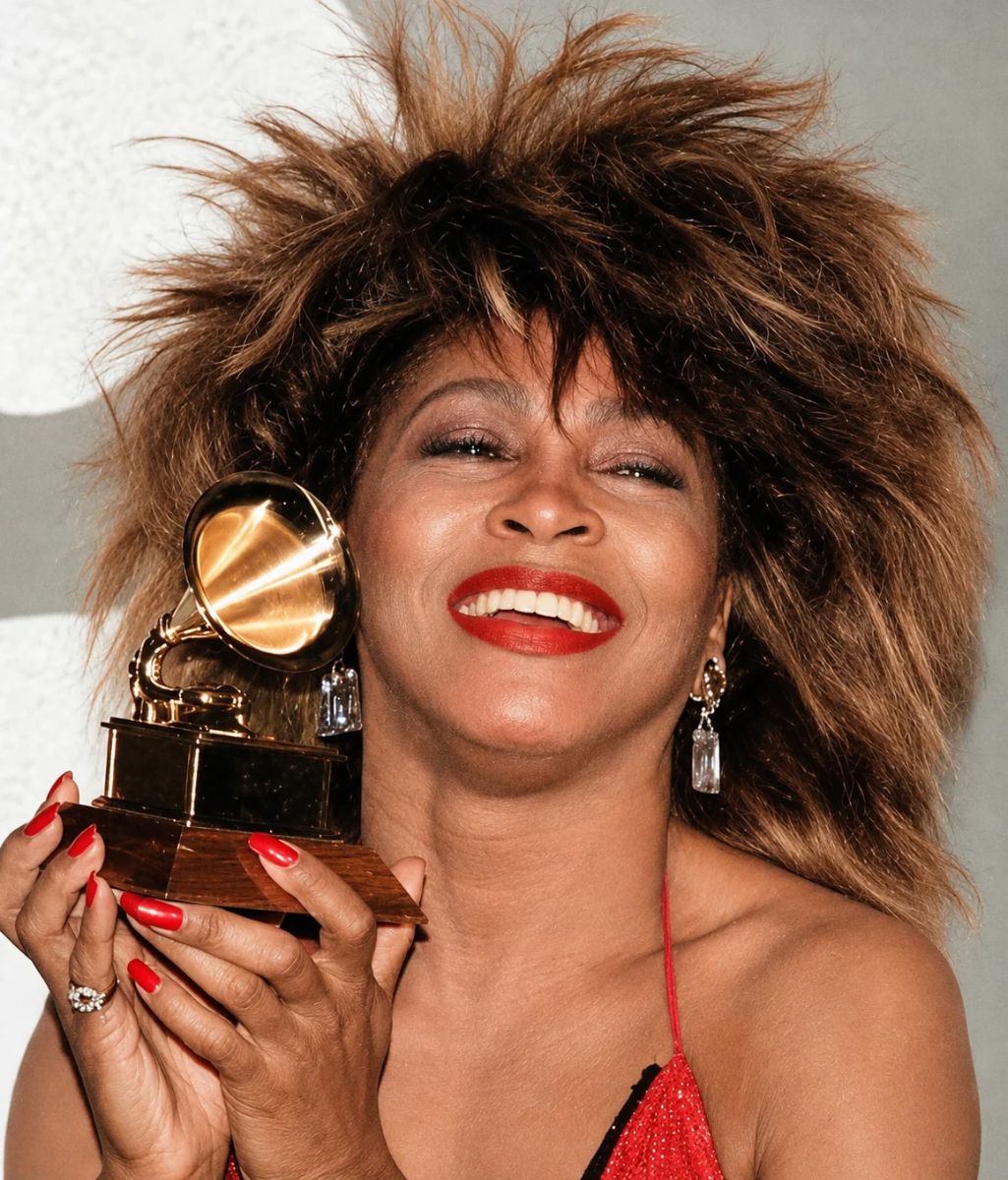
When Tina Turner released “The Best” in 1989, few listeners could have known how deeply the song would become woven into their memories. With its soaring chorus, unmistakable guitar and Tina’s powerful voice, it sounded larger than an ordinary love song. It felt like a declaration meant to be sung at full volume, whether in a crowded arena, inside a car with the windows down or alone in a kitchen where an old radio happened to bring back a familiar voice.
The song itself had existed before Tina recorded it. Written by Mike Chapman and Holly Knight, “The Best” was first recorded by Bonnie Tyler in 1988. Tina’s version arrived the following year on her album Foreign Affair, and it transformed the song into something far bigger. Her interpretation brought a mixture of strength, joy and emotional certainty that made the lyrics feel intensely personal, even for listeners who had heard them many times before.
That emotional power came partly from Tina herself.
By 1989, audiences already knew that her life had included struggle as well as extraordinary success. She had rebuilt her career after leaving a deeply troubled marriage, and by the mid-1980s she had become one of the most successful performers in the world. When Tina sang about someone being “simply the best,” the words carried a confidence that felt earned rather than manufactured.
Over time, however, the song grew beyond Tina’s own story.
People began using it to celebrate marriages, friendships, sporting victories and moments of farewell. It became the kind of song that could mean something slightly different depending on who was listening. For one person, it might bring back the memory of a partner. For another, it might recall a parent, a road trip, a wedding or a person who is no longer here.
That is why hearing “The Best” today can feel almost like opening an old photo album.
The first notes arrive, and suddenly the years between then and now seem much shorter.
You remember where you were.
You remember who was beside you.
You remember the people who once filled an ordinary day and later became part of the memories you carry everywhere.
Tina’s voice had the rare ability to make a song feel both enormous and deeply personal. She could command a stadium, yet somehow make the person listening at home feel as though the message belonged directly to them. That combination is one reason “The Best” has remained so powerful long after its original release.
The song also became inseparable from Tina’s stage presence. Her performances were filled with movement, confidence and a sense of freedom that made the chorus feel even bigger in concert. Watching her sing it today is more than seeing an old performance; it is seeing an artist who had fought for the life she wanted and then stood before thousands of people with nothing left to prove.
Nearly four decades later, “The Best” still does what the greatest songs often do.
It refuses to stay in the year it was released.
Instead, it travels with us.
As listeners grow older, the meaning changes because our lives change. The people we once danced with may no longer be beside us. The homes we remember may belong to someone else. The voices that once filled a room may now exist only in memory.
Yet the song remains.
And when Tina Turner’s voice rises into that familiar chorus, those people and moments seem to return for a few precious minutes.
That may be why “The Best” still touches so many hearts today. It is no longer just one of Tina Turner’s greatest songs. For millions of listeners, it has become a place where love, memory and the people we never truly forget can still meet again.