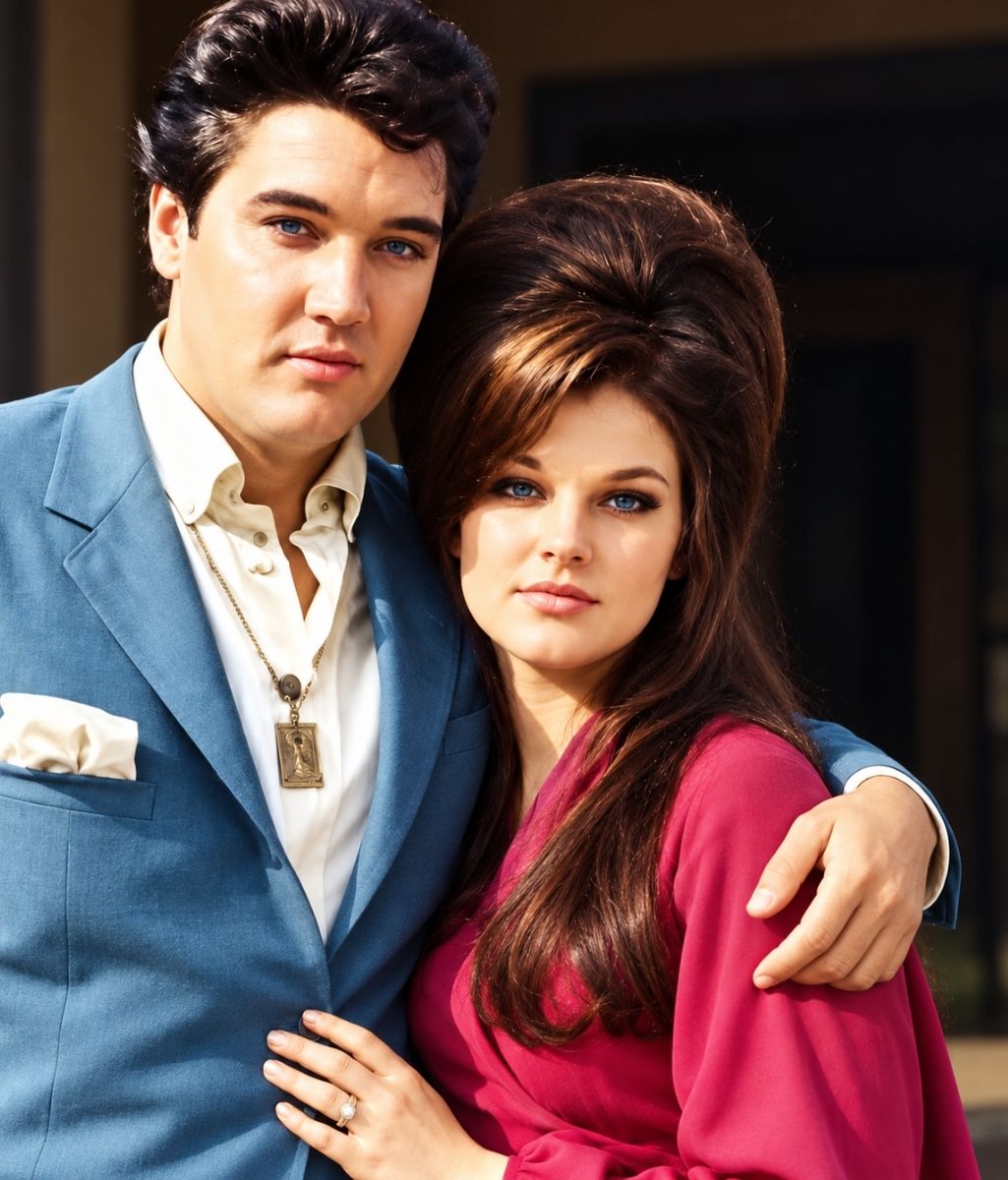
 When Elvis Presley and Priscilla Presley ended their marriage in 1973, the public could easily have assumed that one of the most famous relationships in American entertainment had simply come to an end. The marriage was over, the legal papers were signed, and both of them were free to move forward with their lives. Yet what followed was far more complicated than a clean break. Despite everything that had happened between them, Elvis and Priscilla remained connected in a way that divorce did not completely erase.
Their story had begun many years earlier, long before Priscilla became one of the most recognizable women connected to Elvis Presley. They met while Elvis was stationed in Germany during his military service, and their relationship eventually led Priscilla to move to the United States. They married in 1967, and the following year they welcomed their daughter, Lisa Marie Presley. For a time, they appeared to have built a life together inside the extraordinary world surrounding Elvis, but fame, long absences, personal differences, and the pressures of life at Graceland gradually placed enormous strain on the marriage.
By the early 1970s, Priscilla had begun to feel that she needed to build an identity outside the world that revolved around Elvis. Their separation became formal in 1972, and on October 9, 1973, their divorce was finalized. Yet one important detail about that day has remained especially striking: their divorce did not turn into a public war. Graceland’s own historical account notes that Elvis and Priscilla continued to be close friends after the divorce, and the two shared custody of Lisa Marie without a rigid visitation schedule.
That detail changes the way their relationship can be understood.
Elvis and Priscilla had ended their marriage, but they had not erased their history. They had shared years that neither could simply remove from memory, and most importantly, they shared a daughter they both loved deeply. Lisa Marie became the permanent bridge between them, ensuring that their lives would continue to intersect even after their romantic relationship had ended.
Priscilla later made it clear that keeping Elvis involved in Lisa Marie’s life mattered greatly to her. She did not attempt to cut him off from their daughter or turn the divorce into a battle over access. Instead, they developed a form of co-parenting that allowed Elvis to continue spending time with Lisa Marie regularly. That arrangement may have been imperfect, but it revealed something important: Priscilla understood that Elvis was not simply her former husband; he was Lisa Marie’s father, and that bond deserved to remain intact.
There was also another reason their connection endured.
Priscilla had known Elvis before many of the most difficult years of his career. She had witnessed the man behind the stage image, the person who existed when the crowds disappeared and the famous name no longer filled the room. She had lived inside Graceland, watched the rhythms of his life, understood the people around him, and seen both the confidence and vulnerability that the public could not always see.
For Elvis, that kind of familiarity was difficult to replace.
There were countless people around him, but very few had shared the same years or understood the same private world. Priscilla knew the routines, the pressures, the habits, and the strange reality of living beside one of the most famous men on Earth. Even after the marriage ended, that shared history remained something unique between them.
It is tempting to reduce their story to a simple idea that Elvis “could never let Priscilla go,” but the reality appears more complicated and more human than that. Their connection after divorce was not the same as their marriage. They both moved forward in different ways, and Elvis had other relationships. Yet the emotional familiarity between them did not simply disappear because a judge declared the marriage over.
They could speak to each other without having to explain the past.
They already knew it.
That may be one of the most important reasons their bond lasted.
Divorce can end a legal relationship, but it cannot automatically erase years of memories, shared responsibilities, private jokes, disappointments, hopes, and the experience of raising a child together. In Elvis and Priscilla’s case, the relationship changed form rather than vanishing completely.
Even their appearance at the courthouse on the day of their divorce has become symbolic in the way fans remember them. Rather than emerging as bitter enemies, they were seen together in a manner that suggested mutual affection still existed between them. The marriage was ending, but the respect and familiarity between two people who had once built a life together had not entirely disappeared.
Priscilla’s later reflections on Elvis reinforce that impression. Decades after his death, she continued to speak about him not simply as a global icon, but as someone she had known in a deeply personal way. She remembered his humor, his vulnerabilities, his habits, and the complicated human being behind the mythology. She also continued to protect his place in Lisa Marie’s life and in the broader Presley family story.
When Elvis died in 1977 at the age of 42, Priscilla’s grief was not the grief of a distant former spouse. In later reflections, she described the pain of losing someone she had believed would always somehow remain part of her life. Even though the marriage had ended years earlier, Elvis had never truly become a stranger to her.
That may be the clearest answer to the question fans still ask today: what was it about Priscilla that Elvis could never completely leave behind?
Perhaps it was not one single quality.
Perhaps it was the combination of everything they had shared.
Priscilla had known him before the final, more troubled years of his life. She had built a home with him, raised a daughter with him, lived inside the extraordinary world surrounding Graceland, and understood a side of Elvis that millions of fans could only imagine. She was part of his personal history in a way few people could ever be.
And then there was Lisa Marie.
Through their daughter, Elvis and Priscilla would always remain connected. No matter how much their own relationship changed, they were still two people united by the most important family bond they shared.
That is why their story remains so compelling decades later. It was not a perfect romance, and it did not have a perfect ending. Their marriage contained happiness, tension, disappointment, growth, and eventual separation. But after all of that, they still found a way to remain part of each other’s lives.
There is something deeply human in that.
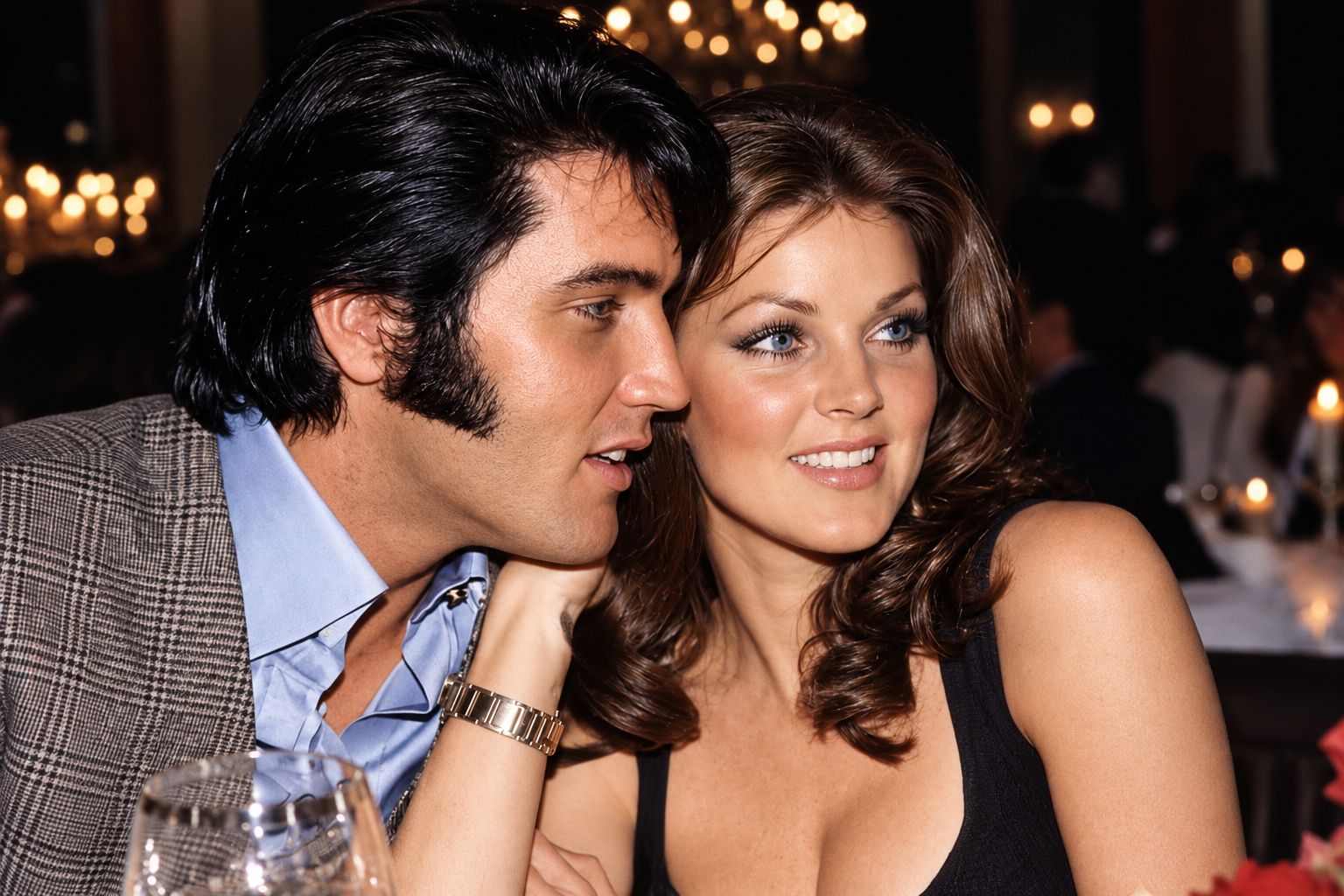
Some relationships end with anger and silence. Others change into something quieter, something harder to define. Elvis and Priscilla seem to have belonged to the second kind.
They could stop being husband and wife, but they could not stop being part of the same story.
And perhaps that is what Elvis could never completely let go of: not simply Priscilla herself, but the history, the understanding, the family, and the life they had once shared together.