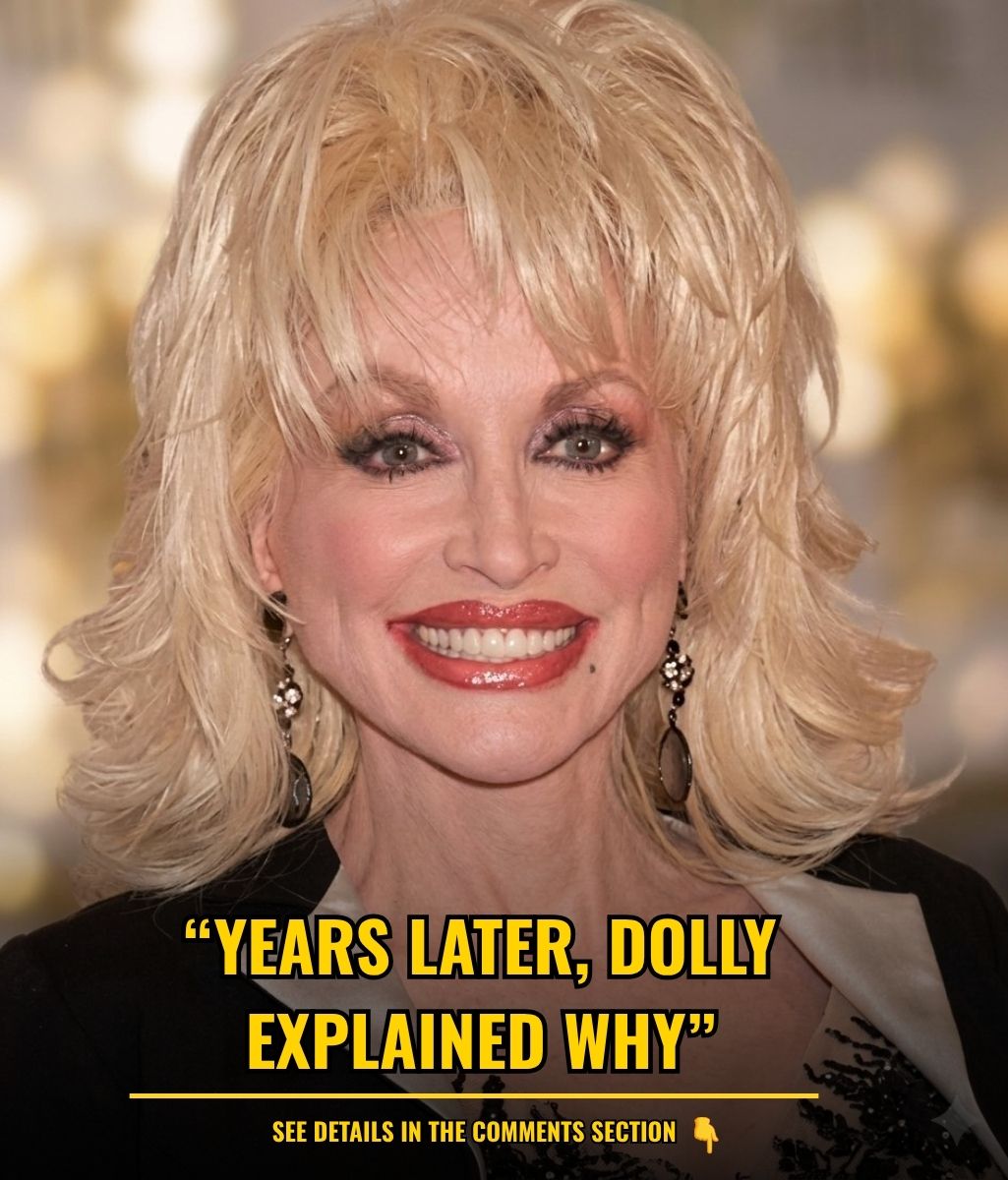
By the early 1980s, Dolly Parton had already proven that she belonged far beyond the country music stage. Her performance in 9 to 5 had turned her into a genuine movie star, while the title song became one of the biggest hits of her career. Hollywood suddenly saw enormous possibilities in the Tennessee singer with the unmistakable voice, quick humor, and larger-than-life personality. Then came an offer that would have been difficult for almost anyone to refuse: $7 million for a single movie role.
Dolly said the offer was connected to Supergirl, the 1984 superhero film starring Helen Slater. Producers reportedly wanted Dolly to play Selena, the glamorous and dangerous villain who becomes Supergirl’s central enemy. The role ultimately went to Faye Dunaway, but years later Dolly revealed that filmmakers had approached her first — and were prepared to pay an extraordinary amount of money to get her.
Seven million dollars was an enormous Hollywood salary at the time. Adjusted for inflation, it would represent many times that amount today. For someone who had grown up in poverty in the mountains of East Tennessee, the number alone could have represented the kind of financial security her younger self could hardly have imagined.
But Dolly said no.
And the reason had very little to do with money.
During a 1992 interview, Dolly recalled being approached about the film and explained that she simply did not like the character she was being asked to play. Selena was not a warm, eccentric woman or a complicated heroine. She was the movie’s supernatural villain — a powerful, manipulative figure closely associated with dark magic.
Dolly said she felt almost insulted that someone thought of her for what she described as an evil witch-type role.
That reaction reveals something important about Dolly’s approach to Hollywood.
She was never opposed to playing colorful characters. In fact, some of her best-known film roles were built around women who were bold, sexy, funny, stubborn, and impossible to ignore. In 9 to 5, she played Doralee Rhodes, a secretary unfairly judged because of her appearance. In The Best Little Whorehouse in Texas, she played Mona Stangley, the warmhearted madam of a Texas brothel. Neither character was conventional, but both contained qualities Dolly could connect with emotionally.
Selena was different.
Dolly apparently could not find enough of herself inside the role to justify doing it.
Hollywood had offered her the kind of paycheck that usually makes people reconsider their principles, yet Dolly’s decision showed that she already understood something many performers learn only after years in the industry: a large paycheck can buy your participation, but it cannot guarantee that you will be proud of what you participated in.
That mattered particularly to Dolly because her public identity was never entirely manufactured by managers or studio executives. The rhinestones, wigs, humor, exaggerated glamour, and Tennessee accent were all extensions of choices she had made herself. She often laughed at her own image, but she was also fiercely protective of the person underneath it.
Hollywood could use Dolly Parton.
But Hollywood could not easily tell Dolly Parton who Dolly Parton was supposed to be.
That independence had already shaped her music career. Years earlier, she had made the difficult decision to leave Porter Wagoner’s television show in order to pursue her own creative path. She later refused Elvis Presley’s request to record “I Will Always Love You” when his management demanded half of the publishing rights, a decision that could have cost her enormous exposure at the time but ultimately allowed her to retain ownership of one of her most valuable songs.
The Supergirl offer fits naturally into that same pattern.
Dolly was willing to walk away.
Not because she believed money was unimportant — she had always been a sharp businesswoman — but because she understood that some opportunities came with a price that could not be measured only in dollars.
There is another fascinating element to the story. By the time Supergirl reached theaters in 1984, Dolly did not exactly need Hollywood to rescue her career. She had already enjoyed major movie success, recorded enormous crossover hits, and established herself as one of entertainment’s most recognizable personalities. She could afford to be selective.
Still, $7 million was not the kind of offer most actors casually rejected.
That is what makes the story so memorable.
Dolly had grown up in a family where money was scarce. She frequently told stories about childhood poverty, hand-me-down clothes, crowded living conditions, and the sacrifices her parents made to support 12 children. She knew precisely what money could change.
Yet success had taught her something else.
There was a difference between earning money and allowing money to make your decisions.
Throughout her career, Dolly repeatedly demonstrated a willingness to take enormous commercial risks when she believed her instincts were right. She crossed from traditional country into pop when critics warned her not to. She entered movies despite having little acting experience. She invested heavily in Dollywood because she wanted to bring jobs and tourism back to the region where she grew up. She maintained ownership and control over much of her songwriting because she understood the long-term value of intellectual property.
Those choices did not come from someone afraid of money.
They came from someone who wanted to control what the money represented.
Looking back, the story of the rejected Supergirl role is therefore about far more than an actress turning down a movie.
It is about Dolly’s unusually strong sense of identity.
Millions of dollars could tempt her.
Fame could expand her opportunities.
Hollywood could offer another enormous stage.
But if Dolly looked at a role and thought, “That isn’t me,” she was capable of walking away.
And history suggests the decision hardly slowed her down.
She continued making movies, recording hit songs, building businesses, writing music, and expanding her cultural influence for decades afterward. The role Dolly rejected became only a small footnote in her career, while the independence behind that decision became one of the defining qualities of her life.
Dolly Parton had once grown up with almost nothing, yet when Hollywood placed $7 million in front of her, money alone was no longer enough. She wanted to recognize herself in the choices she made — and when she couldn’t, she simply walked away.
For Dolly, the real question was never how much the role was worth. It was whether the role was worth being Dolly Parton for.