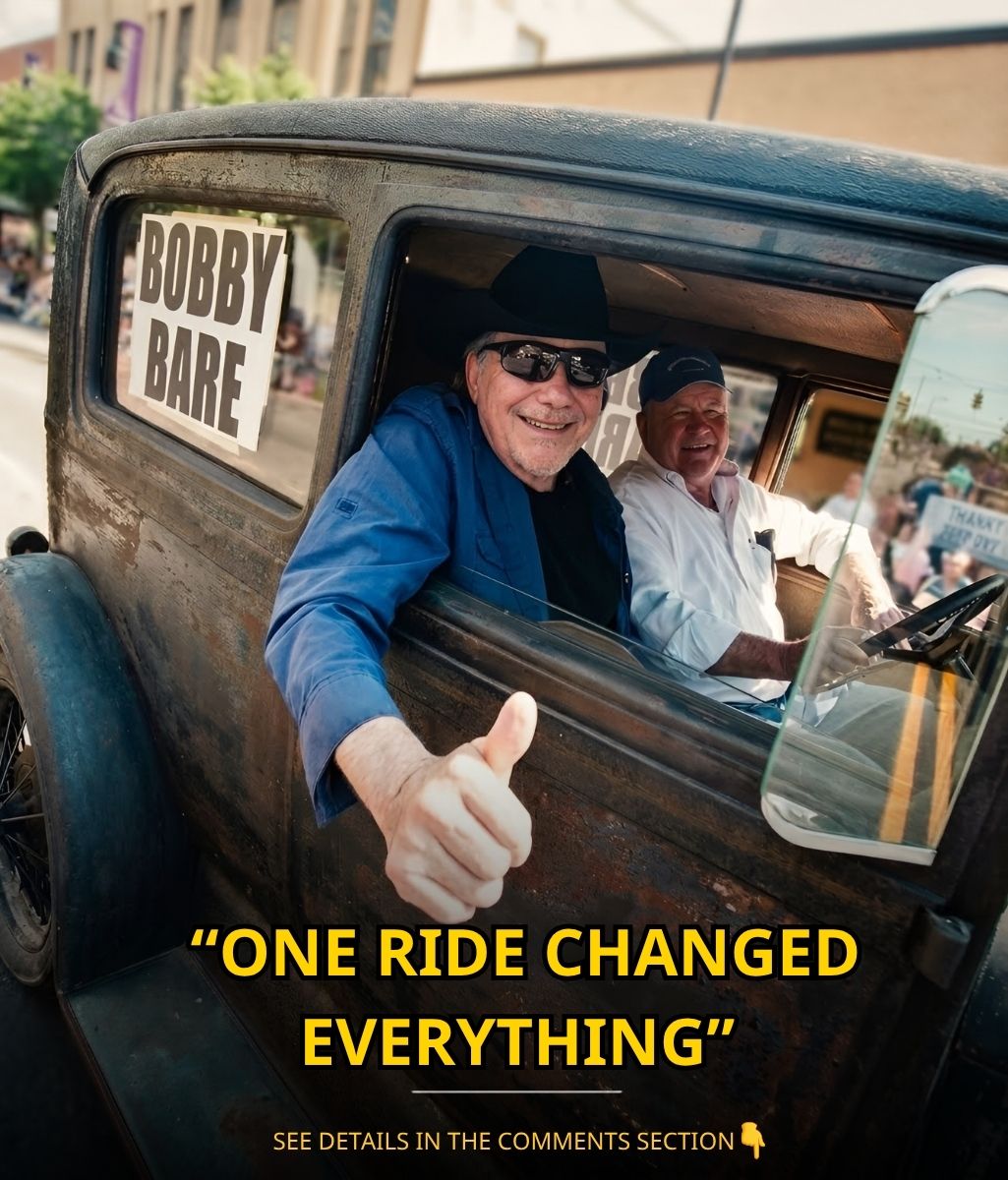
Long before Bobby Bare became the voice behind “Detroit City,” “500 Miles Away from Home,” and “Marie Laveau,” he was a young musician from Ohio trying to figure out how far a few songs and a great deal of determination could carry him. In 1953, Bare decided he had gone about as far as he could in Ohio and needed to head west. What happened next sounds almost too perfectly written for a country song: he accepted a ride to California from a man he barely knew, and that unlikely journey helped put him in front of people who could change his future.
One detail makes the story even better—and slightly different from the version often repeated. It was the driver who was short of money, not simply Bare stranded without gas. According to Bare’s official biography, the man wanted Bare and his companions to come along because he needed passengers who could help pay for fuel. The driver also made an extraordinary claim: he said he knew celebrated West Coast country musicians Jimmy Bryant and Speedy West.
For a young singer with little money and no guarantee waiting for him in California, trusting that claim required a considerable leap of faith.
The trip itself was hardly glamorous. At points along the way, Bare and his traveling companions reportedly had to play music for tips simply to raise enough money for gasoline. There were no tour buses, record-company expense accounts, or comfortable hotel rooms. They were trying to get across the country using whatever talent and cash they could gather.
It would have been easy for the entire adventure to end in disappointment.
Then they reached California.
To Bare’s surprise, the stranger had been telling the truth.
The driver really did know Jimmy Bryant and Speedy West, two respected musicians associated with the thriving West Coast country scene. More importantly for Bare, Speedy West heard something in the young singer that made him want to help. Bare later remembered that West liked his singing and began taking him around, introducing him to people within the music business.
Those introductions mattered.
Bare began writing songs for West’s publishing company and met influential country figure Cliffie Stone. He also appeared on Stone’s radio program. Eventually, according to Bare’s own account, Speedy West helped him secure a recording contract with Capitol Records.
The Capitol period did not instantly make Bobby Bare a star. His early records failed to produce the breakthrough he wanted, and he would endure several more frustrating turns before finally establishing himself. But that does not diminish the importance of the journey west. It gave him entry into a professional music world that had previously existed mostly as a dream.
Bare’s path afterward remained anything but simple. He recorded for several labels, entered the Army, and famously watched his own recording of “The All American Boy” become a major hit while another man’s name appeared on the record. After military service, he continued struggling until friends including Harlan Howard and Hank Cochran helped bring him to the attention of RCA’s Chet Atkins. Atkins signed Bare in the early 1960s, and records such as “Shame on Me” and the Grammy-winning “Detroit City” finally established him as a major country artist.
Years later, Bare would become known for helping other musicians in much the same way people had once helped him. He championed songwriters and artists, supported Waylon Jennings, and eventually became one of Nashville’s most respected advocates for creative freedom. The Country Music Hall of Fame credits Bare with helping open the way for artists seeking greater control over their own recordings.
Perhaps that makes the old California story even more meaningful.
A stranger needed help buying gas. A young Bobby Bare needed a way west. Neither could have known what was waiting at the end of the road.
Had Bare rejected the ride, perhaps he eventually would have found another route into the music business. No one can know. But the journey he actually took brought him directly into the orbit of Speedy West, and that connection helped produce his first important opportunities in professional music.
Decades later, after Grammys, hit records, legendary friendships, and a 2013 induction into the Country Music Hall of Fame, it is remarkable to trace part of Bobby Bare’s story back to something so ordinary.
A car. A stranger. Almost no gas money. And a decision to keep heading west.
Sometimes a career changes inside a recording studio.
For Bobby Bare, one of its most important early turns began on the side of the road.