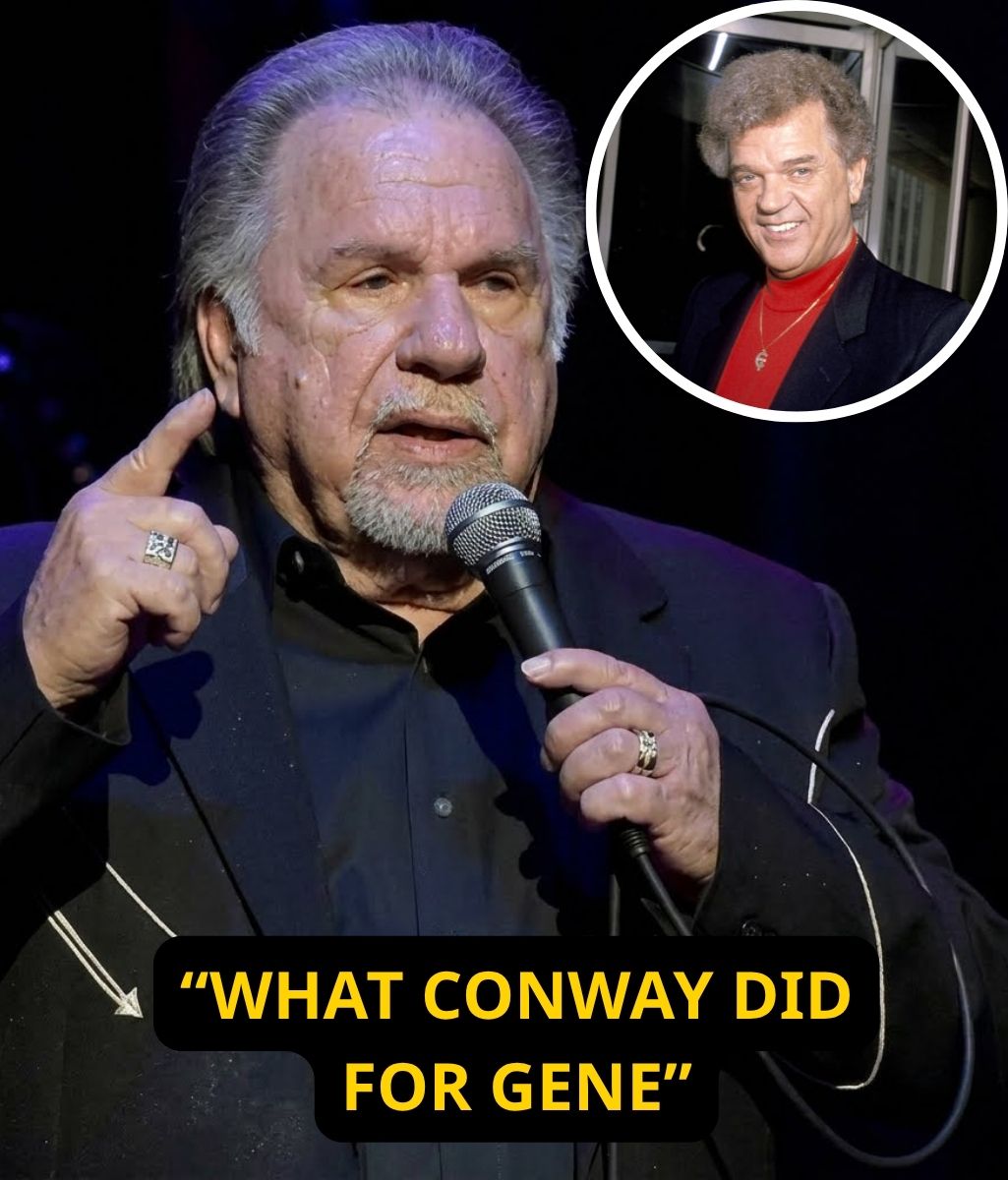
BEFORE GENE WATSON HAD HIS OWN BAND, CONWAY TWITTY GAVE HIM SOMETHING FEW UNKNOWN OPENING ACTS EVER RECEIVED
Long before Gene Watson became one of traditional country music’s most respected singers, he was still trying to convince audiences—and the Nashville establishment—that his voice belonged on the biggest stages. He did not yet have the touring operation that would later surround him. In those early years, Watson has recalled that he was driving his own car to shows and did not even have a band of his own while opening dates for stars including Conway Twitty and Loretta Lynn.
That made what happened on those tours especially meaningful.
Instead of forcing the young opening act to struggle alone or assemble musicians at every stop, Watson was able to perform with the support of the established stars’ professional backing musicians. Biographical accounts of Watson’s early touring years specifically note that he traveled with Conway and Loretta and was backed onstage by their bands.
For Gene Watson, that was much more than a practical convenience.
A major star’s road band was an important part of the show. Those musicians knew how to work under pressure, follow a singer closely, and deliver the level of professionalism audiences expected from a national touring act. Conway’s backing group—known as the Twitty Birds—was an essential part of his touring sound. Musicians associated with the group included respected players such as steel guitarist John Hughey, whose work with Twitty later became celebrated throughout country music.
Allowing an opening performer without his own touring band to step onto the same stage with musicians of that caliber was therefore no small gesture.
At the time, Watson was still building his national reputation. His breakthrough with “Love in the Hot Afternoon” would arrive in the mid-1970s and help establish the rich, powerful voice that later became his trademark. Before that success, however, he was still learning from the artists around him and watching how established professionals handled a major country show.
Conway Twitty offered an extraordinary example.
By then, Twitty had already survived one major reinvention, leaving behind his earlier rock-and-roll identity and establishing himself as a leading country performer. He understood what it meant to stand on a stage while still trying to prove yourself. Perhaps that helps explain why his support of younger performers mattered so much.
For Watson, opening those shows offered something money could not easily buy: a front-row education in how one of country music’s biggest stars worked.
He could watch how Conway structured a performance, how he communicated with musicians, how he controlled pacing, and how he connected with an audience. Watson later spoke about working alongside major artists such as Conway Twitty, Loretta Lynn and Merle Haggard and studying the techniques that made them successful performers.
But there was another lesson hidden in Conway’s generosity.
He was showing a young singer that being the star of the show did not require treating everyone else as insignificant.
There was an obvious hierarchy on the bill. Conway Twitty was the established headliner. Gene Watson was the performer still trying to make his name. Yet when the music started, Conway’s professional resources could also help the newcomer standing earlier on the program.
Years later, Watson would no longer need anyone else’s band. He built a remarkable career of his own, recording enduring country songs such as “Farewell Party,” “Fourteen Carat Mind,” “Paper Rosie,” and “Love in the Hot Afternoon.” He eventually developed his own longtime touring group, appropriately called the Farewell Party Band.
That makes the early Conway story even more powerful in hindsight.
The young singer arriving in his own car without a personal band would eventually become the veteran performer other country singers admired. But before all of that happened, Conway Twitty gave Gene Watson something enormously valuable: a professional stage, experienced musicians behind him, and a chance to sound like he belonged there before the rest of the country fully knew his name.
Country music history tends to remember the No. 1 records and famous performances. Smaller gestures often disappear.
This one deserves to be remembered.
Conway Twitty did not simply give Gene Watson an opening slot. He helped give a rising singer the kind of musical support that allowed an audience to hear what he was capable of—and years later, country music would discover just how important that opportunity had been.