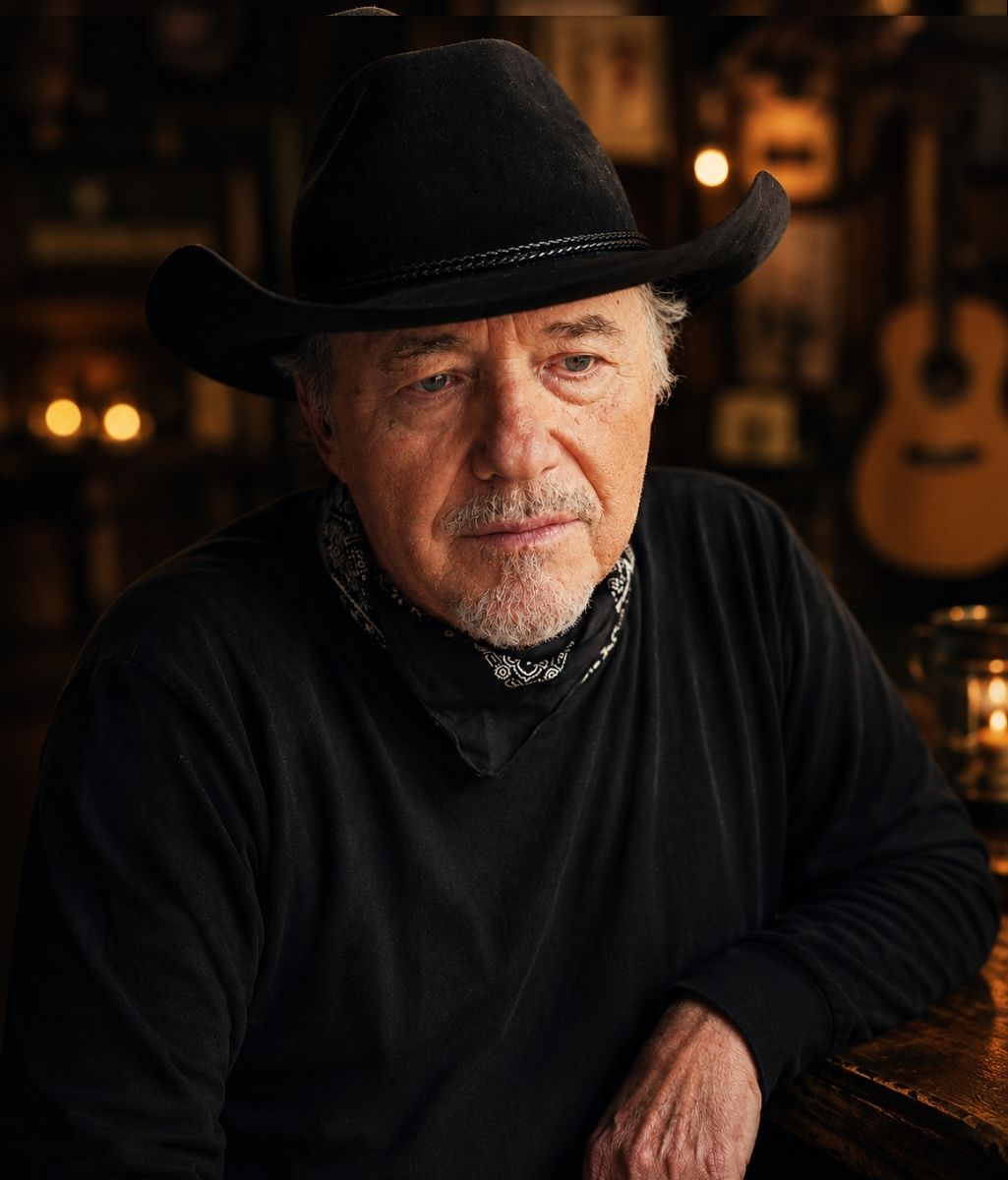
Bobby Bare’s life can look extraordinary from the outside. “Detroit City,” “500 Miles Away from Home,” “Marie Laveau,” a Grammy Award, and eventually induction into the Country Music Hall of Fame gave him the kind of career most singers could only dream about. But behind those achievements was a life that began with profound hardship, and some of Bare’s earliest memories help explain why songs about home, loneliness, and people trying to find where they belong sounded so natural in his hands.
Bare was born in 1935 in Ironton, Ohio, into circumstances far removed from the Nashville success waiting decades ahead. His childhood was marked by poverty, but the defining tragedy came when he was only five years old and his mother died. His father suddenly faced the enormous challenge of caring for the children without her, and the family could not simply continue as it had before.
The consequences were painful. The children spent time living apart and with relatives as their father struggled to manage circumstances that had become overwhelming. Bare later remembered those early years without trying to turn them into a sentimental legend. Home, for the young Bobby Bare, had become something uncertain at precisely the age when a child most needed stability.
That background gives an entirely different dimension to the songs that first made him famous. When Bare recorded “Detroit City,” he was singing about a man living far from home, pretending to his family that everything was going well while privately longing to return. The song was not Bobby’s autobiography, but he understood the emotional territory inside it.
Listeners believed him.
“Detroit City” became Bare’s breakthrough and brought him the Grammy Award for Best Country & Western Recording in 1964. Soon afterward, “500 Miles Away from Home” gave him another major success built around distance and longing. It was a remarkable coincidence that a man whose childhood had been disrupted by the loss of home and family stability became famous singing some of country music’s most enduring songs about exactly those emotions.
Yet success did not arrive without another painful lesson about the music business. Before Bare became a country star, he had recorded “The All American Boy.” The recording became a huge pop hit in 1959, climbing to No. 2 on the Billboard Hot 100, but the record was released under Bill Parsons’ name rather than Bobby Bare’s.
Imagine hearing your own voice becoming a national hit while another name appears on the record.
Bare eventually came to view that bizarre episode with surprising perspective, recognizing that escaping permanent identification with a novelty-style hit may have allowed him to build the more serious country career he truly wanted. But at the time, it demonstrated how little control a young performer could have over his own work.
That experience foreshadowed another battle Bare would encounter in Nashville. The country music industry of his early career was highly structured, with producers and labels often controlling what artists recorded and how their records sounded. Bare increasingly wanted greater freedom, eventually negotiating more control over his own recordings.
Rather than allowing frustration to turn him bitter, Bare used that freedom creatively. His remarkable partnership with Shel Silverstein produced some of the most distinctive storytelling of his career, including Bobby Bare Sings Lullabys, Legends and Lies. Their unconventional approach eventually helped produce “Marie Laveau,” Bare’s only solo No. 1 country hit.
Bare’s life also became intertwined with some of country music’s greatest figures. He recognized Waylon Jennings while Waylon was still performing in Phoenix and helped draw Chet Atkins’ attention to him. Bare moved through the same Nashville world as Johnny Cash, Waylon, Willie Nelson, Chet Atkins, and generations of musicians and songwriters.
As the decades passed, however, that generation inevitably began disappearing.
Friends and musical contemporaries died, while the Nashville Bare had known as a young man transformed into an entirely different industry. There is something naturally poignant about surviving long enough to watch the world in which your greatest memories were created gradually become history. Bare became one of the remaining witnesses to an era populated by people who could now exist beside him only through stories, photographs, and recordings.
It is tempting to turn that reality into claims about an intensely lonely old man or secret regrets, but those details should not be invented without Bobby’s own words to support them. What can be said is powerful enough: Bare lived through the loss of his mother as a child, family separation, an unpredictable early career, decades on the road, and the deaths of people who had shared important parts of his musical journey.
Through it all, music became the place where difficult human experiences could be transformed into stories.
That may be why Bare’s finest performances rarely sounded theatrical. He knew what instability felt like before he knew what fame felt like. When he sang about somebody missing home or trying to survive circumstances beyond their control, he did not need to exaggerate the emotion.
The greatest irony of Bobby Bare’s story is that the boy who experienced so little stability eventually built one of country music’s longest careers. He survived changing musical fashions, moved between labels, challenged Nashville conventions, raised a family, and remained married to Jeannie for more than six decades. In 2013, the Country Music Hall of Fame finally placed him among the artists whose contributions helped shape the genre.
At 90, Bobby Bare’s story should not be reduced to tragedy because his life contains far too much achievement, humor, resilience, and music for that. But the success becomes more remarkable when we understand what came before it.
Before the Grammy, before the Hall of Fame, and before millions knew his voice, there was a five-year-old boy who lost his mother and watched the world around him change.
Decades later, when Bobby Bare sang about people who were 500 miles away from home, perhaps listeners believed him for the simplest reason of all: long before he became a country legend, Bobby Bare already understood how deeply it could hurt to lose the place where you thought you belonged.