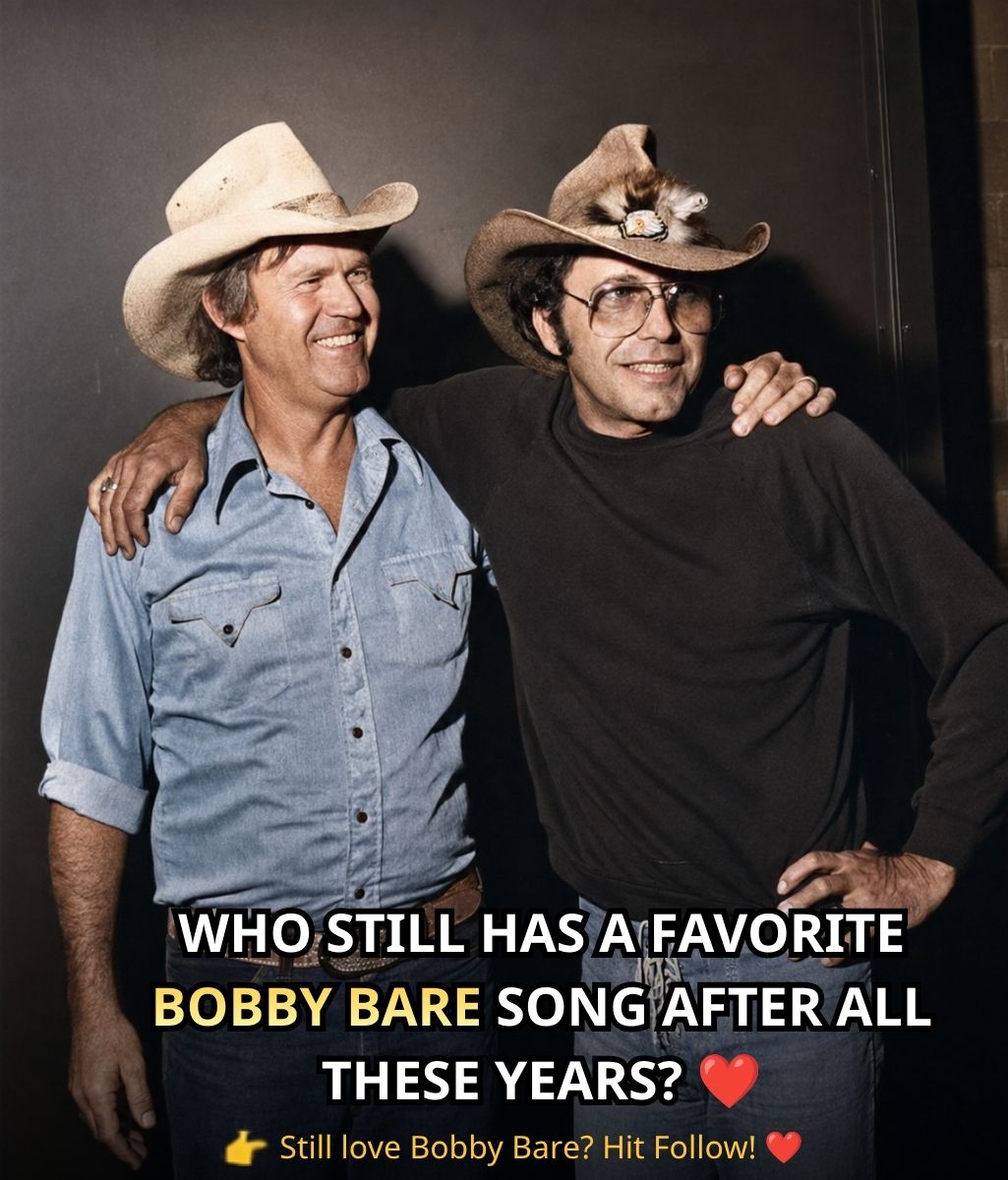
Long before Billy Joe Shaver’s name became permanently connected to Waylon Jennings and one of the defining records of the Outlaw Country era, he was simply another struggling songwriter trying to convince Nashville that his words were worth hearing. He did not arrive looking like the polished songwriters the music business knew how to market. He came carrying a difficult past, very little money, and a collection of songs shaped by a life that had already given him plenty to write about. What Billy Joe Shaver possessed was not polish. It was something harder to manufacture: authenticity. His songs sounded lived-in because, in many ways, they were. Yet talent alone did not guarantee that Nashville would listen. Before Waylon Jennings helped carry those songs into country music history, another established artist had already recognized that there was something unusual about the man writing them: Bobby Bare.
By the time Shaver was trying to establish himself in Nashville, Bobby Bare already understood the strange machinery of the country music business. Bare had built a reputation not only as a distinctive singer but also as an artist willing to listen beyond the obvious choices. He had an ear for songs that felt different, especially material that carried personality rather than simply following whatever formula happened to be working on the radio. That made his connection with Billy Joe Shaver particularly important. Bare heard something in Shaver’s writing that many others had not yet learned how to recognize. The rough edges were not weaknesses that needed to be polished away. They were part of what made the songs believable.
Shaver’s road to Nashville had been anything but conventional. His early life in Texas was marked by hardship, physical labor, setbacks, and experiences far removed from the comfortable offices where publishing decisions were made. He had worked difficult jobs and endured the kind of circumstances that later gave his songwriting its unmistakable character. When he finally committed himself to writing songs, he was not working from an imagined version of hardship. He knew what it meant to struggle. That difference could be heard in his lyrics. His characters did not sound as though they had been invented for a record. They sounded like people he might have known, worked beside, argued with, or encountered somewhere along a Texas highway.
But Nashville was filled with talented people waiting for someone to notice them. A songwriter could possess extraordinary material and still spend years knocking on doors. That is why Bobby Bare’s early recognition mattered. Bare was willing to listen, and more importantly, he was willing to take Shaver seriously as a songwriter. It was an early sign that Shaver’s unusual voice could connect with established country artists even before the rest of Nashville fully understood what to do with him. Before Shaver became a name associated with the Outlaw movement, Bobby Bare was already helping demonstrate that these songs belonged in country music.
Bare would record Shaver material, giving the young songwriter something every unknown writer desperately needed: proof that an established performer believed his songs deserved to be heard. One particularly important example was “Ride Me Down Easy,” a Shaver composition recorded by Bare. To a casual listener today, that might seem like a small detail beside everything that happened afterward. But careers are rarely built from one enormous moment. They are usually built from a chain of smaller moments — a door opening, a respected artist listening, a song getting recorded, or someone inside the business saying, in effect, “This man has something.”
Then came the chapter that would transform Billy Joe Shaver’s reputation forever.
Waylon Jennings encountered Shaver and his songs at a time when Waylon himself was fighting for greater control over his music. Nashville’s established system had often dictated which musicians played on sessions, how records should sound, and which songs artists should record. Waylon increasingly wanted something different — music with more freedom, more personality, and fewer compromises. Shaver’s writing fit that direction almost perfectly. His songs were rugged without trying to appear rugged. They carried humor, regret, stubbornness, faith, loneliness, survival, and the restless spirit of people who refused to fit neatly into someone else’s expectations.
The result was 1973’s Honky Tonk Heroes, the Waylon Jennings album built largely around Billy Joe Shaver compositions. Today, it is difficult to discuss the emergence of Outlaw Country without mentioning that record. Songs such as “Honky Tonk Heroes,” “Old Five and Dimers Like Me,” “You Ask Me To,” and “Ride Me Down Easy” helped establish Shaver as one of the most distinctive songwriters of his generation. Waylon’s voice gave those songs tremendous visibility, but the words came from a man whose life had already supplied him with stories Nashville could never have manufactured in a studio.
And here is where Bobby Bare’s place in the story becomes especially interesting.
When history looks backward, it naturally focuses on the biggest turning point. In Shaver’s career, Waylon Jennings and Honky Tonk Heroes became that enormous moment. It is the chapter everyone remembers because its influence became impossible to ignore. But breakthrough stories can sometimes make us forget the people who recognized the talent before the breakthrough happened. Bobby Bare belongs to that earlier chapter. He was part of the period when Billy Joe Shaver was still proving himself, when the legend had not yet been written and there was no guarantee that Nashville would eventually celebrate his songs.
That makes Bare’s role more meaningful, not less.
It takes very little imagination to appreciate someone after the rest of the world has already declared that person important. Recognizing something special before everyone else sees it is different. Bare had built his own career by trusting strong material, and his willingness to embrace Shaver’s songwriting reflected the instincts of an artist who understood that country music was at its strongest when the words sounded true.
Years later, Billy Joe Shaver would be remembered as one of the great original voices in American songwriting, while Waylon Jennings would become one of the central figures of the Outlaw Country movement. Their creative connection would become legendary. Yet just behind that famous chapter sits an earlier story that deserves to be remembered: Bobby Bare heard something worth believing in before Billy Joe Shaver became the songwriter everyone else wanted to talk about.
Country music history often celebrates the moment a star is born. But sometimes the more fascinating story is who noticed the light before everyone else was looking.