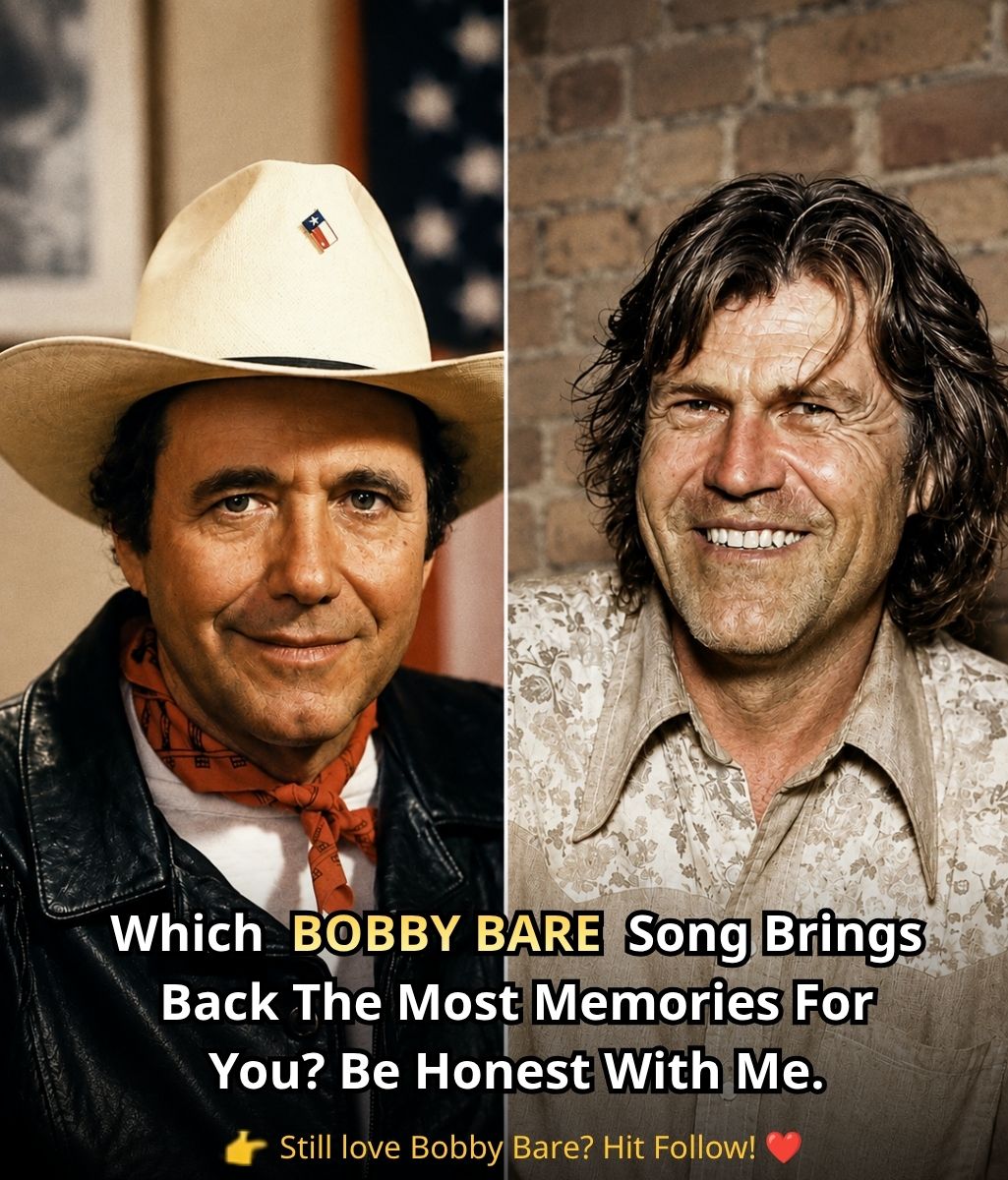
Long before the world knew the phrase Outlaw Country, Bobby Bare was already listening to voices that Nashville wasn’t sure it wanted to hear. By the late 1960s, Bare had established himself with hits like “Detroit City” and “500 Miles Away From Home,” but commercial success never changed the way he judged a song. He wasn’t searching for polished perfection. He wanted honesty. That instinct led to one of the most important decisions of his career—and, in time, one of the quiet turning points in country music history.
In 1968, a struggling Texas songwriter named Billy Joe Shaver arrived in Nashville carrying little more than a notebook full of songs and an unwavering belief that they deserved to be heard. His life had been anything but easy. He had worked in rodeos, served in the Navy, taken physically demanding jobs, and even lost most of two fingers on his right hand in a sawmill accident. Yet despite every setback, he continued writing songs filled with the grit, heartbreak, humor, and resilience of ordinary people. They didn’t sound like the polished Nashville hits dominating country radio. They sounded like real life.
Most people in the industry weren’t sure what to do with him. His writing was rough around the edges, deeply personal, and unlike the formulas that filled the charts. But Bobby Bare heard something different. He heard truth.
When Billy Joe Shaver found his way into Bare’s office, he wasn’t asking for fame. He simply wanted someone willing to listen. Bare did more than that. Recognizing the remarkable talent in front of him, he offered Shaver a songwriting job that paid about $50 a week. It wasn’t a glamorous opportunity, and it certainly wasn’t a guarantee of success. Yet for a songwriter with few prospects, it was the chance to stay in Nashville, continue writing, and prove himself.
Looking back, that modest decision carried consequences no one could have predicted.
The job gave Shaver valuable time to develop his craft while introducing his songs to artists who appreciated authentic storytelling. Before long, other musicians began recognizing the extraordinary power of his writing. His songs eventually reached artists such as Waylon Jennings, who built the landmark 1973 album Honky Tonk Heroes around Shaver’s material. That record is now widely regarded as one of the defining moments in the birth of the Outlaw Country movement.
Billy Joe Shaver would go on to become one of the most respected songwriters in American music, influencing generations of artists with songs that refused to compromise their honesty. His career eventually earned him recognition as one of the architects of Outlaw Country. Yet before the acclaim, before the awards, and before his name became legendary among songwriters, there was simply a man looking for someone willing to believe in him.
That someone was Bobby Bare.
The gesture perfectly reflected Bare’s character throughout his career. While many artists focused on protecting their own success, Bare consistently championed gifted songwriters, often recording material that others considered too unconventional. His long partnership with Shel Silverstein produced unforgettable songs, and his willingness to trust unique voices helped expand the boundaries of country music. He understood that great songs rarely come from playing it safe.
Perhaps that is why Bobby Bare’s influence reaches far beyond the records that bear his name. His greatest contribution was not only the music he sang but also the opportunities he created for others. Sometimes changing history doesn’t require standing at the center of the spotlight. Sometimes it begins with opening a single office door, pulling up a chair, and giving an unknown songwriter the chance to be heard.
Years later, Billy Joe Shaver became a legend in his own right, while Outlaw Country reshaped the sound and spirit of American music. Looking back, it’s remarkable to think that one of its earliest turning points wasn’t made in a packed arena or a major recording studio. It happened quietly, in Bobby Bare’s office, when an established singer listened to a struggling songwriter and chose belief over certainty. Country music has never forgotten the legends who stood on stage—but it should never forget the man who first opened the door.