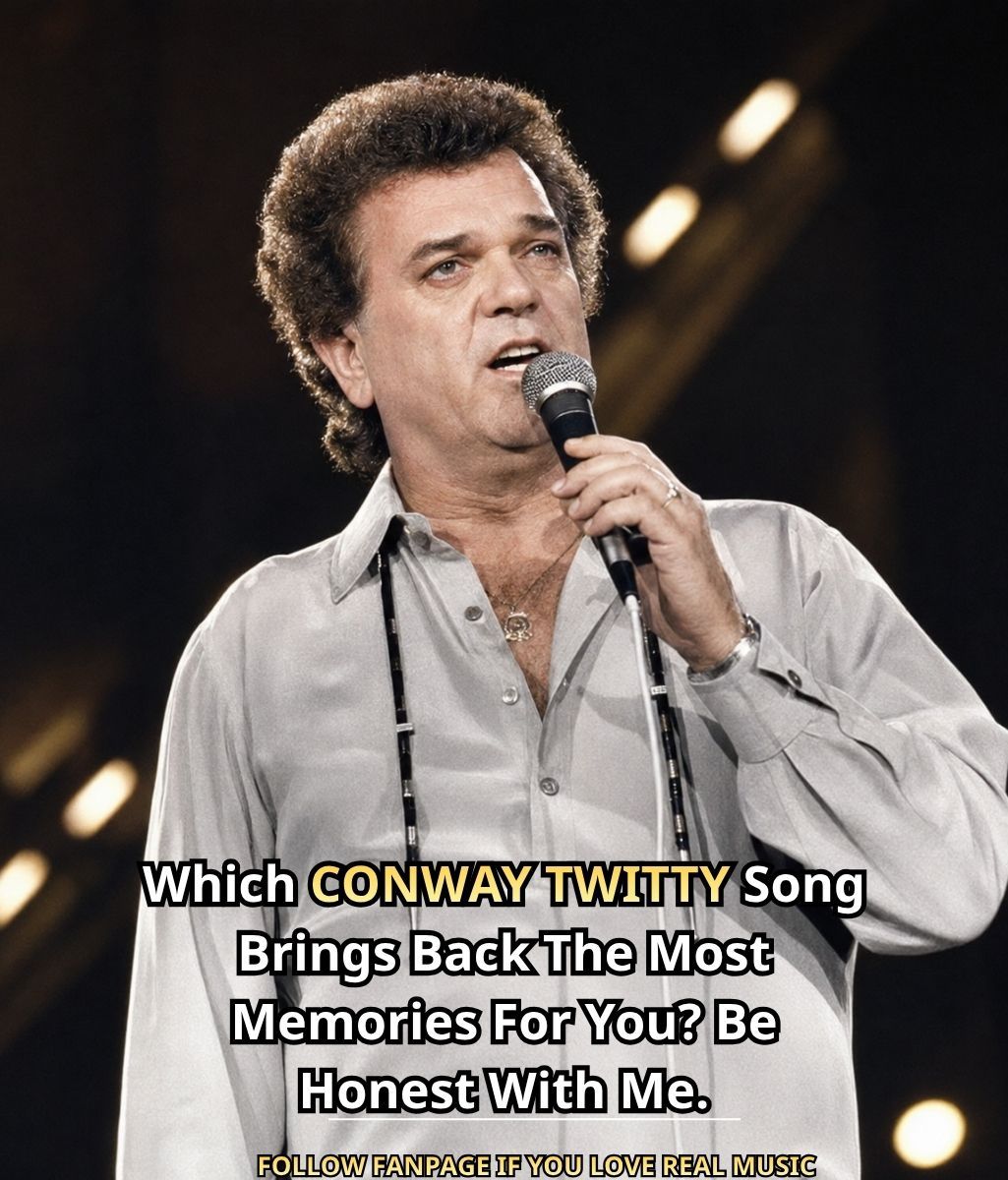
There are final performances that everyone knows are final. The lights dim, the artist takes one last bow, and the audience understands that they are witnessing the end of an era. Conway Twitty never had that kind of goodbye. There was no grand farewell tour, no carefully planned final appearance, and no announcement asking fans to remember the moment. Instead, one of country music’s most recognizable voices simply continued doing what he had done for decades — walking onto a stage, standing before an audience, and singing the songs that had become part of millions of lives. Only later would those final performances carry a meaning that no one in the room could have fully understood at the time.
By 1993, Conway Twitty was 59 years old and already a towering figure in country music. His career had stretched across generations, and his voice had become instantly familiar to listeners who had followed him through changing times, changing fashions, and changing sounds. When Conway stepped into the spotlight, he did not need an elaborate introduction. The voice was enough. For longtime fans, hearing him sing could bring back memories of radios playing late at night, records stacked beside the stereo, long drives on familiar highways, and ordinary evenings when a Conway Twitty song somehow seemed to say exactly what needed to be said.
That is what makes the final chapter of his career so haunting in retrospect. There was no obvious line separating the Conway audiences had known for decades from the Conway they were seeing near the end. He was still performing. He was still appearing before the people who had supported him. The music was still playing. There was no reason for an audience to sit there thinking that every song might be one of the last times they would ever hear him perform it.
And perhaps that is why his story feels so different from the carefully planned farewells we sometimes see from legendary performers. Conway did not get the opportunity to turn his final chapter into a celebration of everything that had come before. Life simply moved forward until, suddenly, it did not.
On June 4, 1993, Conway became seriously ill after performing in Branson, Missouri. He was taken to a hospital, where doctors discovered an abdominal aortic aneurysm. Surgery followed, but Conway Twitty died on June 5, 1993, at only 59 years old. The news stunned the country music world. An artist whose voice had seemed like a permanent part of American country radio was suddenly gone.
That is when the meaning of those final performances changed.
A stage appearance that had once seemed like another night on the road was now part of history. A familiar song became one of the last. A wave to the crowd became something worth remembering. Ordinary moments became precious because nobody had known they were running out.
There is something deeply human about that kind of ending. We often imagine that important chapters of life will announce themselves when they are closing. We expect some unmistakable signal telling us to pay attention because this moment will never happen again. But life rarely works that way. Sometimes the final conversation feels like any other conversation. Sometimes the last photograph looks completely ordinary. And sometimes the last performance feels like simply another performance — until there can never be another one.
For Conway’s longtime fans, that realization gives his final year an emotional weight that could never have existed while he was still alive. People were not gathering to say goodbye. They were gathering to hear Conway Twitty. They expected the familiar songs, the unmistakable voice, and perhaps another chance to see him somewhere down the road.
There was supposed to be another night.
Another audience.
Another song.
But there wasn’t.
And that may be the most powerful part of Conway Twitty’s final chapter. His farewell was never presented as a farewell. There was no giant sign saying that an era was ending. The audience was simply watching a legendary country singer doing what he had always done, unaware that history was quietly moving beneath their feet.
After his death, the recordings remained. So did the photographs, television appearances, concert memories, and stories told by people who had seen him perform. For those who had grown older alongside his music, these pieces of the past became something more than entertainment. They became reminders of a particular time in American life and of the people, places, and memories connected to those songs.
That is the strange power of music after an artist is gone. The voice does not age anymore. Press play on an old Conway Twitty recording today and he is suddenly there again, sounding exactly as he did decades ago. The years disappear for three minutes. The room changes. Memories return. For someone who heard those songs when they were new, it can almost feel as though the past has briefly opened its door.
But then the song ends.
And reality returns.
More than three decades after Conway Twitty’s death, perhaps that is why his final performances remain so moving to think about. Nobody standing in those audiences could have known exactly how little time remained. They were not witnessing a carefully scripted ending. They were simply sharing another evening with a singer whose music had been part of their lives for years.
Only afterward did those moments become a goodbye.
No farewell speech. No final tour. No carefully planned last bow.
Just Conway Twitty, a microphone, an audience, and the songs that had carried him through an extraordinary career.
Then, suddenly, the stage was empty.
And when fans looked back, they understood something they could not possibly have understood while the music was still playing: sometimes the most unforgettable goodbye is the one nobody realizes is happening until it is already over.
Video