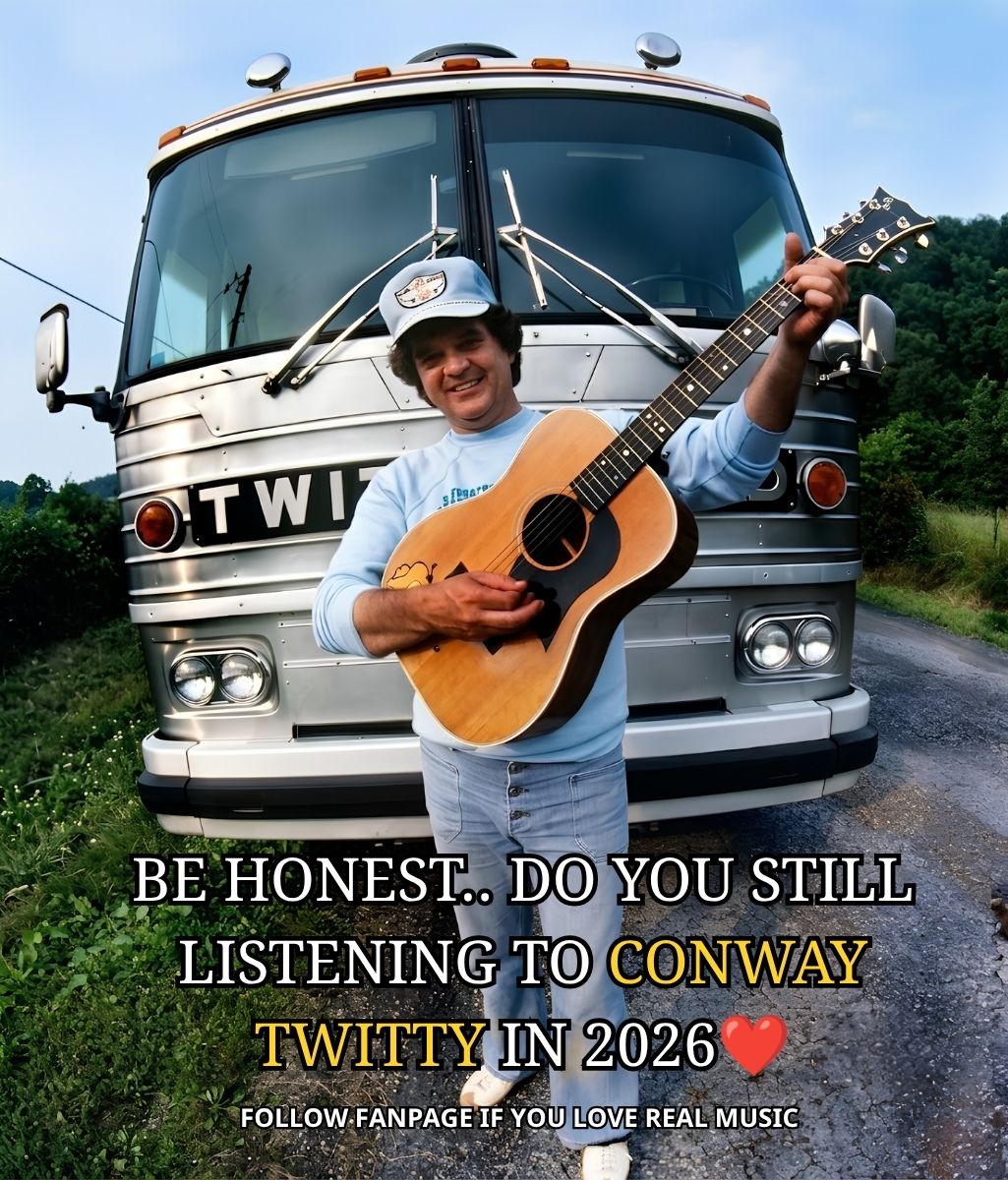
 Thousands of fans applauded as Conway Twitty walked off the stage on June 4, 1993, believing they had witnessed another unforgettable performance. No one in the audience realized they had just seen him for the very last time. What followed over the next two days became one of the most heartbreaking chapters in country music history.
For more than three decades, Conway Twitty had built a career unlike any other. He conquered rock and roll before reinventing himself as one of country music’s greatest romantic voices, recording dozens of No. 1 hits and earning a reputation for performances that combined effortless charm with emotional honesty. Night after night, audiences packed concert halls to hear classics like “Hello Darlin’,” “Linda on My Mind,” and “You’ve Never Been This Far Before.” Even after years of constant touring, Conway remained committed to giving every audience his very best. Fans saw a confident entertainer standing beneath bright stage lights, smiling, joking, and delivering songs that had become part of their own lives. Very few could have imagined that behind the applause was a man who was about to face the greatest challenge of his life.
On the evening of June 4, 1993, Conway performed at the Jim Stafford Theatre in Branson, Missouri, where everything appeared perfectly normal. Those in attendance remembered another polished performance from an artist who still possessed the unmistakable voice that had made him a legend. Nothing suggested that the concert would become his farewell. When the final song ended, the audience applauded, Conway thanked his fans, and the lights slowly faded. Like countless nights before, he left the stage and prepared to continue traveling with members of his touring team. The music had ended, but the most important part of the story had not yet begun.
Not long after leaving the theater, Conway began experiencing severe discomfort while traveling on the road. What initially seemed like pain quickly became something far more serious. The cheerful atmosphere that had followed another successful concert disappeared almost instantly as those around him realized he needed urgent medical attention. He was taken to Cox South Hospital in Springfield, Missouri, where doctors determined that he was suffering from a serious abdominal aortic aneurysm. Emergency surgery offered the only hope, and medical teams worked tirelessly to save one of country music’s most recognizable voices. The man who had spent a lifetime bringing comfort to millions through music was suddenly fighting for his own life, surrounded not by applause, but by the quiet urgency of a hospital room.
For fans across America, the news came as a profound shock. Only hours earlier, Conway had been doing what he loved most—performing before a live audience. There had been no public farewell, no emotional final concert announced in advance, and no opportunity for admirers to understand that history was unfolding before their eyes. Instead, concern spread rapidly as updates emerged about his condition. Friends, fellow musicians, and countless fans hoped he would recover and return to the stage once again. Unfortunately, despite every effort by his medical team, Conway’s condition continued to worsen. On June 5, 1993, at the age of 59, Conway Twitty passed away, bringing an extraordinary career to an unexpected and heartbreaking end.
The suddenness of his death made the loss especially difficult to accept. Conway had remained an active performer until the very end, continuing to tour and connect with audiences who had followed him for decades. There was no gradual retirement, no carefully planned goodbye tour, and no farewell speech thanking fans for a lifetime of support. His final performance became his farewell without anyone realizing it at the time. That reality has remained one of the most emotional aspects of his story, reminding listeners how quickly life can change, even for someone who seems larger than life.
Conway’s influence on country music reached far beyond his remarkable voice. After beginning as a successful rock-and-roll artist, he took the enormous professional risk of reinventing himself in country music, a decision that ultimately reshaped his career. His smooth delivery, emotional sincerity, and ability to tell stories of love, heartbreak, and devotion helped define an era. Over the years, he accumulated dozens of chart-topping hits, countless awards, and one of the most successful recording careers in the genre’s history. His memorable duet partnership with Loretta Lynn also produced some of country music’s most beloved recordings, proving that his artistry extended far beyond solo performances. Conway never relied on trends to remain relevant. He relied on authenticity, consistency, and songs that spoke directly to the human heart.
Perhaps that is why his final days continue to resonate so deeply. The contrast is impossible to ignore. Only hours separated the brilliant lights of the stage from the silence of a hospital room. One moment he was receiving standing ovations from devoted fans. The next, he was engaged in the most personal battle of his life, far from the spotlight that had followed him for so many years. It is a reminder that the lives of legendary performers are often far more fragile than the images audiences see from their seats. Behind every celebrated performance stands a human being whose greatest struggles may unfold long after the curtain falls.
More than three decades have passed since Conway Twitty’s final concert, yet the emotions surrounding that last performance have never disappeared. Fans still return to recordings of that remarkable career, listening to the familiar warmth of his voice and remembering an artist who never stopped giving everything he had to the people who came to hear him sing. His music continues to introduce new generations to timeless stories of love, longing, and resilience, while longtime admirers remember not only the songs but also the dedication that defined his career until the very end.
Conway Twitty’s final night was never meant to become part of country music history. It was supposed to be another successful concert followed by another trip home. Instead, it became one of the genre’s most heartbreaking farewells. The applause eventually faded, the stage lights went dark, and the highway grew quiet. Yet the voice that captivated millions never truly disappeared. Every time “Hello Darlin'” begins to play, Conway Twitty returns once more—not as the man whose final journey ended too soon, but as the timeless artist whose music continues to outlive the silence that followed his last drive home.