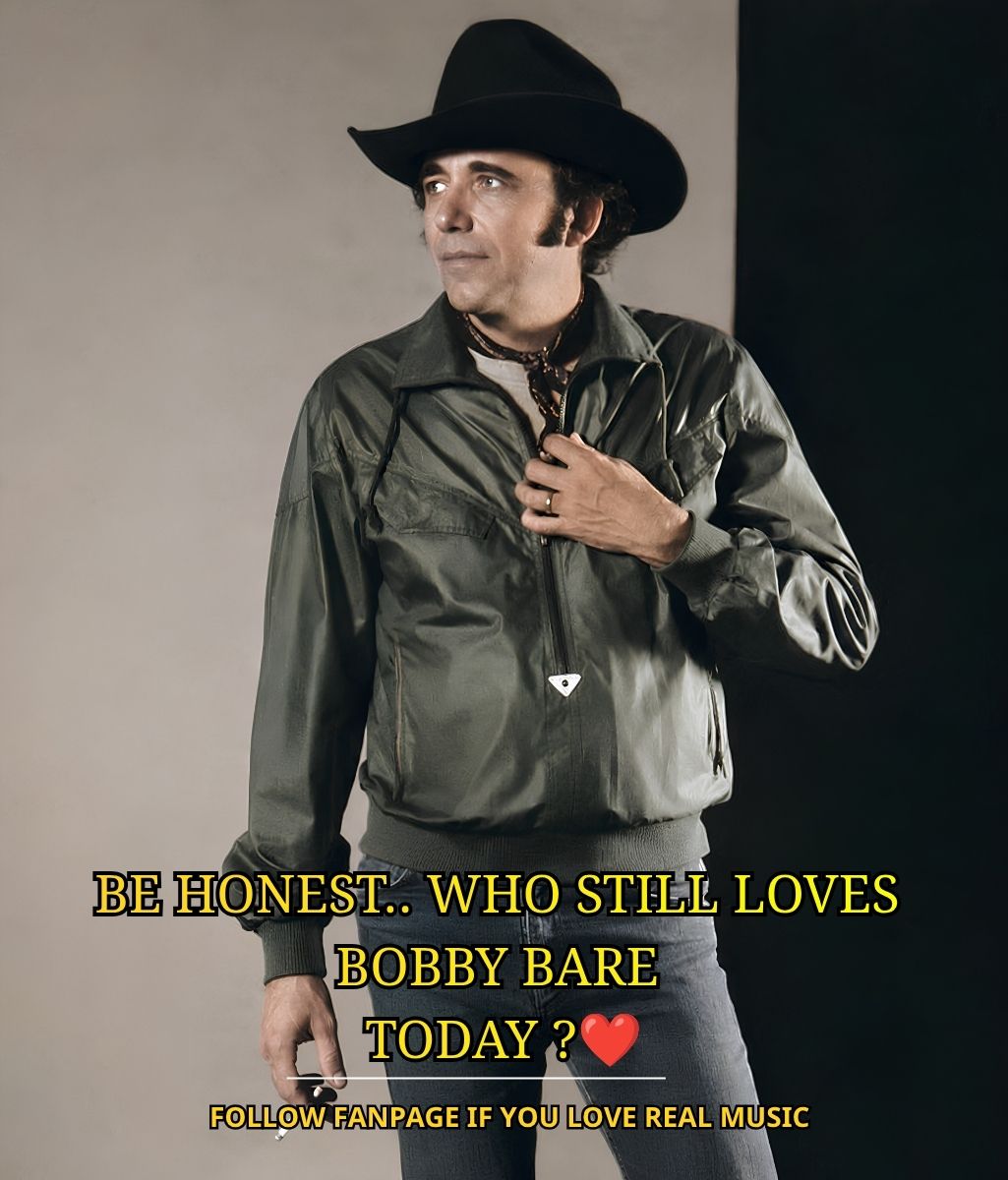
By 1973, Bobby Bare had already spent years building a reputation as one of country music’s most distinctive storytellers, but he was reaching a point in his career when simply walking into a studio, singing the songs, and leaving the final decisions to someone else was no longer enough. Nashville had long operated through a powerful and highly organized studio system, where producers, record labels, session musicians, and executives often played major roles in determining how an artist’s records would ultimately sound. It was a system that had produced countless classics, but for musicians who wanted greater control over their own work, there were limits. Bare wanted something more: the freedom to shape an album according to his own instincts.
That desire became especially significant in 1973, when Bobby Bare released Ride Me Down Easy, an album he produced himself. Today, self-producing an album may not sound revolutionary. Artists regularly take an active role in production, songwriting, arrangements, and virtually every other aspect of their recordings. But in early-1970s Nashville, the balance of creative authority was different. For an established country singer to take greater responsibility for producing his own album represented a meaningful challenge to the traditional way records were made.
Bare was not rejecting Nashville or the people who had helped build his career. He was demonstrating something far more important: an artist could trust his own musical judgment. After years of recording, touring, listening to songwriters, and learning what connected with audiences, Bare understood the kind of records he wanted to make. He knew his voice, but more importantly, he understood the stories that belonged inside that voice. Producing his own work gave him an opportunity to bring those elements together without surrendering the heart of the music to someone else’s expectations.
Ride Me Down Easy arrived during a fascinating period in country music. Nashville was changing. A growing number of artists wanted more influence over the songs they recorded, the musicians they worked with, the arrangements they used, and the overall direction of their albums. The polished Nashville system remained enormously successful, but another philosophy was emerging alongside it—one built around creative independence and greater artistic control. Bobby Bare became an important part of that transition.
What made his approach especially powerful was that it did not depend on rebellion for the sake of rebellion. Bare did not need to shout about independence. He demonstrated it through the records he made. His relaxed delivery and storyteller’s instinct had always separated him from artists who relied on elaborate production. He could make a song feel like a conversation taking place across a kitchen table or late at night after everyone else had gone home. Greater creative control allowed that natural quality to remain at the center of the recording rather than becoming buried beneath expectations about what a country record was supposed to sound like.
And that mattered because Bobby Bare had developed a remarkable understanding of songs. Throughout his career, he showed an ability to recognize material that was unusual, intelligent, humorous, heartbreaking, or simply different from what everyone else was recording. His collaborations with great songwriters would become a defining part of his legacy, particularly his work with Shel Silverstein, whose unconventional storytelling found an ideal interpreter in Bare. The relationship between singer and songwriter demonstrated exactly why artistic judgment mattered: sometimes the most memorable music comes from trusting a song that does not fit neatly inside the industry’s safest formula.
The importance of Ride Me Down Easy therefore extends beyond one album. By taking greater responsibility for his own production, Bare helped demonstrate that Nashville artists could be more than performers standing in front of microphones. They could participate directly in shaping the records that carried their names. That idea would become increasingly important as the decade progressed and more country musicians pushed for control over their recordings, musicians, song choices, and careers.
Bare’s move did not single-handedly transform Nashville, nor was he the only artist seeking greater independence during this period. But his willingness to produce his own work became part of a larger shift in country music, one that challenged the assumption that creative decisions had to flow primarily from producers and record companies. Artists were beginning to ask a simple but powerful question: if these records represented their voices and their lives, shouldn’t they have a greater say in how those records were made?
That question would echo throughout the 1970s as country music entered one of its most creatively adventurous eras. Artists increasingly fought for the freedom to sound like themselves rather than conforming completely to established expectations. The movement would eventually become associated with some of the most independent personalities in country music, but its foundations were built through many individual decisions—some dramatic, others almost invisible at the time.
Bobby Bare’s decision in 1973 belonged to that quieter kind of revolution.
There were no grand declarations necessary. There was simply an experienced artist entering the studio with enough confidence to say, in effect, “I know what my music should sound like.” That belief carried significance far beyond the recording sessions for one album. It helped reinforce the idea that an artist’s instincts deserved a place alongside commercial considerations and industry tradition.
More than half a century later, Ride Me Down Easy can be viewed as more than another chapter in Bobby Bare’s long career. It represents a moment when an established Nashville artist chose to take greater ownership of his creative identity and, in doing so, helped strengthen a path that others would continue to explore.
Bobby Bare had already proven that he could sing a great song. In 1973, he showed that an artist could also fight—quietly, confidently, and creatively—for the right to decide how that song should reach the world. And sometimes, the decisions that change an industry are not the loudest ones. They are the decisions that make the next artist realize that another way is possible.