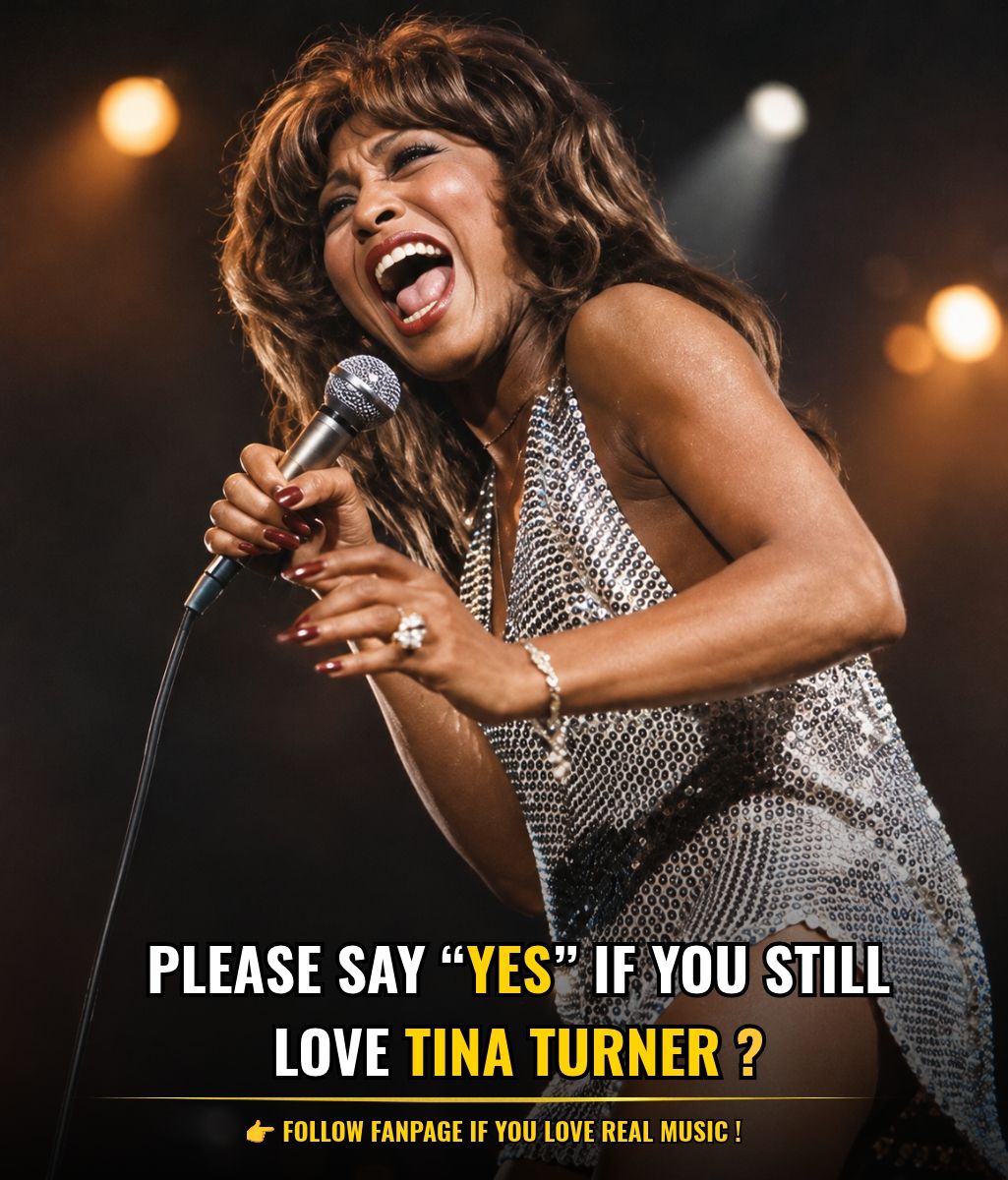
Long before “Proud Mary” became inseparable from Tina Turner, it already belonged to someone else.
The song was written by John Fogerty and first became a major hit for Creedence Clearwater Revival in 1969. Their version was smooth, steady and built around the image of a riverboat rolling down the Mississippi. It was already a successful song before Tina ever touched it.
Then Tina changed everything.
When Ike & Tina Turner recorded their version for the 1970 album Workin’ Together, they completely reimagined the structure. Instead of beginning with immediate energy, Tina opened the song slowly and deliberately, telling the audience that they would start “nice and easy” before taking it somewhere much rougher.
The promise became one of the most famous transitions in live music.
The first section allowed Tina’s voice to simmer. Then the rhythm suddenly accelerated, the backing singers joined in and Tina exploded into the second half with the kind of movement, power and vocal attack that had already made the Ike & Tina Turner Revue one of the most exciting live acts in America.
The recording became a major success.
Released as a single in 1971, “Proud Mary” reached No. 4 on the Billboard Hot 100, becoming one of Ike & Tina Turner’s biggest American hits. The performance later won the duo the Grammy Award for Best R&B Vocal Performance by a Group at the 1972 ceremony.
Yet the chart position only explains part of its importance.
What made “Proud Mary” special was the way Tina continued carrying it with her long after her partnership with Ike had ended.
After leaving Ike in 1976 and rebuilding her career as a solo artist, Tina could have abandoned many of the songs associated with their years together. Instead, she kept performing “Proud Mary,” gradually transforming it from an Ike & Tina Turner hit into one of her own defining stage moments.
Audiences learned to recognize what was coming almost immediately.
The slow introduction created anticipation. Tina would hold the energy back just long enough for the crowd to know that the explosion was coming. When the tempo changed, the performance became a showcase for everything that made her unique: the unmistakable voice, the relentless dancing, the hair, the high heels and the physical confidence that very few performers could match.
Even as Tina grew older, the song remained part of her concerts.
During her 50th Anniversary Tour in 2008 and 2009, when she was approaching 70, “Proud Mary” still appeared as one of the major highlights of the show. Reviewers marveled that she could continue delivering the famous choreography with extraordinary intensity decades after the song had first become a hit.
That longevity changed the song’s identity.
Many people who heard “Proud Mary” in later decades no longer thought first of Creedence Clearwater Revival. They thought of Tina Turner standing under the lights, beginning quietly before unleashing everything she had.
That transformation says something important about Tina’s artistry.
She did not need to write a song to make it completely her own.
She could take something familiar, reshape its rhythm, inject it with personality and create a performance so distinctive that audiences remembered the performer as much as the composition itself.
“Proud Mary” began as someone else’s hit, but Tina Turner turned it into a ritual. For generations of fans, the moment she promised to start it “nice and easy” meant only one thing: something unforgettable was about to happen.
Video
https://www.youtube.com/watch?v=hzQnPz6TpGc&list=RDhzQnPz6TpGc&start_radio=1