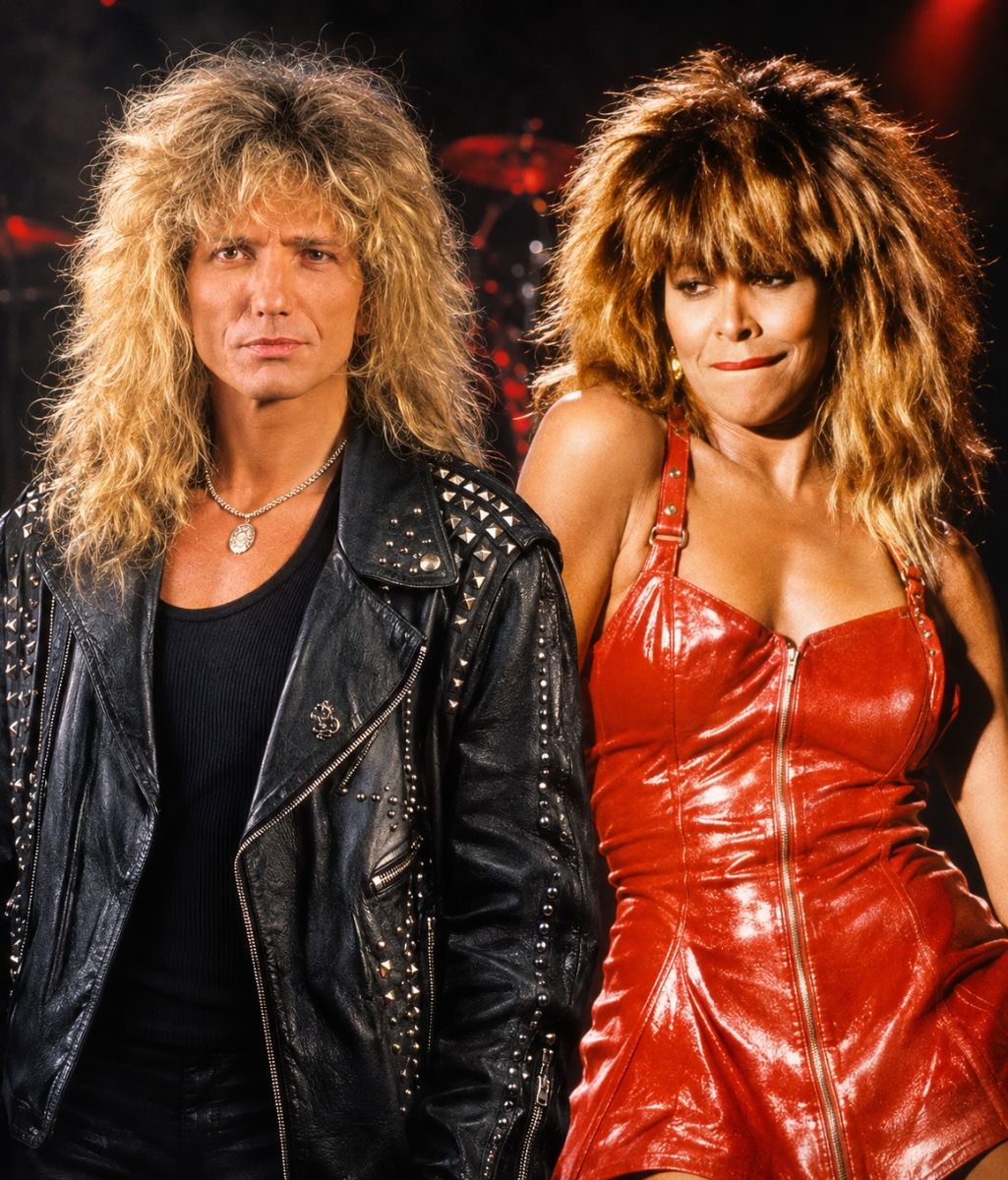
By the mid-1980s, Tina Turner had completed one of the most remarkable comebacks in popular music.
Private Dancer had transformed her into an international superstar, “What’s Love Got to Do With It” had reached No. 1, and record executives were suddenly searching for songs powerful enough to continue the momentum. One of the musicians asked to consider writing something for Tina was David Coverdale, the unmistakable voice of Whitesnake.
What he came up with became one of the biggest rock ballads of the decade.
The song was “Is This Love.”
Coverdale later explained that the idea began while he was working on material in a villa in the south of France with guitarist John Sykes. Friends at EMI knew he admired Tina and asked him to keep her in mind if he developed anything that might suit her voice. Coverdale began working on a softer, more romantic idea at the piano and initially believed it belonged to Tina rather than Whitesnake.
Then Sykes heard it.
According to Coverdale, the guitarist immediately began adding delicate guitar textures around the chords. The song started growing into something neither man had originally expected, and the combination of Coverdale’s melody and Sykes’s playing gradually transformed the idea into a full Whitesnake recording.
Even then, Coverdale still believed it was meant for Tina.
When record executive David Geffen heard the song, however, he had another opinion. Coverdale recalled telling him the track was intended for Turner, only to be told that Whitesnake should keep it. The decision proved commercially enormous.
Released in 1987, “Is This Love” became one of Whitesnake’s defining hits.
The ballad climbed to No. 2 on the Billboard Hot 100, held from the top position by George Michael’s “Faith.” It also reached No. 9 in the United Kingdom and became one of the biggest songs of Whitesnake’s career, second in U.S. chart performance only to “Here I Go Again.”
Yet the story never completely ended there.
Years later, Coverdale was asked whether Tina had ever actually received the song. His answer was surprisingly simple: he did not know.
What he did know was that he had never stopped imagining what Tina might have done with it.
In 2022, Coverdale again explained that “Is This Love” had originally been conceived for Tina and added that he still wished he could have heard her sing it. He believed her voice would have brought something extraordinary to the song, even though Whitesnake’s own version had already become a worldwide classic.
That lingering wish is what makes the story so fascinating.
Tina Turner never needed “Is This Love” to complete her comeback. By 1987, she had already established herself as one of the biggest solo performers in the world. But imagining her voice on the song opens a tantalizing musical question.
Her raspy lower register could have given the verses a darker edge, while the soaring chorus might have provided exactly the kind of emotional release that defined many of her greatest performances.
Instead, the song found another destiny.
“Is This Love” became a signature Whitesnake ballad and one of the defining power ballads of the 1980s. Yet decades later, David Coverdale still carried one unanswered musical wish: to know what that song might have sounded like if Tina Turner had been the one standing behind the microphone.