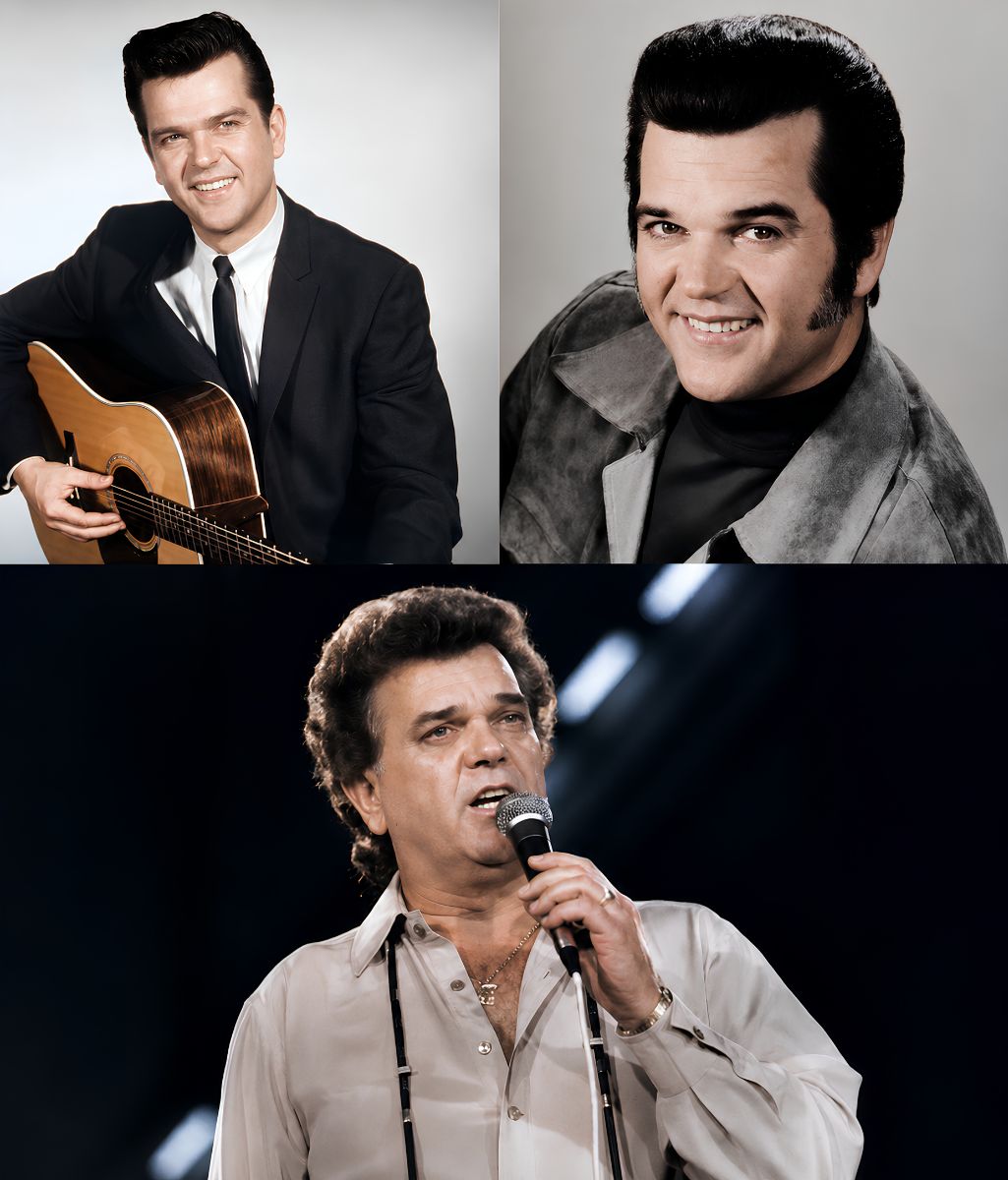
Long before Conway Twitty became one of the most beloved voices in country music, he made a career decision that many believed would end everything he had worked so hard to achieve. At the height of his success as a rock & roll star, he turned away from fame, ignored the critics, and risked his entire future to pursue the music that truly spoke to his heart. It was a gamble few artists would have dared to make—but it became the choice that transformed him into a legend.
Every successful artist eventually faces a moment when they must decide whether to keep following the path that made them famous or risk everything to pursue something more meaningful.
For Conway Twitty, that moment arrived when most people believed he had already achieved the American dream.
By the late 1950s, Conway had become one of the brightest stars in rock & roll. His chart-topping hit “It’s Only Make Believe” had become an international sensation, selling millions of copies and introducing his unmistakable voice to audiences around the world. Concerts were packed, radio stations eagerly played his records, and his future appeared brighter than ever. Industry executives saw enormous commercial potential, while fans expected many more rock hits to follow.
From the outside, there seemed to be only one logical choice.
Keep doing what was already working.
But behind the applause, Conway Twitty felt something very different.
Although he appreciated the success that rock & roll had brought him, another kind of music had always lived deep inside him. Long before the fame, he had grown up listening to country songs that told honest stories about love, family, heartbreak, and everyday life. Those songs felt personal in a way that commercial success never could. As his career continued to grow, he found himself increasingly drawn back toward the music that had first inspired him.
It was not a decision based on money.
Nor was it a strategy to chase changing musical trends.
It was a decision about identity.
When Conway Twitty announced that he intended to focus on country music, many people were stunned. Friends questioned his judgment. Record executives worried he was abandoning a successful formula. Critics openly wondered whether country audiences would ever accept a singer so closely associated with rock & roll. Some predicted that his popularity would disappear almost overnight, leaving him without a place in either genre.
The risks were very real.
History is filled with talented artists who attempted to reinvent themselves only to discover that fans preferred the version they already knew. Conway understood exactly what he stood to lose. Years of hard-earned success, financial security, and widespread recognition could all disappear if the gamble failed.
Yet he chose to move forward anyway.
The early years were far from easy. Building credibility in country music required patience, persistence, and a willingness to start over. Conway had to prove that he belonged—not because of his past success, but because of the sincerity of his performances. Rather than expecting instant acceptance, he worked tirelessly, recording songs that reflected his deep respect for the genre and connecting with audiences one performance at a time.
Slowly, everything began to change.
Listeners discovered that Conway’s rich, expressive voice was perfectly suited to country storytelling. His ability to convey tenderness, longing, and emotional vulnerability gave his recordings a remarkable authenticity. Songs such as _”Hello Darlin'”, “Linda on My Mind”, “You’ve Never Been This Far Before”, and dozens of other classics established him as one of country music’s defining voices. The artist many had once dismissed as a former rock singer gradually became one of the genre’s greatest ambassadors.
His remarkable partnership with Loretta Lynn elevated his career even further. Together, they recorded a series of unforgettable duets that became staples of country music history. Their chemistry, warmth, and ability to portray everyday relationships resonated with millions of listeners, creating songs that remain beloved decades later.
Looking back, it is almost impossible to imagine country music without Conway Twitty. Yet none of that extraordinary success was guaranteed when he first made the decision to change directions. At the time, all he had was a belief that he belonged somewhere different—a quiet conviction strong enough to outweigh the fears and doubts surrounding him.
That is perhaps the most inspiring lesson his story offers.
True success is not always found by remaining where life feels comfortable. Sometimes it requires the courage to leave behind certainty in pursuit of authenticity. Conway could have continued enjoying the rewards of his rock & roll career, but he understood that lasting fulfillment comes from creating the music that genuinely reflects who you are.
Today, Conway Twitty is remembered not simply as a successful recording artist but as one of the greatest storytellers in the history of country music. His catalog of timeless songs continues to inspire new generations, proving that heartfelt storytelling never goes out of style. Ironically, the decision that many once considered the biggest mistake of his career ultimately became the foundation of his enduring legacy.
The applause he received as a rock star brought him fame. But the courage to follow his heart gave him something even greater—a place among the immortals of country music. Sometimes the boldest gamble is not chasing success. It is trusting yourself when almost no one else does.