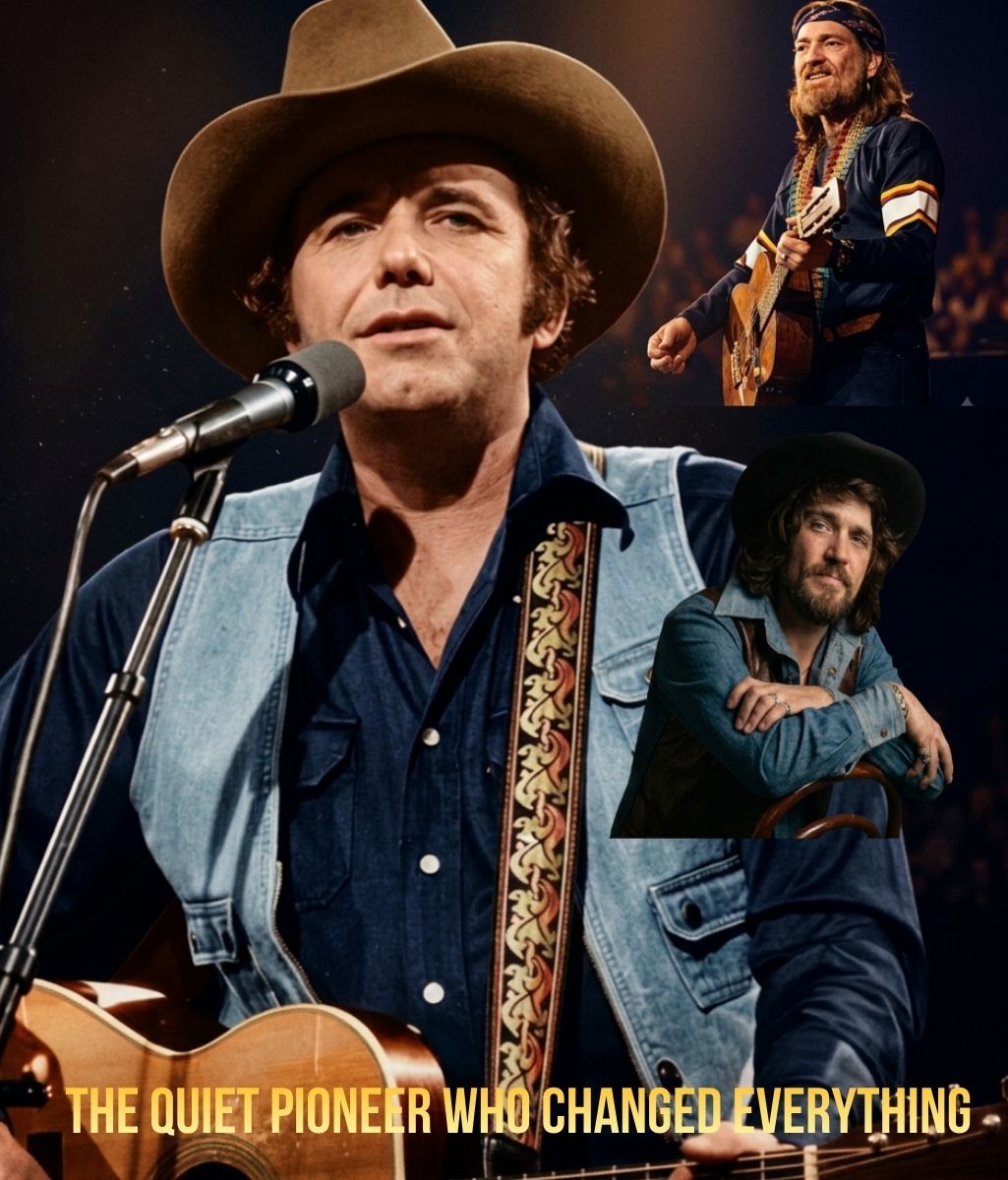
Long before Outlaw Country became synonymous with names like Willie Nelson and Waylon Jennings, Bobby Bare quietly challenged Nashville’s traditional power structure. His determination to gain creative control over his own recordings helped pave the way for a new generation of artists who believed that authentic country music should belong to the people creating it.
History often remembers the faces of a movement, but not always the people who laid its foundation.
When country music fans talk about the rise of Outlaw Country, the conversation usually begins with Willie Nelson and Waylon Jennings. Their influence on the genre is undeniable, and their fight for creative independence reshaped Nashville during the 1970s. Yet years before the movement reached national attention, another artist had already begun challenging the system in a quieter but equally significant way.
That artist was Bobby Bare.
At a time when major record labels exercised extraordinary control over nearly every aspect of an artist’s career, musicians were often expected to record the songs they were given, work with producers chosen by the label, and follow carefully designed commercial strategies. Creative freedom was limited, particularly for artists who depended on large record companies for distribution and promotion. For many performers, questioning that system simply was not considered realistic.
Bobby Bare saw things differently.
Rather than accepting every decision made on his behalf, he believed that artists deserved a meaningful voice in shaping the music carrying their own names. His conviction led him to pursue something that was almost unheard of at the time—the right to produce his own recordings while remaining under contract with a major record label. It was a bold request that challenged long-established industry traditions and required both confidence and persistence.
When Bobby Bare succeeded, the victory extended far beyond his own career.
For the first time, a major label artist demonstrated that creative independence and commercial success did not have to exist on opposite sides of the conversation. His achievement quietly altered expectations within Nashville, proving that performers could be trusted to make important artistic decisions without sacrificing professionalism or quality. It became an example that many others would eventually follow.
Unlike some of the more public battles that later defined the Outlaw Country movement, Bobby Bare’s efforts unfolded without dramatic headlines or public confrontations. He rarely sought attention for changing the rules. Instead, he focused on creating music that reflected his own artistic vision while earning the respect of fellow musicians throughout the industry. His influence spread through action rather than publicity.
As the years passed, artists such as Willie Nelson and Waylon Jennings would become the most recognizable symbols of artistic independence in country music. Their determination to challenge Nashville’s traditional business model inspired countless musicians and forever changed the direction of the genre. Yet the path they traveled had already begun to widen because pioneers like Bobby Bare demonstrated that greater creative freedom was possible.
Perhaps that is one of the most remarkable aspects of Bobby Bare’s legacy. He never needed to stand at the center of every story to leave an extraordinary mark on country music. His greatest contributions often happened quietly, through courage, professionalism, and an unwavering belief that authentic music begins with artistic honesty. While audiences celebrated his unforgettable recordings, his work behind the scenes helped reshape the relationship between artists and the industry itself.
Of course, Bobby Bare’s influence cannot be measured solely through the freedoms he helped establish. His extraordinary catalog of songs remains one of the richest in country music history. Through timeless recordings such as Detroit City, 500 Miles Away from Home, Marie Laveau, and The Winner, he proved that compelling storytelling and emotional authenticity never go out of style. Those songs continue introducing new generations to an artist whose quiet confidence spoke louder than any publicity campaign ever could.
Looking back today, it becomes increasingly clear that Bobby Bare’s legacy extends beyond chart success or awards. His career represents the power of standing firmly behind one’s artistic convictions while treating others with respect and humility. The creative independence that many country artists now enjoy did not emerge overnight. It was built gradually by individuals willing to question long-standing traditions and imagine a better future for those who would follow.
Perhaps that is why Bobby Bare deserves to be remembered not only as one of country music’s finest storytellers but also as one of its most important pioneers. His courage helped open doors that countless artists have since walked through, even if many fans never realized who first turned the handle.
Some legends are remembered because they lead movements. Others are remembered because they make those movements possible. Bobby Bare belongs firmly in the second category—a quiet pioneer whose influence continues to echo through every artist who enjoys the freedom to create music on their own terms, proving that some of the greatest revolutions begin not with loud voices, but with quiet determination.