oday, it takes only a few seconds.
“S-A-T-U-R-D-A-Y… Night!”
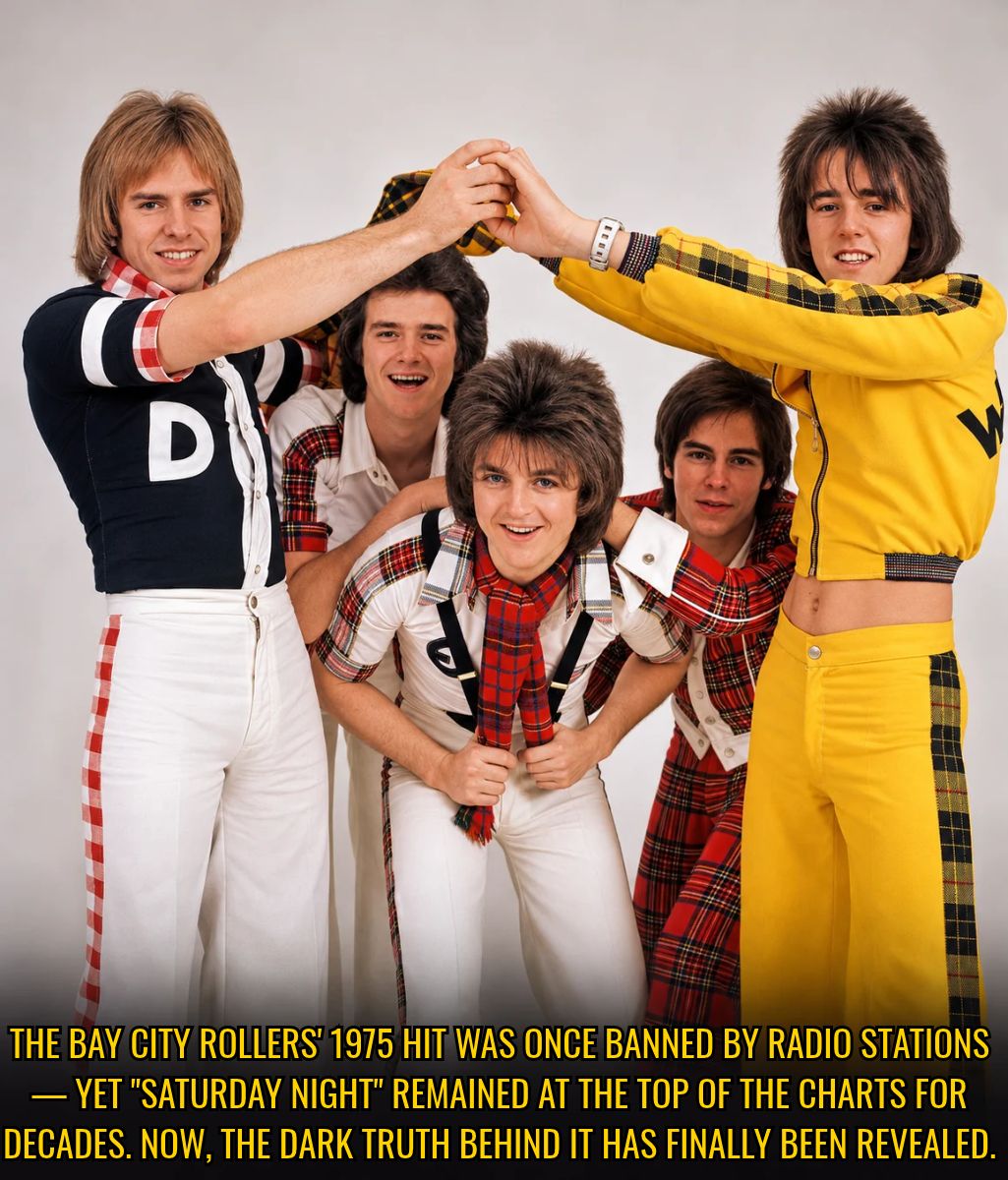
For generations of Bay City Rollers fans, that chant instantly brings back tartan scarves, television appearances, screaming crowds and the wild excitement of Rollermania. “Saturday Night” eventually became one of the songs most closely associated with the Scottish group, especially in America.
But its journey to No. 1 was anything but obvious.
The Bay City Rollers first released “Saturday Night” in Britain in 1973, with Nobby Clark singing lead. Instead of becoming the breakthrough the band hoped for, the single failed to chart. At that point, there was little reason to believe the song would ever become one of the defining pop anthems of the decade.
Then the band changed.
Clark left, Les McKeown became the lead singer, and the Rollers entered the period that would turn them into teenage superstars. A new version of “Saturday Night” was recorded with Les on vocals, but Britain had already moved on from the song. The re-recording was not pushed there as a new major single.
America, however, had never heard it.
When the new version was released in North America in 1975, the timing was perfect. The Rollers were being marketed as Britain’s next enormous teenage phenomenon, and American audiences were suddenly introduced to the pounding drums, handclaps and unforgettable spelling chant that British listeners had largely overlooked two years earlier.
The record began climbing.
By the chart dated January 3, 1976, “Saturday Night” reached No. 1 on the Billboard Hot 100, giving the Bay City Rollers their first and only American chart-topper. It spent seventeen weeks on the Hot 100 altogether and sold more than a million copies in the United States.
The irony was remarkable.
A song that had failed at home had become the record that introduced millions of Americans to the Bay City Rollers.
Yet looking back today, the carefree sound carries a more complicated meaning.
At the height of Rollermania, the public saw five young men surrounded by screaming fans, tartan clothes and songs built around uncomplicated happiness. Decades later, former members would describe a far darker world behind that image, including intense managerial control, financial disputes and disturbing allegations involving manager Tam Paton.
None of those realities were hidden inside the lyrics of “Saturday Night,” and the song itself was not responsible for what happened behind the scenes. But knowing the later history changes the way the Rollers’ happiest recordings can feel.
The contrast is difficult to ignore.
On record, “Saturday Night” sounded like the beginning of the best weekend imaginable. Behind the fame, some members were entering a period that would leave emotional and financial wounds lasting long after Rollermania disappeared.
There is another strange twist to the song’s legacy.
Although “Saturday Night” became the Bay City Rollers’ signature American hit, it never became a major British chart hit at all. The country that created Rollermania had largely ignored the very song that later convinced America to join it.
That makes its survival even more extraordinary.
Fifty years later, audiences still recognize the chant almost immediately. The chart run lasted months rather than decades, but the memory has lasted far longer than any chart position ever could.
“Saturday Night” began as a failed British single, returned with a new singer and became America’s No. 1 song. What sounded like three minutes of carefree teenage fun would eventually become the soundtrack to a much more complicated story — one in which the brightest moments of Rollermania existed beside realities fans would not fully understand until years later.