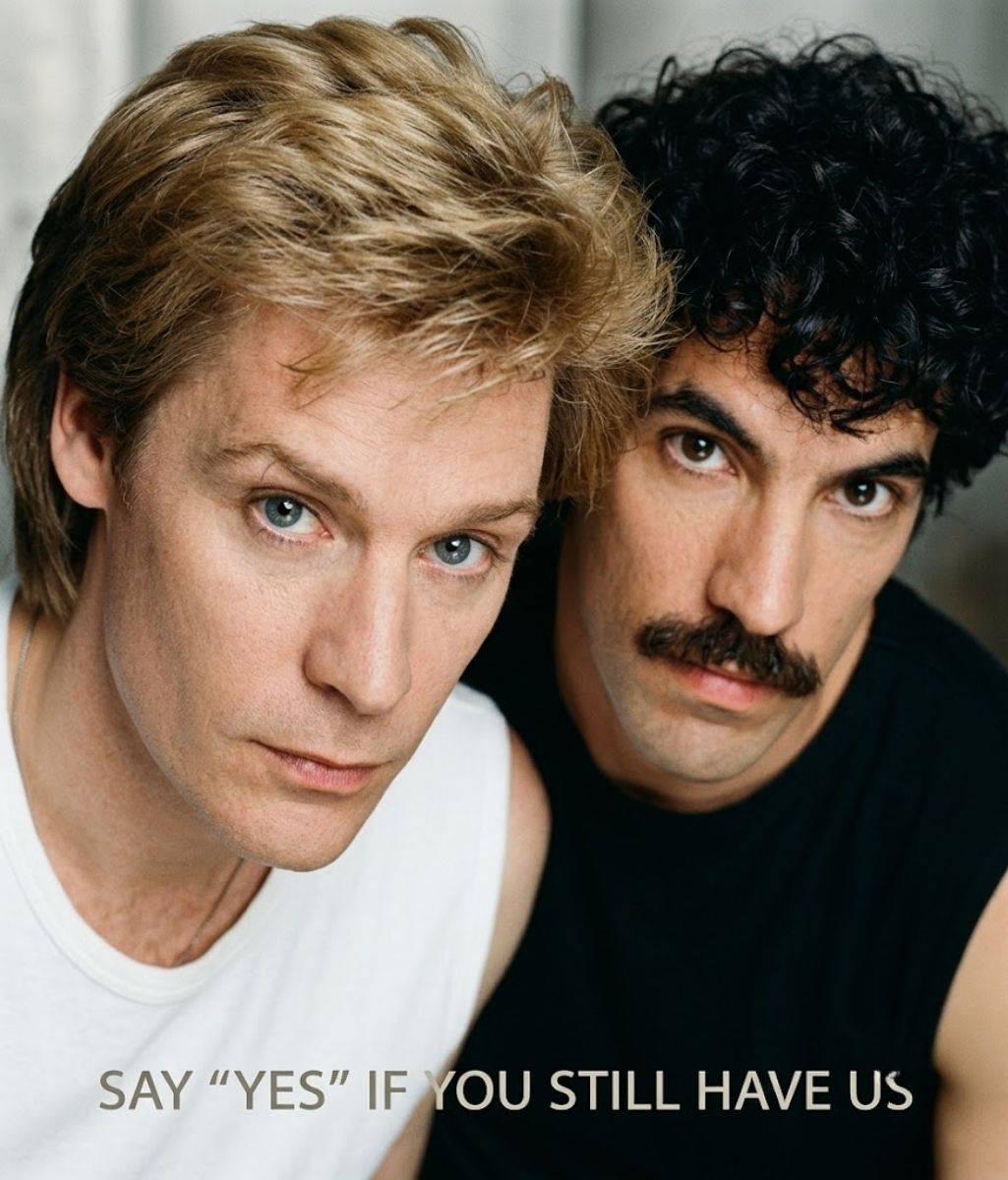
When Daryl Hall & John Oates released “Maneater” in 1982, it quickly became one of the biggest hits of their career. Yet behind its unforgettable bassline and irresistible hook lay a message far deeper than many listeners first realized. Rather than telling a simple story about romance, the song explored the dangers of unchecked ambition, greed, and the hidden forces that can consume anyone chasing success without caution.
Some songs become famous because of their melody. Others endure because listeners continue discovering new meaning in their lyrics decades after they were first released. “Maneater” belongs to that rare second category.
When Hall & Oates unveiled the song in 1982, it immediately captured attention with its driving rhythm, haunting atmosphere, and one of the most recognizable basslines of the decade. Radio stations embraced it, audiences sang along instantly, and the record climbed to the top of the charts. For many listeners, the title suggested a straightforward story about a dangerously seductive woman. It was an interpretation that seemed natural at first glance.
But according to Daryl Hall, that explanation barely scratched the surface.
Over the years, Hall explained that “Maneater” was never intended to focus solely on one person. Instead, the “maneater” represented something much larger—a powerful metaphor for anything capable of consuming people who lose sight of what truly matters. It could be an individual driven by manipulation, but it could just as easily represent a city, a corporation, the entertainment industry, unchecked ambition, or any environment where the pursuit of success comes at the expense of wisdom and integrity.
That broader interpretation helps explain why the song has remained so relevant for more than four decades.
The early 1980s were defined by rapid economic growth, fierce competition, and a culture that often celebrated wealth and achievement above all else. Cities like New York symbolized limitless opportunity, but they also reflected the pressures that accompanied success. People arrived filled with dreams, convinced they could conquer the world, only to discover that ambition sometimes demanded a far greater price than they had imagined.
Against that backdrop, “Maneater” became more than an infectious pop-rock hit. It evolved into a cautionary tale about navigating a world where appearances can be deceiving and where success, if pursued without balance, can quietly become destructive. The danger described in the song is never presented as obvious. Instead, it arrives disguised as opportunity, excitement, or the promise of something better.
Perhaps that subtlety is exactly what makes the song so powerful.
Rather than delivering a direct warning, Hall & Oates invited listeners to think beyond the surface. Every generation finds its own version of the “maneater.” For some, it may be the relentless pursuit of wealth. For others, it could be fame, power, unhealthy relationships, or environments where personal values gradually disappear beneath constant pressure to succeed. The song never limits its message because human ambition itself has never been confined to one place or one era.
Musically, “Maneater” perfectly reinforces its lyrical themes. The dark, pulsing bassline creates a sense of quiet tension from the very first notes, while the steady rhythm suggests something steadily approaching, almost impossible to escape. Daryl Hall’s smooth yet restrained vocal performance avoids unnecessary drama, allowing the lyrics to unfold with calm confidence rather than exaggerated emotion. Together, those elements created a sound that felt both sophisticated and slightly unsettling, making the song instantly memorable.
The record also demonstrated why Hall & Oates became one of the defining musical partnerships of their generation. Throughout their remarkable career, they consistently blended memorable melodies with thoughtful songwriting, creating hits that rewarded listeners willing to look beyond the obvious. While many songs dominated the charts for a season, “Maneater” continued inviting discussion long after its commercial success, proving that great songwriting often reveals new meanings over time.
Looking back today, it is easy to understand why the song has remained one of Hall & Oates’ signature recordings. It captures the atmosphere of the early 1980s, yet its message extends far beyond that decade. Every generation faces its own temptations, its own ambitions, and its own versions of the forces capable of quietly consuming dreams. That timeless quality allows the song to remain just as relevant today as it was when audiences first heard it.
Perhaps that is the greatest achievement of “Maneater.” It begins as an irresistible pop hit but gradually reveals itself as something much more profound. It reminds us that life’s greatest dangers rarely announce themselves openly. They often arrive disguised as opportunity, success, or the fulfillment of our deepest desires.
More than forty years after its release, “Maneater” continues to resonate because its warning has never lost its relevance. The melody still captivates audiences, the chorus remains unforgettable, and the message remains timeless. Daryl Hall & John Oates created far more than another chart-topping single. They created a lasting reminder that while ambition can inspire extraordinary achievements, it must always be guided by wisdom. Otherwise, the very thing we pursue most passionately may ultimately become the thing that consumes us.