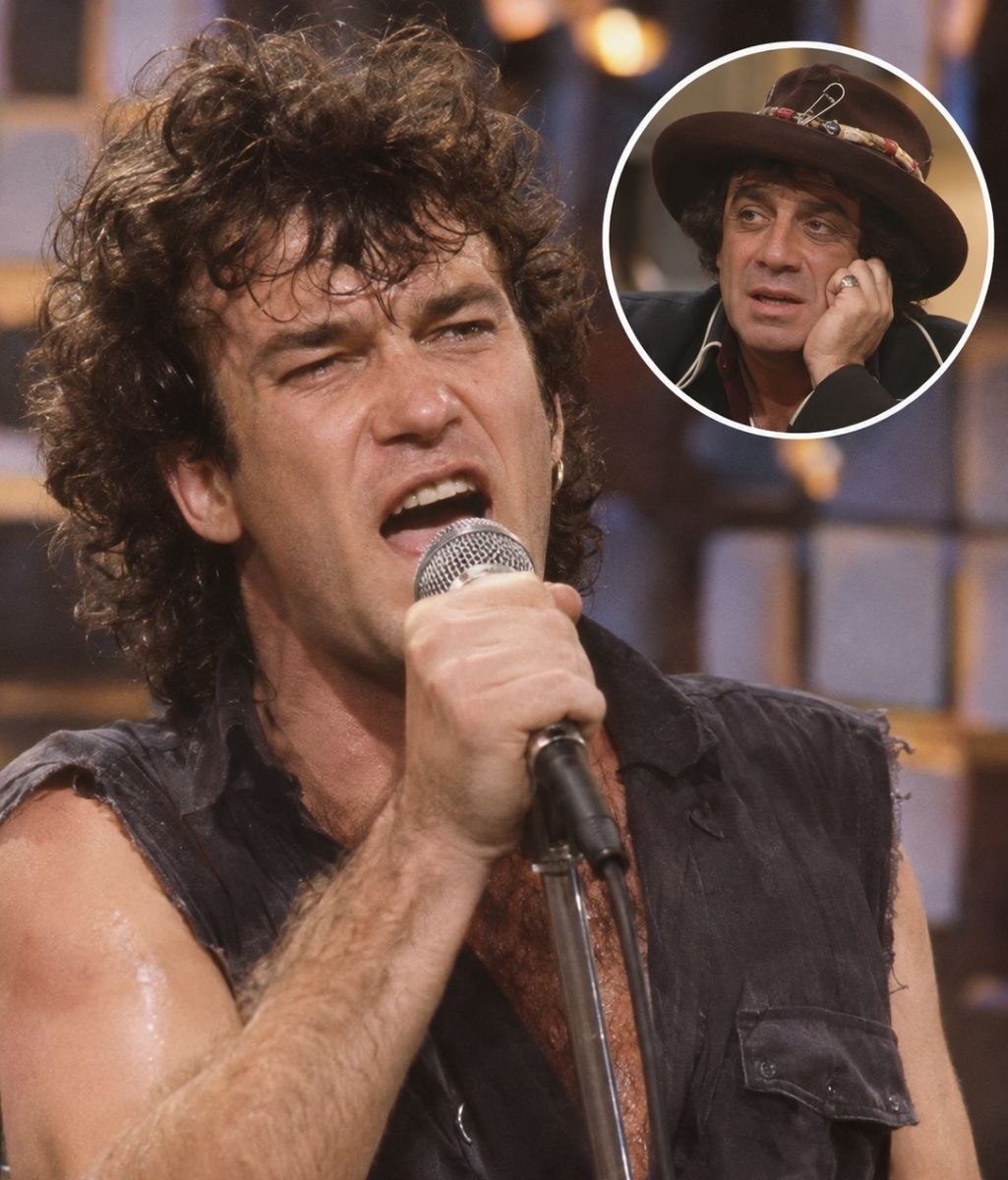
For more than four decades, Jimmy Barnes and Molly Meldrum shared one of Australian music’s most extraordinary relationships, a friendship born out of bitter disagreements, unforgettable confrontations, and an outrageous television incident that became part of rock-and-roll history. But following Meldrum’s death at 83, Barnes has revisited the night Cold Chisel caused chaos on Australia’s most influential music programme — and revealed how two men who once regarded each other as enemies eventually became lifelong friends.
The Australian entertainment industry was left mourning on Monday, November 23, 2026, following the death of legendary television personality and music journalist Ian “Molly” Meldrum, aged 83.
For generations of Australians, Meldrum was far more than a television presenter. Through the enormously popular ABC programme Countdown, he helped introduce international superstars and emerging Australian performers to millions of viewers.
His enthusiastic interviews, unpredictable personality, and unmistakable cowboy hat made him one of the country’s most beloved entertainment figures.
Yet not every Australian musician initially appreciated his influence.
Among those who strongly opposed certain aspects of Countdown was Jimmy Barnes, the powerful vocalist whose band Cold Chisel was developing a reputation for uncompromising live performances.
Their relationship began with disagreements that eventually escalated into one of Australian television’s most notorious moments.
The trouble started when Cold Chisel refused to follow the rules that governed appearances on Countdown.
During a November 27 interview on Sunrise, Barnes explained that the programme expected performers to mime along to their recordings rather than deliver completely live performances.
For Cold Chisel, whose identity was built around the unpredictable energy of live rock music, that arrangement was unacceptable.
The disagreement intensified when the band was invited to perform “Khe Sanh,” one of its most recognisable songs.
According to Barnes, producers requested changes to the lyrics before the performance.
Rather than compromise, the musicians refused and walked away.
It was the beginning of a difficult relationship between Barnes and Meldrum, two outspoken personalities who held very different views about presenting rock music on television.
The situation eventually improved when Cold Chisel returned to Countdown to promote “Breakfast at Sweethearts.”
Barnes later acknowledged that the television exposure dramatically increased the band’s popularity, helping bring its music to audiences who might otherwise never have discovered it.
But their disagreements were far from over.
In March 1981, Cold Chisel appeared at the Countdown music awards, where the band enjoyed an extraordinary evening of recognition.
They collected seven awards, confirming their position among Australia’s most successful rock acts.
For many musicians, such recognition would have been an occasion for celebration.
Cold Chisel, however, had something very different in mind.
During their performance of “My Turn to Cry,” the musicians suddenly began destroying parts of the television stage.
The extraordinary scenes unfolded in front of cameras, transforming what should have been a prestigious awards celebration into an unforgettable spectacle.
In later accounts, the destruction was interpreted as a protest against the commercial machinery surrounding the music industry and the television programme.
Rather than accepting the ceremony’s expectations, the band delivered a dramatic statement that immediately became part of Australian rock folklore.
The incident was especially uncomfortable for Meldrum, whose television programme had played such an important role in promoting Australian music.
Barnes later recalled that Molly was deeply embarrassed by what happened.
The confrontation could easily have destroyed whatever goodwill remained between them.
After all, Countdown was one of the country’s most powerful platforms for musicians, and Cold Chisel had publicly disrupted one of its major events.
Yet time gradually changed the relationship.
Despite their disagreements, Barnes came to recognise something that mattered far more than television rules or personality clashes.
Molly Meldrum genuinely loved music, and he dedicated his life to helping musicians reach an audience.
That passion eventually helped bridge the divide between the two men.
In his recent reflections, Barnes acknowledged that countless recordings and performers might never have received national attention without Meldrum’s determination.
It was a remarkable tribute from someone who had once considered the television presenter an adversary.
For Barnes, the years brought a greater appreciation of Molly’s contribution to Australian culture.
And for Meldrum, Cold Chisel’s confrontational behaviour became another colourful chapter in the unpredictable history of Countdown.
Their relationship developed into a friendship built on shared memories, professional respect, and an enduring love of Australian music.
The man Barnes once fought against eventually became someone he valued and admired.
Following Meldrum’s death, Barnes joined numerous Australian entertainers in celebrating the television legend’s extraordinary legacy.
Artists including Kylie Minogue, Tina Arena, and Kate Ceberano also shared heartfelt tributes, reflecting the enormous influence Meldrum had across several generations.
For Australians who remember gathering around the television each Sunday evening, Countdown was much more than entertainment.
It was where new musical discoveries were made, where local performers became household names, and where unforgettable personalities occasionally created moments nobody could have scripted.
The infamous Cold Chisel incident remains one of those moments.
A band that had won seven awards ended the night by destroying the stage, leaving behind a story that would still be discussed 45 years later.
But perhaps the most meaningful part of that story is what happened afterward.
Despite their explosive disagreements, Barnes and Meldrum eventually found common ground through the music they both loved.
Today, with Molly gone, Barnes’s reflections offer a poignant reminder that even the most difficult relationships can change with time.
Jimmy Barnes may never have forgotten the night Cold Chisel shocked Countdown, but he also never forgot the man whose passion helped shape Australian music.
And that is what makes this extraordinary story so memorable: a confrontation that might have ended their relationship ultimately became just one chapter in a friendship that endured for decades.