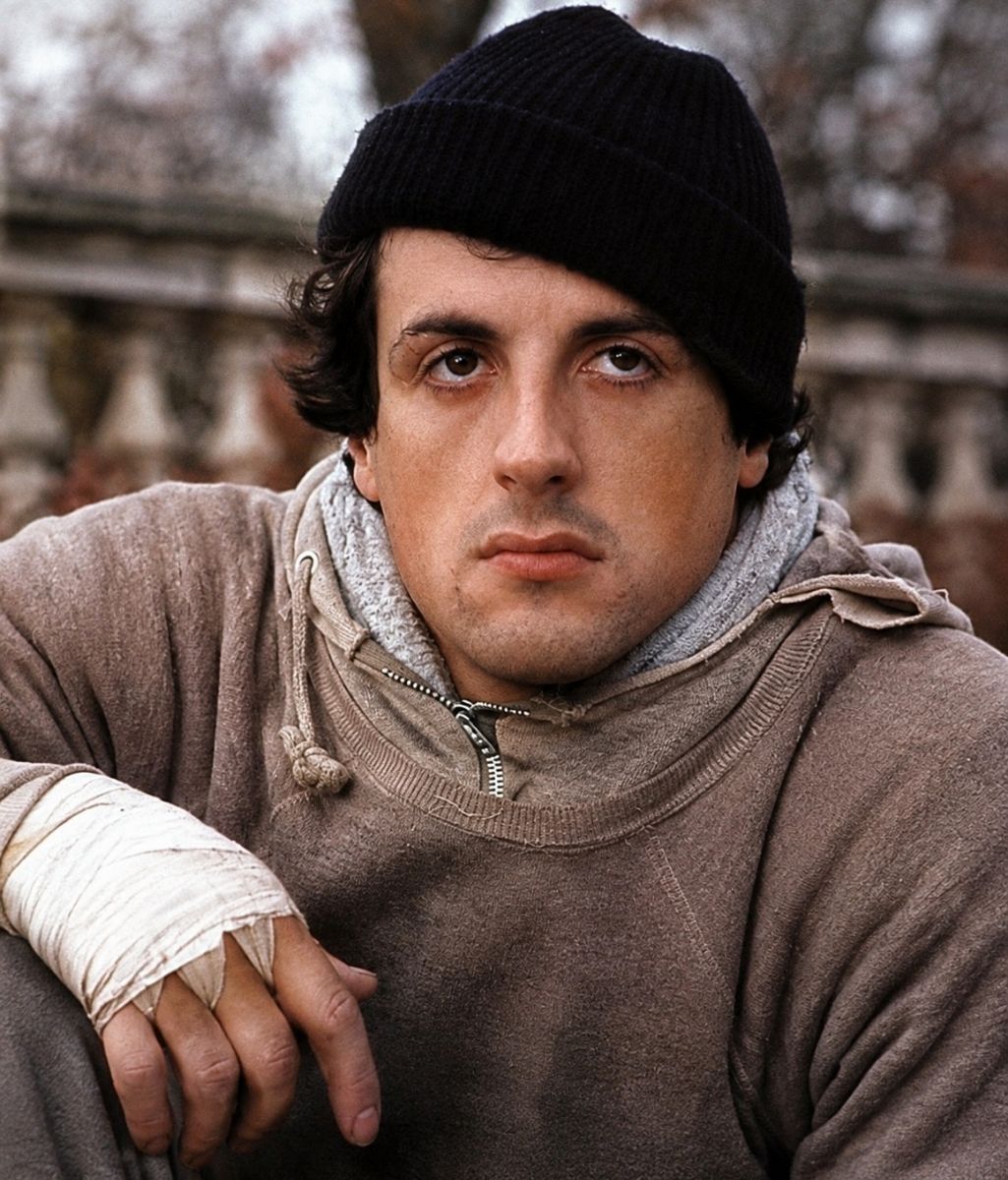
Before Sylvester Stallone became one of Hollywood’s most recognisable action stars, he was a struggling young actor facing rejection after rejection. When producers finally recognised the extraordinary potential of his screenplay for Rocky, they were prepared to pay him a life-changing sum of money. There was just one condition: someone else would play the leading role. What Stallone did next seemed almost unthinkable — but his refusal would help create one of the greatest success stories in cinema history.
Today, at 80, Sylvester Stallone is celebrated around the world for unforgettable characters such as Rocky Balboa and John Rambo. His films have entertained generations, and his remarkable career has become a symbol of determination, resilience, and the refusal to surrender.
But in the mid-1970s, Stallone’s future looked very different.
He was an unknown actor in Hollywood, struggling financially and desperately searching for an opportunity to prove himself. Despite his ambition, meaningful acting roles were difficult to secure, and the possibility of becoming a major star seemed increasingly remote.
Then, in March 1975, one extraordinary boxing match changed the direction of his life.
Stallone watched heavyweight champion Muhammad Ali face an unlikely challenger named Chuck Wepner, a determined fighter who was widely expected to lose.
Although Wepner ultimately suffered defeat in the final round, his courage and refusal to give up made a lasting impression on Stallone.
The fight helped inspire an idea that would soon become Rocky, a story about an overlooked Philadelphia boxer who receives an unexpected opportunity to face the heavyweight champion.
For Stallone, however, the story was never simply about boxing.
It was about ordinary people whose dreams had been dismissed, yet who continued fighting for something greater than themselves.
Driven by that inspiration, Stallone reportedly completed the first draft of the screenplay in approximately three and a half days.
The story followed Rocky Balboa, a small-time boxer with limited opportunities, little money, and an uncertain future. Despite his circumstances, Rocky possessed something that could not be bought: an extraordinary determination to prove his worth.
The character reflected much of Stallone’s own experience.
Like Rocky, he understood what it meant to be underestimated. He knew the disappointment of rejection and the painful feeling that the world had already decided what he could never become.
When producers Irwin Winkler and Robert Chartoff encountered the screenplay, they recognised its potential.
Hollywood had discovered a compelling story, and the producers believed audiences could connect with its emotional journey.
But there was one serious obstacle.
They wanted the screenplay. They were not convinced that the unknown Stallone should be its star.
Established actors such as Burt Reynolds, Ryan O’Neal, and James Caan were among the names considered during discussions about casting.
From a business perspective, the reasoning was understandable. A recognised Hollywood star could potentially attract financing and audiences more easily than an inexperienced performer.
For Stallone, however, surrendering the role was unacceptable.
He had written Rocky’s struggles from a deeply personal place. Allowing someone else to portray the character would mean abandoning the opportunity he believed could transform his own life.
The financial offers became increasingly tempting. Some accounts describe proposed payments reaching hundreds of thousands of dollars, with later retellings citing as much as $360,000.
The precise figures vary across historical accounts, but the central decision is well established.
Stallone refused to sell the screenplay unless he could play Rocky himself.
It was an extraordinary gamble for a man who had experienced serious financial hardship.
He could have accepted the money, improved his circumstances, and perhaps established himself as a successful screenwriter.
Instead, he chose uncertainty.
Stallone was willing to risk losing the entire deal rather than surrender the character he had created.
Eventually, the producers found a way forward.
Rather than abandon the project, Winkler and Chartoff supported making Rocky with Stallone in the leading role, using a considerably smaller production budget.
Directed by John G. Avildsen, the film began shooting in January 1976 with a budget of approximately $1 million.
There were no guarantees of success.
Stallone was still largely unknown, the production operated under significant financial limitations, and boxing films were hardly guaranteed to become major commercial hits.
Yet those limitations contributed to the film’s authenticity.
The streets of Philadelphia became an essential part of the story, while Rocky’s modest surroundings reinforced the character’s working-class identity.
And then came the moment that changed everything.
When Rocky reached American cinemas in November 1976, audiences discovered something far more powerful than an ordinary boxing movie.
They discovered a story about dignity, determination, and the courage to continue despite overwhelming odds.
The film became an enormous commercial success, earning more than $200 million worldwide and establishing Stallone as a major Hollywood star.
At the 1977 Academy Awards, Rocky received ten nominations and won three Oscars, including Best Picture, Best Director, and Best Film Editing.
Stallone himself received nominations for both Best Actor and Best Original Screenplay.
The man who had once struggled to convince Hollywood to give him a chance was suddenly standing at the centre of one of cinema’s greatest triumphs.
But perhaps the most remarkable achievement was what followed.
Rocky developed into a legendary franchise, inspiring sequels, the Creed films, and generations of viewers who identified with its unforgettable message of perseverance.
Its famous training scenes, emotional storytelling, and triumphant musical themes became enduring symbols of determination.
Nearly fifty years later, the story remains a reminder that success is not always about defeating someone else. Sometimes, it is simply about refusing to give up on yourself.
For Stallone, the greatest gamble was never the fictional fight against Apollo Creed.
It was the real-life decision to reject financial security and insist that he deserved the opportunity to bring his own creation to the screen.
That choice could have ended his Hollywood ambitions before they truly began.
Instead, it helped turn an unknown actor into an international star and an unlikely boxing drama into one of the most beloved films of all time.
Hollywood wanted his story, but Stallone demanded the chance to live it. And almost fifty years later, the extraordinary success of Rocky continues to prove just how much one act of determination can change a life.