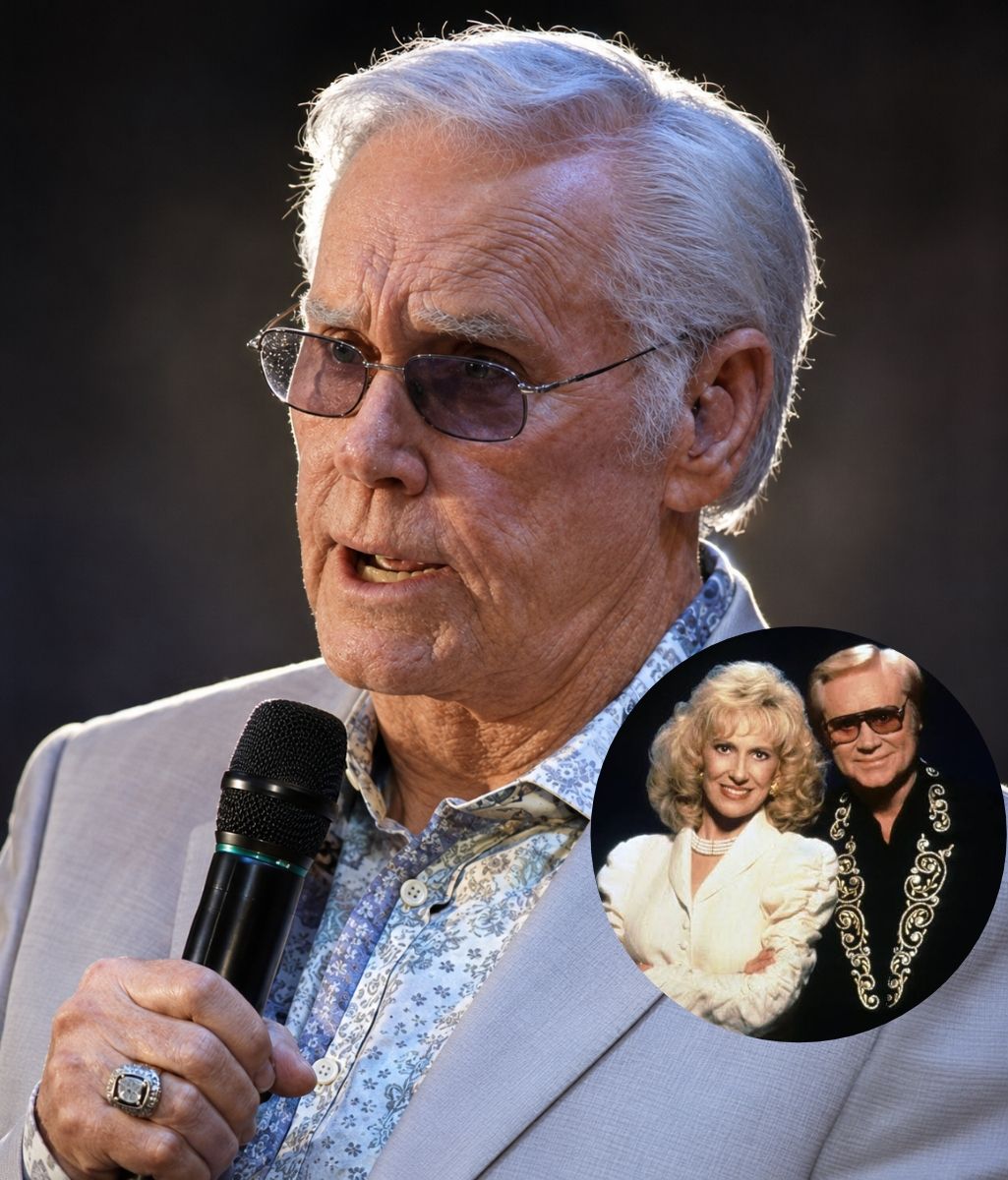
For decades, George Jones and Tammy Wynette were remembered as one of country music’s most unforgettable couples.
They had the voices, the chemistry and the songs. When they sang together, especially on records such as “We’re Gonna Hold On,” “Golden Ring” and “Near You,” they sounded like two people who understood heartbreak before the rest of the world had even experienced it.
Their marriage, however, was far more complicated than the music suggested.
George and Tammy married in 1969, and almost immediately their personal lives became inseparable from their careers. They toured together, recorded together, raised a family and spent enormous amounts of time in one another’s company. What looked romantic from the outside could become exhausting behind closed doors.
Years later, George spoke about that period with surprising honesty.
He said that when they first became close, they admired each hvother’s work so deeply that they fell in love through music. In another later interview, he went even further, explaining that he sometimes believed they loved hearing each other sing and singing together more than they loved the ordinary reality of marriage itself.
That admission changes the way their story looks.
George was not saying the relationship had been fake. On the contrary, he repeatedly made clear that his feelings for Tammy were real. What he seemed to recognize with age was that the strongest part of their connection may have been the part audiences heard through the speakers.
Away from the microphones, everyday life was much harder.
George struggled heavily with alcohol and later drugs, and he admitted that his drinking became a major problem during the marriage. Tammy eventually reached a point where she wanted out, while George later acknowledged that he, too, had become exhausted by the conflict.
The pressures were not limited to addiction.
George once told an interviewer that one of the biggest problems was that he and Tammy were together constantly. They lived together, worked together, traveled together and performed together, leaving almost no separation between marriage and career. He believed that constant closeness, combined with jealousy, mistrust and drinking, helped wear the relationship down.
Their divorce became final in 1975.
But the strange part was that separation did not completely end the bond.
In fact, George later said they got along better after the divorce than they had while married. In 1977, he made one of his most revealing statements about Tammy when he said, “I think we still love each other. I know I love her.”
They continued recording together.
They continued appearing together.
And years later, they reunited again professionally for the 1995 album One, proving that whatever had failed inside their marriage had never completely destroyed the musical connection that first brought them together.
That is what makes George’s later reflection so striking.
He did not rewrite the marriage as a perfect romance ruined only by bad luck. He acknowledged that the relationship had serious problems and that he had contributed to them. He also seemed to understand that the part of their relationship that worked best was the one that never depended on ordinary domestic life.
It was the music.
When Tammy died in 1998, George said he was grateful they had been able to work and tour together again before her death because it allowed them to close the chapter on what they had been through. He said that by the end they had become very close friends again, and losing that friendship hurt deeply.
For longtime fans, that may be the most surprising truth behind George Jones and Tammy Wynette.
Their marriage failed, but their connection did not simply disappear.
George eventually seemed to understand that they had fallen in love through songs, struggled when those songs became real life, and somehow found their way back to each other through music again.
In the end, George Jones did not claim that he and Tammy should have stayed married. What he admitted was more complicated: the thing they did best together may never have been marriage at all. It was singing — and that was the one bond neither divorce nor time could fully erase.