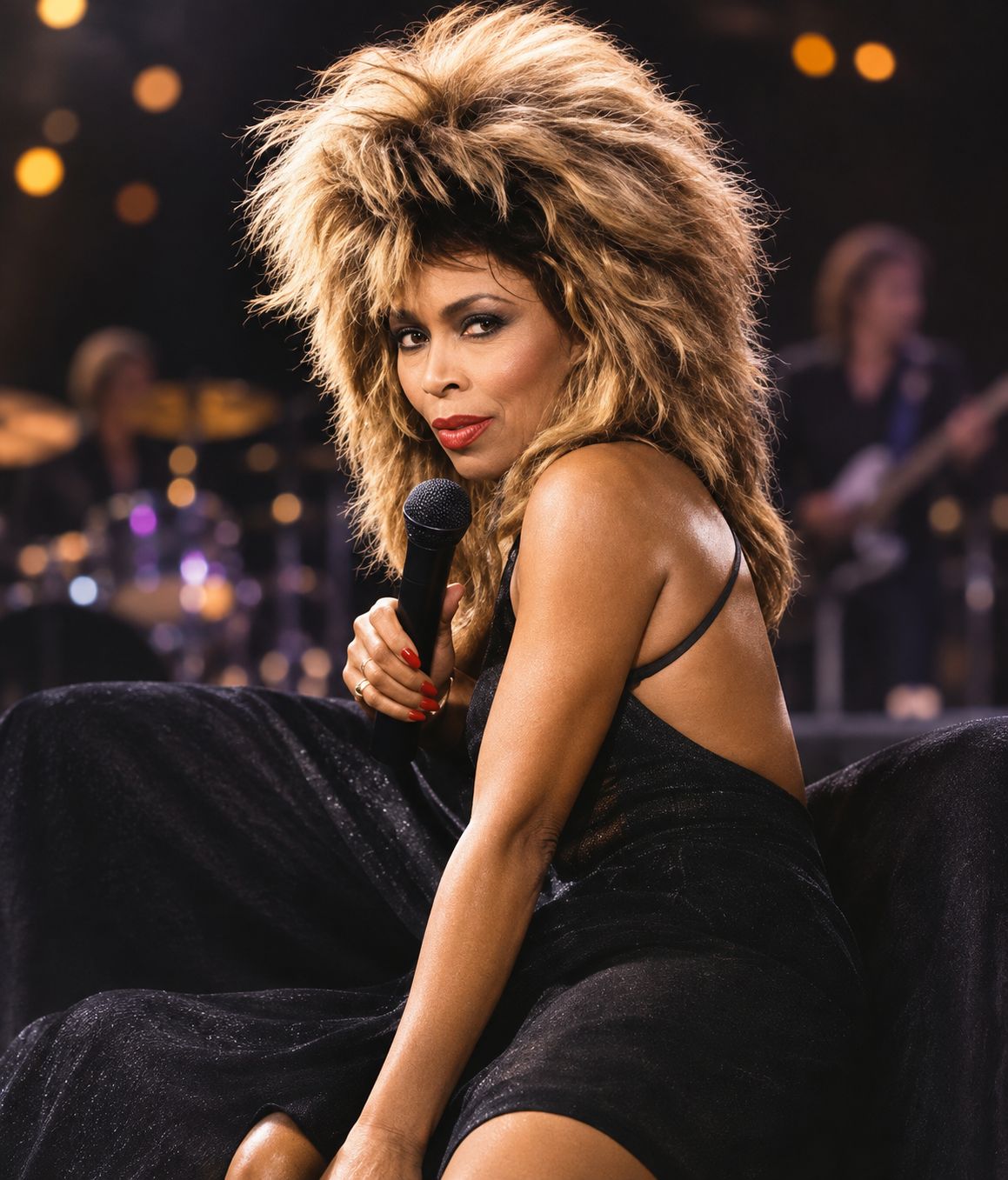
When Tina Turner died on May 24, 2023, at the age of 83, millions of fans immediately thought of the songs that had defined her extraordinary life. “What’s Love Got to Do With It,” “Private Dancer,” “The Best,” and “Proud Mary” had followed her through decades of triumph, reinvention and survival, making it easy to imagine that one of those famous recordings would accompany her final goodbye.
But Tina had once given a very different answer.
When asked which song she wanted played at her funeral, she did not name one of her greatest hits. She did not choose a dramatic ballad or a recording from the height of her career. Instead, Tina said that because of her Buddhist faith, she expected sounds of nature to be part of the ceremony.
It was an answer that revealed something important about the woman behind the stage lights.
For much of her public life, Tina had been associated with enormous sound. Her concerts were loud, physical and filled with energy, while her unmistakable voice could turn even a quiet lyric into something explosive. Yet the later chapters of her life moved in a very different direction.
After decades of touring, Tina eventually settled in Switzerland, where she valued privacy and a sense of ordinary life that fame had rarely allowed her to experience. Friends and neighbors described how she could move through her community without the constant attention that had followed her elsewhere.
That peace mattered to her.
Tina had also practiced Buddhism for decades, beginning during one of the most difficult periods of her life. She later credited Buddhist practice with helping her find strength and eventually build a life beyond the abuse and fear she had experienced during her marriage to Ike Turner.
By the time she reached her later years, spirituality had become deeply connected to the way she understood peace, suffering and letting go.
That may explain why her funeral wish was so different from what fans might have expected.
There was no need for one final performance.
No need for the biggest hit.
No need for a room filled with applause.
After her death, her representatives confirmed that the funeral would be a small, private ceremony attended by close friends and family. Tina had not wanted a large public farewell, which was consistent with the quiet life she had spent years creating in Switzerland.
The contrast is striking.
A woman who had spent much of her life commanding enormous stages wanted the final chapter to belong to something simpler.
Wind.
Water.
Birdsong.
The sounds of a world continuing without an audience.
There is something deeply fitting about that choice. Tina Turner had already given the world her voice. She had sung through heartbreak, freedom, love and survival, and those recordings would continue playing long after she was gone.
Her final goodbye did not need another song to explain who she had been.
After a lifetime of being heard by millions, Tina Turner seemed to want something completely different at the end: not another performance, but peace.