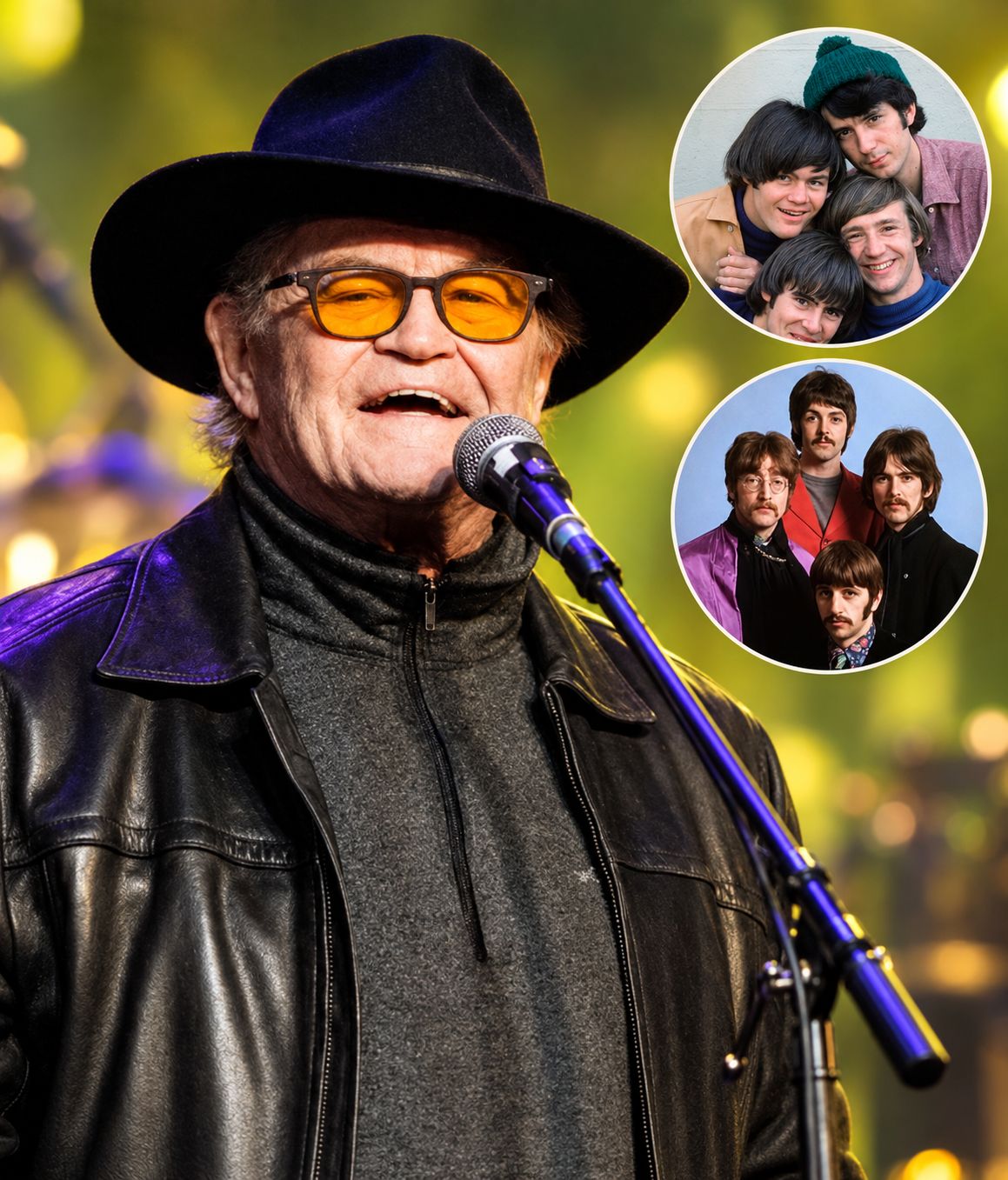
When The Monkees first appeared on American television in 1966, critics had an easy way to dismiss them. They had been assembled for a television series inspired by the energy of The Beatles, their early records relied heavily on professional songwriters and studio musicians, and the four young men on screen had been chosen partly because they could act, joke and carry a weekly comedy show.
To some people, that made them a “fake band.”
What happened next made that label increasingly difficult to defend.
Micky Dolenz, Davy Jones, Michael Nesmith and Peter Tork became enormously popular almost immediately. The television show turned them into familiar faces, while songs such as “Last Train to Clarksville” and “I’m a Believer” transformed the fictional band on television into a very real presence on the radio. By 1967, Monkeemania had become so intense that four Monkees albums reached No. 1 on the Billboard album chart in a single year, an extraordinary achievement that remains central to the legend surrounding their commercial peak.
That success created a strange problem.
The more famous The Monkees became, the more the four men wanted control over the music being released under their names. Michael Nesmith and Peter Tork were already experienced musicians, and Micky and Davy were becoming increasingly involved as performers. Yet during the group’s earliest period, producer Don Kirshner and a network of professional writers and session players controlled much of the recording process. The arrangement produced hits, but it also fed the accusation that The Monkees were little more than actors pretending to be musicians.
Eventually, they pushed back.
By early 1967, the group won greater control over its recordings and began working more directly as a band. The result was Headquarters, an album on which the members played much of the instrumentation themselves and took a far more active role in creating the music. It reached No. 1 before being displaced by The Beatles’ Sgt. Pepper’s Lonely Hearts Club Band, an almost perfect symbol of the strange position The Monkees occupied in popular culture.
The irony was impossible to miss.
The band that had been created partly to capture some of the excitement surrounding The Beatles was now competing with them near the top of the charts.
Over the years, another claim became attached to that story: that The Monkees had at one point outsold The Beatles, or even The Beatles and The Rolling Stones combined. The exact wording varies, and the sweeping claim is difficult to prove as a simple historical fact. What can be said with confidence is that The Monkees were commercially enormous in 1967, with four No. 1 albums and a string of hit singles that made them one of the dominant pop acts of the era.
More importantly, the people they were supposedly imitating did not necessarily treat them with the contempt critics expected. Michael Nesmith spent time with John Lennon, Micky Dolenz visited Paul McCartney, and Peter Tork later played banjo on George Harrison’s Wonderwall Music project. Monkees historian Andrew Sandoval has pointed out that The Beatles appeared to genuinely like them, even while parts of the music press continued dismissing the group as manufactured.
That may be the most interesting part of The Monkees’ rise.
They began as four men cast to play a band on television, but the success became so real that they were forced to become the band audiences already believed them to be. They learned to perform together, toured in front of screaming crowds, fought for creative control and eventually made music on their own terms.
The Monkees may have started as television’s “fake band,” but somewhere between the cameras, the records and the fight to control their own sound, the imitation became something real — and millions of fans never forgot it.