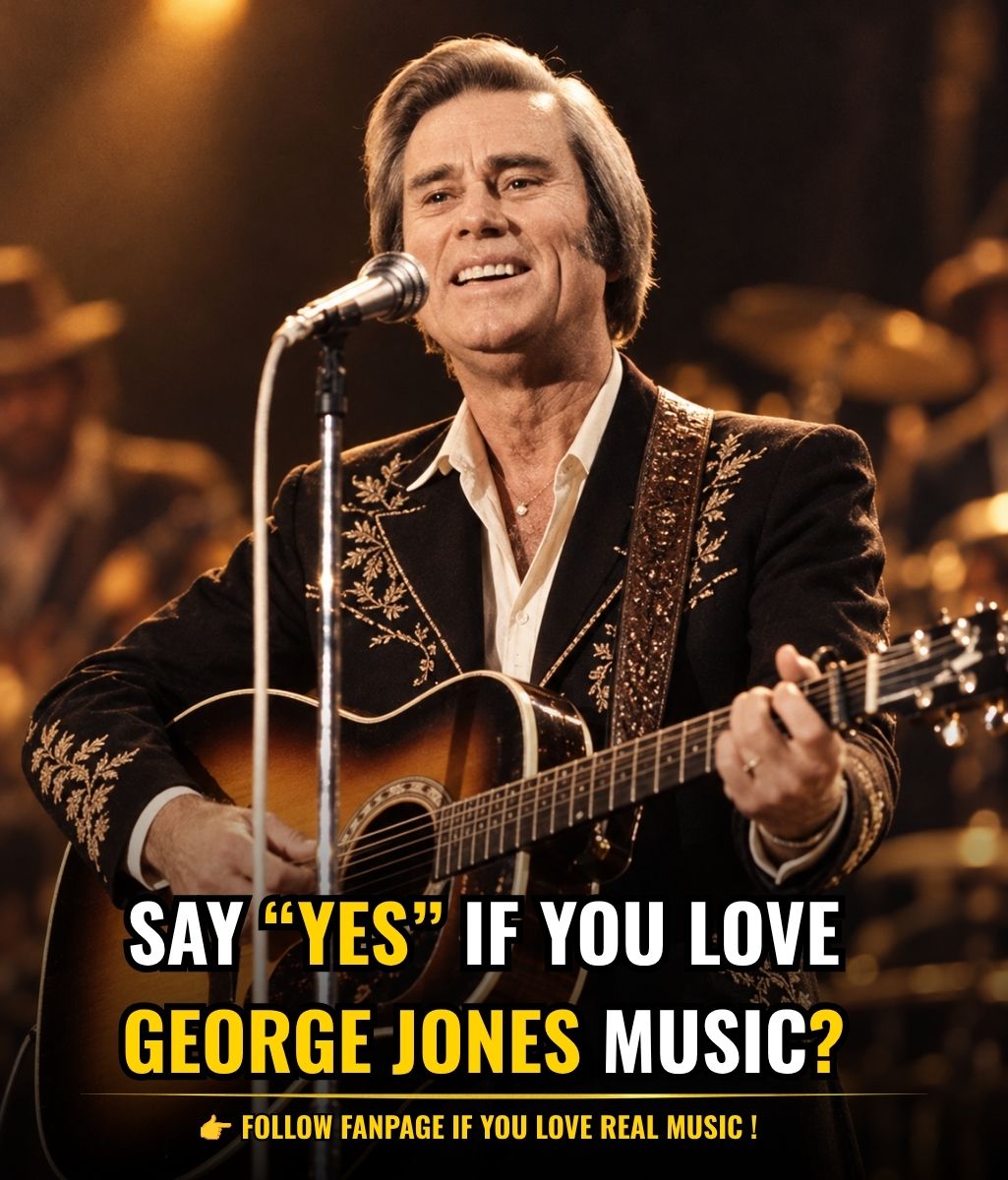
By the time George Jones recorded “The One I Loved Back Then (The Corvette Song)” in the mid-1980s, he had already lived through enough heartbreak, broken relationships and hard-earned reflection to make almost any song about the past sound personal. What made this one different was the way it wrapped regret inside humor, allowing George to tell a story that initially seemed lighthearted before revealing something much more emotional underneath.
The song begins with a man stopping at a convenience store while driving a beautiful Corvette. An older man behind the counter notices the car and begins talking about how much he admires it, which leads the narrator to assume they are discussing the automobile. For most of the song, the misunderstanding feels playful, but when the older man finally reveals that he is actually talking about the woman sitting beside the driver, the entire story changes.
That twist is what gives the song its lasting power.
On the surface, it is clever country storytelling built around a simple misunderstanding. Beneath that humor, however, is a much more familiar emotion: the sudden realization that someone from the past can still carry meaning years after life has moved on. The older man is not simply remembering a woman he once knew. He is confronting the distance between the life he once imagined and the life that actually unfolded.
George Jones was uniquely suited to that kind of song because his voice could make regret sound natural without becoming overly dramatic. He did not need to force sadness into the lyric. The weariness already present in his delivery gave the story enough weight, while the humor kept it from becoming sentimental.
That balance made “The One I Loved Back Then” feel different from many of George’s darker heartbreak songs.
Tracks such as “He Stopped Loving Her Today” or “The Grand Tour” confront loss directly, allowing grief to dominate the entire performance. “The One I Loved Back Then” takes another route by allowing the listener to smile before realizing that the joke is carrying a much older wound.
That emotional turn is one of the reasons the song has remained memorable.
Most people eventually experience some version of what the narrator encounters. A name, a photograph, a familiar place or a face from long ago can suddenly reopen a memory that seemed safely buried. The person may have changed, the relationship may have ended decades earlier, but the feeling attached to that moment can return with surprising clarity.
George understood how to sing that kind of memory.
His career was filled with songs about people looking backward, wondering what might have happened if they had made different choices. Those stories worked because George never sounded like someone judging the character inside the song. He sounded like someone who understood exactly how easily love, pride and timing could pull people in different directions.
“The One I Loved Back Then” also showed that country music did not need a complicated arrangement to tell a complicated emotional story. A car, an old man, a woman and a brief conversation were enough to create a moment that could make listeners laugh and hurt at the same time.
That simplicity was one of George Jones’s greatest strengths.
He could take an ordinary scene and reveal the regret hiding underneath it.
Years later, fans still return to the song because the twist is memorable, but the feeling behind it is even harder to forget. The story reminds listeners that moving on does not always mean forgetting, and that some people remain part of us long after the relationship itself has disappeared.
“The One I Loved Back Then” may begin with a Corvette, but George Jones ultimately made it a song about something far more valuable and far harder to replace: the memory of a love that time never completely erased.