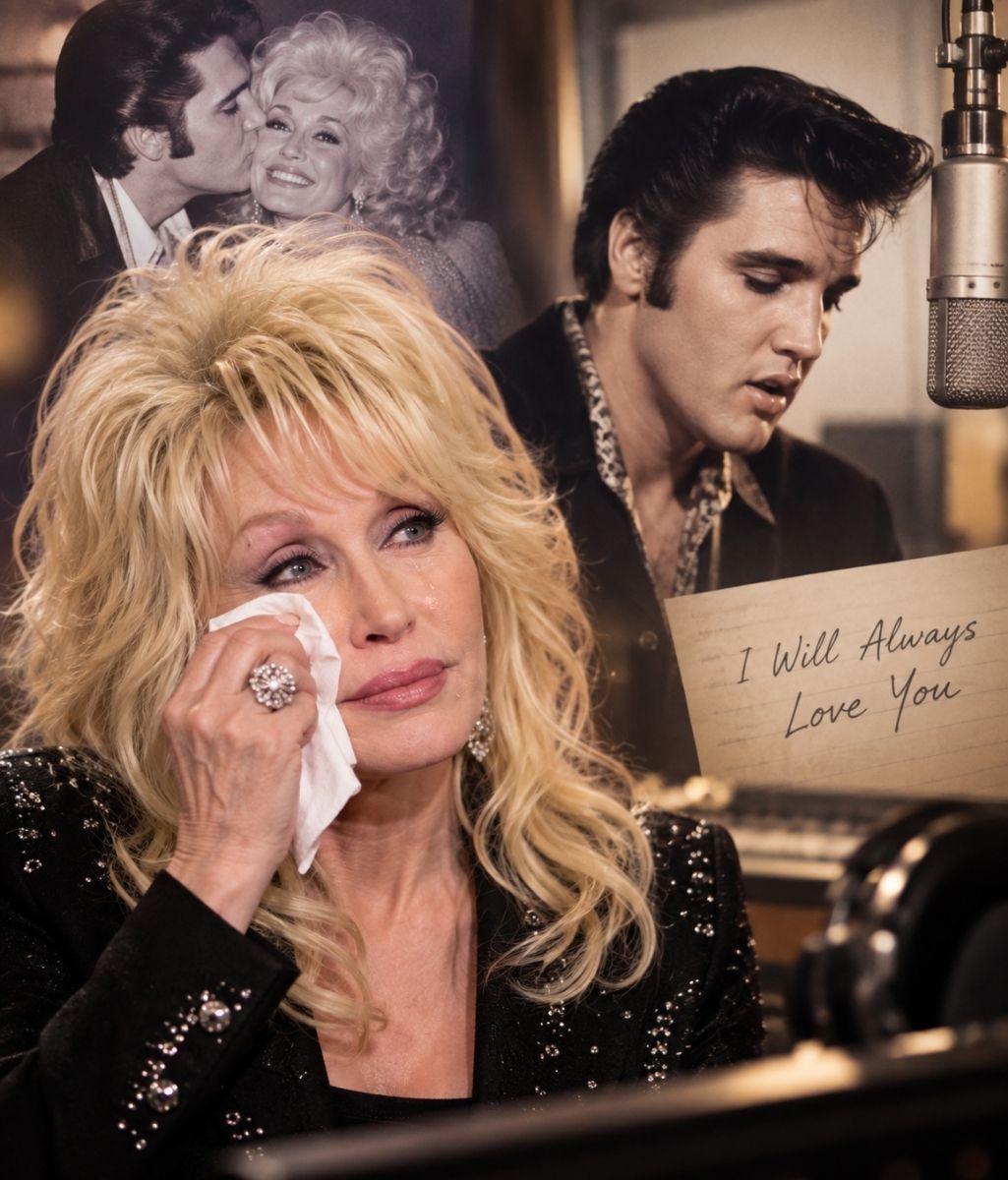
For decades, one of the most famous stories connected to Dolly Parton’s “I Will Always Love You” had nothing to do with Whitney Houston. Long before the song became one of the biggest recordings in pop history, another superstar wanted to record it: Elvis Presley. For Dolly, the possibility felt almost unimaginable. Elvis was one of the biggest artists in the world, and the thought of hearing him sing a song she had written was enough to keep her awake with excitement.
Then everything changed.
Dolly has told the story many times over the years. According to her, Elvis loved “I Will Always Love You” and wanted to record it. She was thrilled. She had grown up admiring him, and the idea that Elvis Presley might put his voice on one of her songs felt like the kind of moment a songwriter dreams about for a lifetime.
But before the recording could happen, Elvis’s manager, Colonel Tom Parker, introduced a condition.
Dolly said Parker told her that if Elvis recorded the song, they would need to receive half of the publishing rights. For Dolly, that was a devastating request. Publishing ownership was one of the most valuable things a songwriter could hold, especially for a song she had written entirely herself. Giving away half meant surrendering control and a huge portion of future income forever.
She said no.
That decision cost her the Elvis recording.
Dolly later admitted that she went home and cried all night.
The pain was understandable. This was Elvis Presley, an artist whose name could transform a song instantly. At the time, Dolly had no way of knowing what “I Will Always Love You” would eventually become. All she knew was that one of the most famous singers in the world had wanted her song, and she had just walked away from the opportunity because she refused to give up ownership.
For many songwriters, the temptation would have been overwhelming.
Dolly chose differently.
That decision became one of the clearest examples of the business instincts that would eventually define her career. She understood that a song was not just a performance. It was an asset, a piece of intellectual property, and something that could continue generating value long after the recording session ended. By keeping the publishing, Dolly kept control over the song’s future.
At the time, that probably offered little comfort.
The version of “I Will Always Love You” she had imagined hearing in Elvis’s voice never happened. There is no completed Elvis recording of the song that Dolly later got to hear, because the deal fell apart before that stage. The heartbreak came from the opportunity disappearing, not from hearing a finished version that was somehow withheld from her.
That distinction matters.
The story became legendary partly because of what happened years later.
In 1992, Whitney Houston recorded “I Will Always Love You” for The Bodyguard. Her version became a global phenomenon, spent 14 weeks at No. 1 on the Billboard Hot 100, and introduced Dolly’s song to an entirely new generation.
Dolly later said she first heard Whitney’s version on the radio while driving and was so overwhelmed that she had to pull over. The song she once feared she had lost a once-in-a-lifetime opportunity with had now become even bigger than anyone could have imagined.
And because Dolly had kept the publishing rights, she benefited enormously from that success.
That is where the Elvis story changes from heartbreak into something much more revealing.
Dolly had cried because she thought she might have lost something extraordinary.
In reality, she had protected something even more valuable.
Her ownership.
Her songwriting future.
And her ability to decide what happened to the song next.
The moment also helps explain why Dolly later became respected not only as an entertainer but as an unusually sharp businesswoman. She understood early that artists could lose control of their work if they signed away rights too easily. In an industry where performers were often encouraged to focus on fame while other people handled the business, Dolly paid attention to both.
She knew what her songs were worth.
Even before the world did.
That instinct extended far beyond “I Will Always Love You.” Dolly built a career around maintaining control over her catalog, businesses, image, and long-term creative decisions. The same woman who could joke about wigs and rhinestones also understood contracts, publishing, and ownership well enough to make decisions that would protect her for decades.
The Elvis episode may have been one of the hardest of those decisions.
Dolly was not rejecting Elvis.
She was rejecting the price attached to the opportunity.
That difference is crucial.
She wanted him to sing the song.
She was deeply honored that he wanted it.
But she was not willing to surrender half of something she had created just to make the collaboration happen.
Years later, Dolly could look back on the decision with a completely different perspective. What felt devastating in the moment ultimately became one of the smartest choices of her career.
The song remained hers.
Whitney’s version made it immortal.
And Dolly’s ownership meant she continued to benefit from every new life the song found.
There is something almost poetic about the story.
A younger Dolly Parton sat at home crying because Elvis Presley would never record her song.
A wiser Dolly Parton later understood that saying no had protected the very thing that allowed “I Will Always Love You” to become one of the most valuable and enduring songs she ever wrote.
She lost the Elvis recording.
But she kept the song.
And in the end, that may have mattered far more.