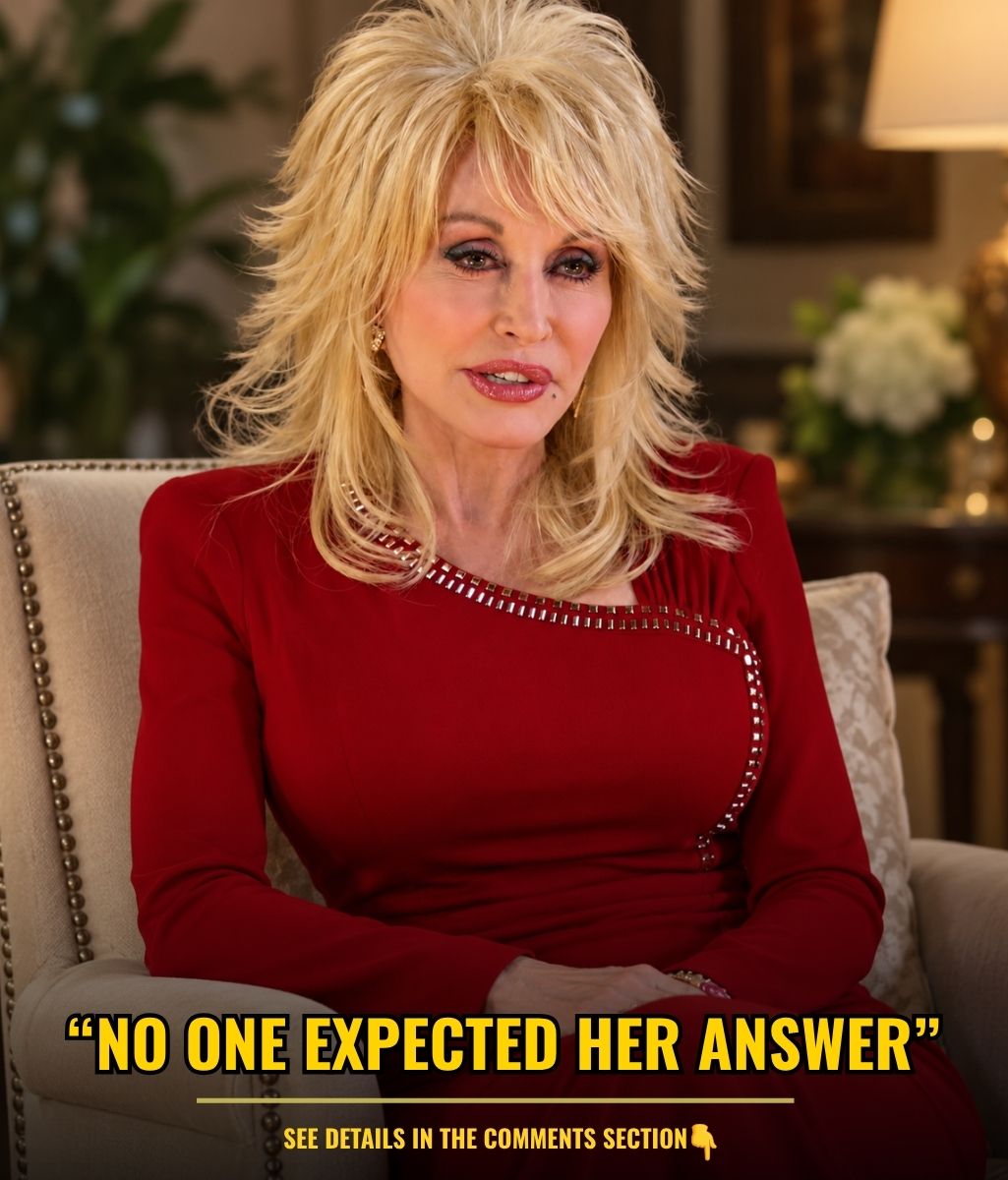
Dolly Parton spent much of her career knowing that sooner or later, an interviewer would stop talking about the songs and start talking about her body. Her wigs, rhinestones, tiny waist, towering heels, and exaggerated curves had become such a recognizable part of her public image that journalists often treated questions about her appearance as inevitable. Dolly usually handled them with humor, but during one television interview in 1986, the questioning became so persistent that she finally drew a line in a way only Dolly could.
The exchange took place during an appearance on Australia’s 60 Minutes, where reporter Mike Munro was conducting what would become one of the most memorable celebrity interviews of his career. The conversation covered Dolly’s fame, her image, and the attention surrounding her appearance, but eventually Munro turned directly toward the subject of her measurements.
Dolly did not immediately become defensive. She explained that she had never liked giving exact figures because her body changed depending on her weight. She joked that she could fluctuate considerably and reminded Munro that she was actually a very small-framed woman. Much of what people thought they saw, she suggested, came from the way she deliberately styled herself.
That answer might have ended the conversation.
It did not.
Munro continued pressing, trying to get Dolly to reveal the actual numbers behind the figure that had become part of her legend. At that point, Dolly stopped playing along with the premise that the audience was entitled to every private detail simply because she had chosen an attention-grabbing public image.
Then came the line.
With a laugh, Dolly told him: “No, you can’t. Bite me, buddy.”
The remark was funny, but it also captured something Dolly had understood better than most celebrities of her era. She knew exactly what people thought about her appearance, and she knew how to use that curiosity without allowing other people to control the conversation completely.
That balance had been part of her public persona for years. Dolly never pretended the blonde wigs, tight clothes, heavy makeup, and exaggerated silhouette were accidental. She had deliberately built the look, often joking that she patterned it after the most glamorous woman she remembered seeing as a child. What separated her from many public figures was that she seemed perfectly comfortable acknowledging the artificial parts of her image while insisting that the person underneath them was real.
In a famous late-1970s interview with Barbara Walters, Dolly made that distinction particularly clear. When Walters questioned the extreme clothes, blonde wigs, and whether Dolly worried that people considered her a joke, Dolly explained that the look was entirely her choice. She said she wanted to attract attention first, believing that once people got past the outrageous exterior, they might notice the other parts of her worth appreciating.
Her attitude toward body questions followed the same pattern.
Dolly could make jokes about herself before anyone else had the chance. She understood that humor gave her control over subjects that might otherwise become humiliating. But there was a difference between Dolly choosing to make a joke and an interviewer assuming unlimited access to personal information.
That difference became obvious in the 1986 interview.
Munro later remembered Dolly with enormous admiration, describing her as a remarkable figure whose warmth and charisma extended far beyond the provocative questions that had become associated with their conversation. The exchange resurfaced again after Dolly’s death in 2026 because it showed a side of her personality fans had always loved: she could remain gracious while making it absolutely clear when someone had gone far enough.
There had been earlier versions of the same question. In a 1979 interview, when Dolly was asked directly, “What are your measurements?”, she avoided giving numbers and simply joked that she did not really know, adding that there was “plenty.”
That answer was classic Dolly too.
She gave the interviewer enough humor to keep the conversation entertaining without surrendering the private detail they wanted. Over time, that became one of her greatest skills. Dolly knew how to transform intrusive questions into jokes that worked in her favor, allowing audiences to laugh with her rather than at her.
The 1986 moment took that skill one step further.
She had already answered politely. She had already explained herself. When the questioning continued, Dolly did not lose her temper or deliver a long lecture about privacy. She simply smiled, fired off five unforgettable words, and moved on.
That response says more about Dolly Parton than the measurements ever could.
People spent decades trying to reduce Dolly to the blonde hair, tiny waist, and famous curves. Dolly understood the fascination, laughed about it, and even used it to her advantage — but when someone pushed too far, she knew exactly how to remind them that the final word still belonged to her.