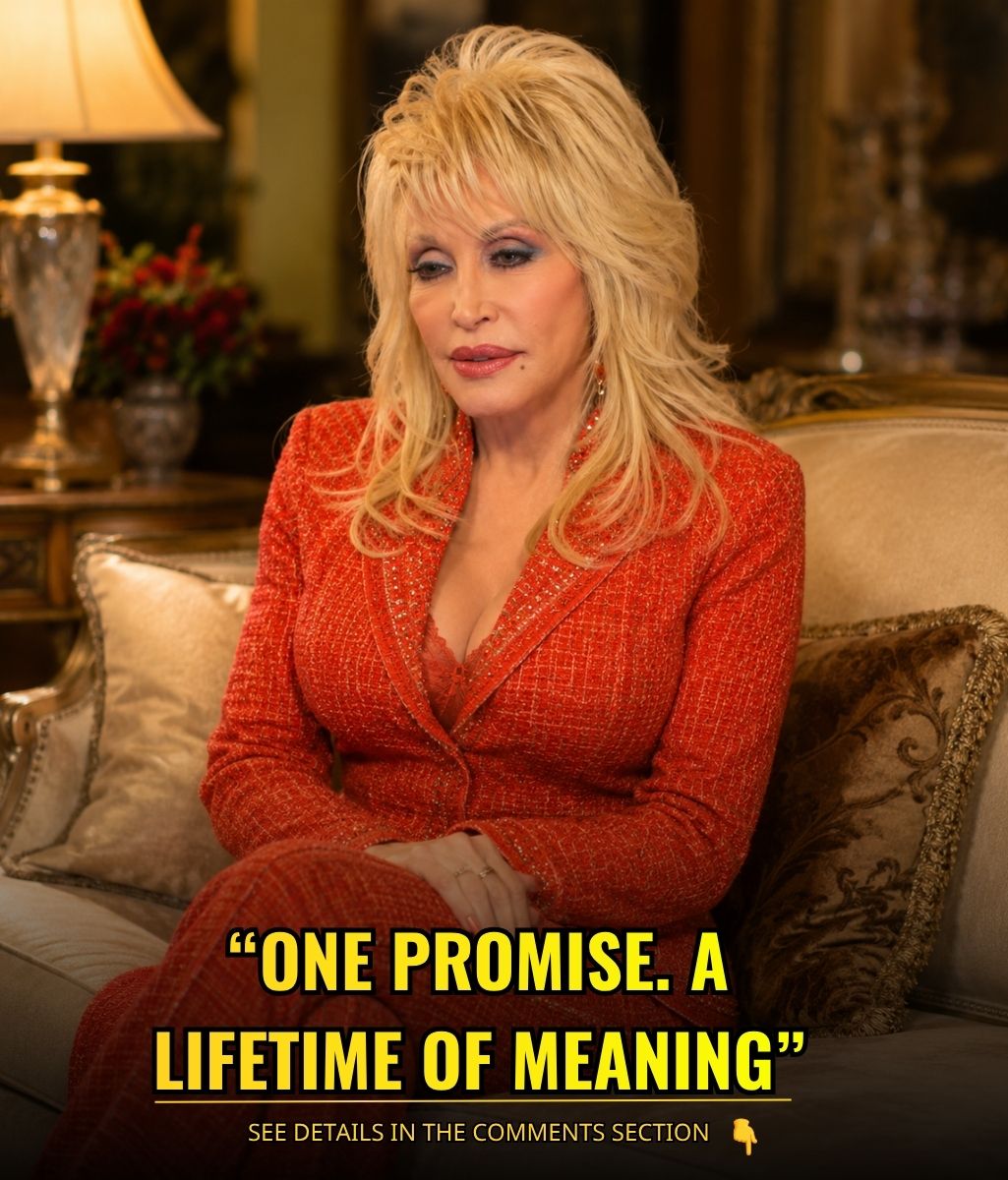
Long before Dolly Parton became one of the world’s most recognizable entertainers, she was a little girl growing up in the mountains of East Tennessee, dreaming far beyond the poverty surrounding her. Her family had very little, and Dolly learned early what it meant to want things that seemed impossible. But her dreams were never only about fame or escaping hardship. She wanted to succeed badly enough to have a better life — and still have enough left over to help others.
That belief followed her throughout her career. Dolly went from singing in East Tennessee to becoming a songwriter, performer, actress, businesswoman, and philanthropist known for songs such as “Jolene,” “Coat of Many Colors,” “9 to 5,” and “I Will Always Love You.” Yet as her fame grew, she continued asking how she could use her success to create opportunities for people who had not been given the same chances.
The most personal reason behind that promise was her father, Robert Lee Parton. Dolly often described him as one of the smartest people she had ever known. He was hardworking and resourceful, but he never learned to read or write. Dolly understood that his lack of literacy had nothing to do with intelligence. Instead, it reflected the limited opportunities available to him.
That realization stayed with her. She saw how a person’s future could be restricted not by a lack of ability, but by circumstances beyond their control. In 1995, she turned that memory into one of the most meaningful projects of her life: the Imagination Library.
The program began in Dolly’s home county of Sevier County, Tennessee, with a simple goal. Children from birth to age five would receive free, high-quality books, regardless of their family’s income. What started as a local effort inspired by her father eventually expanded internationally, reaching children across the United States, Canada, the United Kingdom, Australia, and the Republic of Ireland.
For Dolly, the program was much more than charity. It was a tribute to her father. Before he died, he told her that the Imagination Library was probably the most important thing she had ever done. His words meant so much to her because she knew how deeply his inability to read had affected his life. By giving children books, Dolly hoped to give them opportunities her father had never received.
The connection between reading and dreaming was central to her mission. Dolly often spoke about children imagining themselves as doctors, writers, singers, inventors, or anything else they could picture. Books, she believed, could help children see possibilities beyond their immediate circumstances.
That idea reflected Dolly’s own childhood. Before she had money, fame, or access to the world’s biggest stages, she had imagination. She understood what it meant to dream beyond the life directly in front of her. Later, when she had the power to help others, she wanted children to begin dreaming as early as possible.
Her generosity extended beyond literacy. Dolly supported education, disaster relief, medical research, and communities throughout East Tennessee and beyond. She never treated her difficult childhood as merely a story about what she had survived. Instead, she used it to recognize the struggles other people were still facing.
That perspective also shaped the way she viewed wealth. Dolly enjoyed the rewards of her success, but she understood that money was most meaningful when it could be shared. The little girl who once dreamed of having more eventually became a woman defined almost as much by giving as by earning.
By the later years of her life, the Imagination Library had distributed hundreds of millions of books. Those numbers were extraordinary, but the emotional heart of the program remained simple: a daughter remembered a father who had been denied the chance to read, and she decided to make sure other children had a different beginning.
That is why Dolly’s promise carries such powerful meaning after her death at 80. Her life could be remembered through awards, songs, films, costumes, businesses, and records. But her deepest legacy may be found in the opportunities she created for children she would never meet.
Dolly once wanted enough success to build a better life for herself. She also wanted enough left over to make someone else’s life larger. Every child who received an Imagination Library book became part of that promise — proof that where a person begins should never determine how far they are allowed to dream.
Before Dolly Parton became rich, famous, or powerful enough to change other people’s lives, she had already decided what success should mean. She wanted enough to live her own dream and enough left over to help someone else begin theirs.
After her death, that promise no longer feels like something she simply talked about.
It became the life she actually lived.