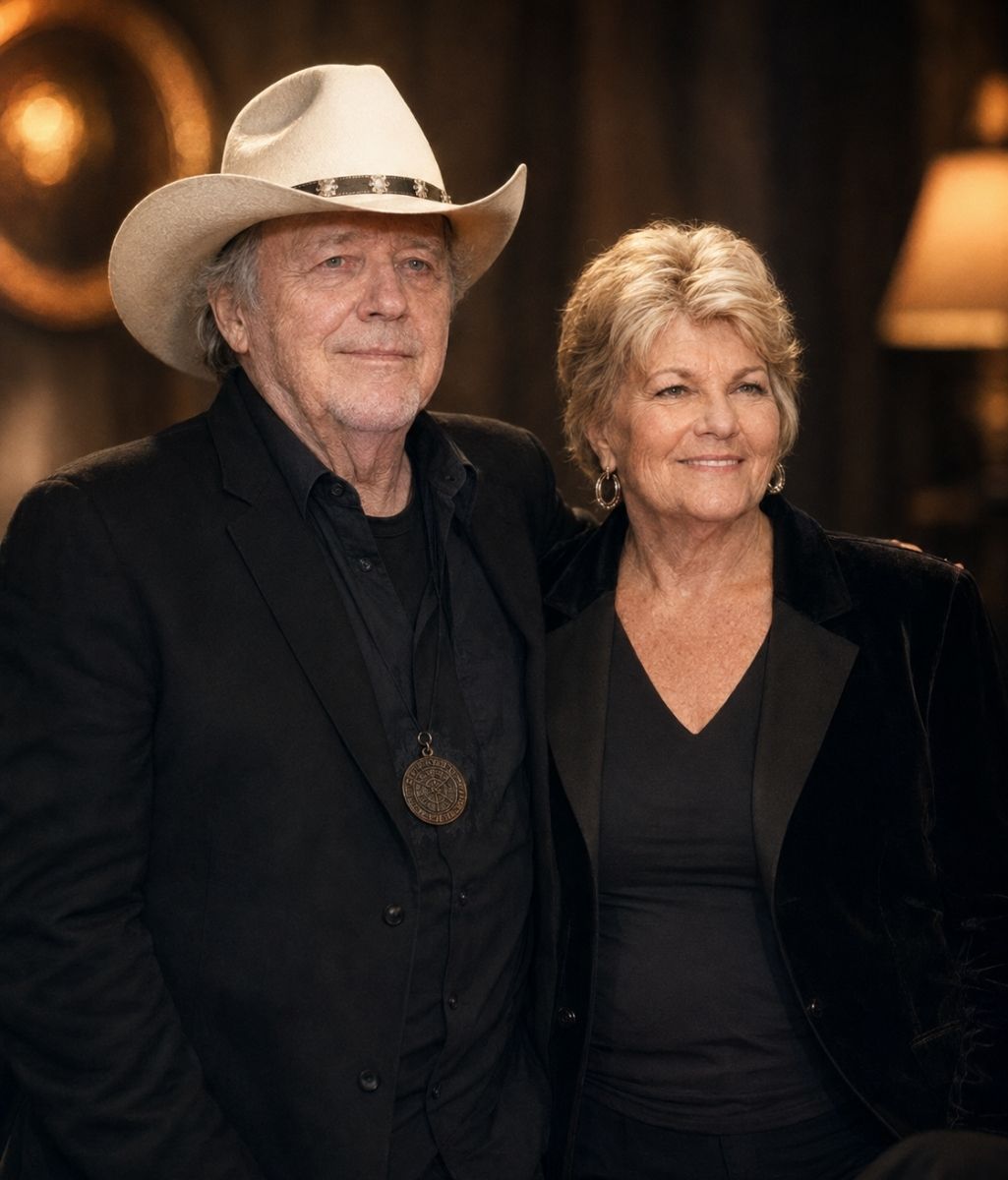
For decades, Bobby Bare’s life seemed to contain a contradiction that country music fans could easily overlook. His songs often wandered through loneliness, broken homes, restless men, and people searching for somewhere to belong, yet away from the stage, one relationship remained remarkably steady. Beside him through decades of fame was Jeannie Bare, the woman he married in 1964 — and the real story behind their life together is quieter, and perhaps more meaningful, than any sensational rumor.
Bobby Bare was already building his place in country music when he married Jeannie. “Detroit City” had helped establish him as an important new voice, and “500 Miles Away from Home” strengthened his reputation as a singer who could make loneliness sound deeply personal. The years ahead would bring touring, recording sessions, chart success, changing musical trends, and the constant pressures that came with maintaining a career in Nashville. Through those changes, however, his marriage to Jeannie endured.
That longevity alone makes their story unusual in an industry where careers can place enormous strain on private life. Bobby spent long periods working, traveling, and pursuing opportunities that carried him far beyond home. Jeannie largely remained outside the celebrity spotlight, never building a public identity that competed with her husband’s. While Bobby Bare became a name recognized by country audiences around the world, Jeannie represented a part of his life that remained considerably more private.
There was another important part of their story that many casual fans may not have known. When Bobby married Jeannie, he was not simply beginning a relationship with her; Jeannie already had a daughter, Cari Jean, from an earlier marriage. Bobby subsequently adopted Cari, making her part of his family. It was a personal decision rather than a publicity moment, but decades later it offers a revealing glimpse of the man who existed beyond the songs and stage appearances.
Bobby and Jeannie would go on to build a family together, including their son Bobby Bare Jr., who eventually followed his own musical path. Yet the younger Bare did not simply become a copy of his famous father. He developed a very different artistic identity, and Bobby allowed him to find that path for himself. It is another small example of how the Bare family story often unfolded away from the conventional image people might expect from a Nashville dynasty.
What makes Jeannie’s place in Bobby’s story especially interesting is how little spectacle surrounded it. She was married to a man who spent decades performing songs filled with complicated relationships and emotional turmoil, but their own marriage continued through the changing chapters of his career. The contrast between the troubled characters Bobby sang about and the stability of his private partnership became one of the quieter ironies of his life.
By the 1970s, Bobby was pushing against Nashville conventions and seeking greater control over his recordings. His collaboration with Shel Silverstein produced some of the most distinctive work of his career, including Bobby Bare Sings Lullabys, Legends and Lies. Later came “Marie Laveau,” his only solo No. 1 on Billboard’s country chart. Through each reinvention, Jeannie remained connected to the private world behind a career that was constantly changing in public.
The decades continued to accumulate. Musical fashions came and went, younger stars arrived, and many of the people who had shared Bobby’s early Nashville years eventually passed away. Bobby himself moved in and out of the spotlight, but his marriage to Jeannie survived for more than six decades, stretching across a remarkable portion of modern country music history.
That is where the “truth” behind their story becomes more interesting than a dramatic secret. There is no need to invent a shocking confession or hidden scandal to explain why Jeannie Bare matters. The more compelling reality is that while audiences knew Bobby through songs about people whose lives were often falling apart, his own longest partnership was quietly doing the opposite — enduring.
Jeannie also provides a reminder of how incomplete the public picture of a famous performer can be. Fans see the stage, hear the records, follow the chart positions, and remember the awards. They rarely witness the ordinary years between those milestones: the family routines, difficult decisions, career uncertainties, and relationships that continue after the applause has ended.
For Bobby Bare, those ordinary years eventually became extraordinary simply because there were so many of them. A marriage beginning in 1964 survived the height of his fame, the changing Nashville business, years on the road, his later career, and the transition from active country star to elder statesman of the genre. Jeannie was present through chapters of Bobby’s life that stretched far beyond any single hit record.
That does not mean outsiders can know everything about their marriage, nor should private gaps be filled with claims that cannot be verified. Jeannie spent much of her life away from the intense publicity surrounding her husband’s career, and that privacy deserves to remain part of the story. What can be appreciated is the remarkable duration of a partnership that began when Bobby Bare’s country career was still relatively young and continued as he became a Country Music Hall of Famer.
Perhaps that is why their story resonates particularly strongly with longtime country fans. Bobby Bare spent a lifetime singing about people searching for home, losing what mattered, and trying to find their way back. Yet behind those songs was a relationship that remained beside him through more than sixty years of change.
The public knew Bobby Bare as the voice behind “Detroit City,” “500 Miles Away from Home,” and “Marie Laveau.” Jeannie knew the person who came home after the recording sessions and performances were over. Her story was never as loud as his music, but it became part of the life behind it.
And after all those decades, perhaps the most surprising truth is also the simplest: behind one of country music’s great storytellers was a remarkably long family story that never needed the spotlight to endure.