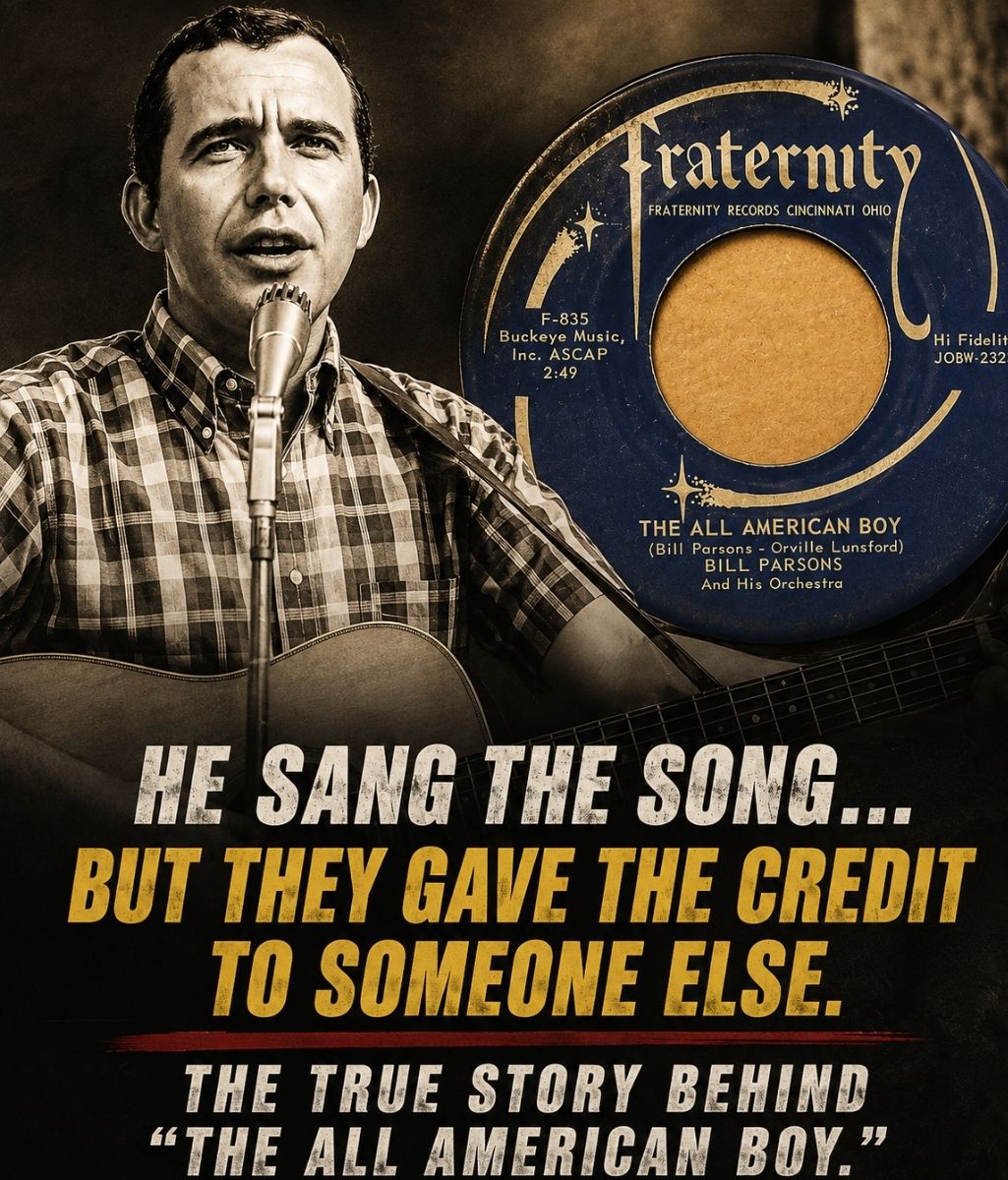
Years before “Detroit City” made Bobby Bare famous, millions heard him sing “The All American Boy”—but the name printed on the hit belonged to his friend Bill Parsons.
Before the awards, the Hall of Fame recognition, and the long career that established him as one of country music’s most respected storytellers, Bobby Bare experienced a success so strange that it could easily have broken a young artist’s spirit. His voice was playing on radios across America. His performance was climbing toward the top of the charts. Listeners knew the recording, repeated its humorous lines, and helped turn it into one of the biggest hits of 1959. Yet when they looked at the record label, they did not see the name Bobby Bare. They saw Bill Parsons.
The story began shortly before Bare entered the United States Army. Still trying to establish himself in the music business, he recorded a demonstration of “The All American Boy,” a talking-blues parody inspired by the rapid rise of young rock-and-roll stars and the possibility of being called into military service. The song followed a young performer who gains fame, attracts screaming fans, and then suddenly meets Uncle Sam. Its subject felt especially timely during the era of Elvis Presley’s military induction, and its humorous storytelling gave the record an immediate appeal. Bare recorded the vocal so that his friend Bill Parsons could learn the song, but the demonstration itself was ultimately chosen for release.
Then came the mistake that would follow the recording into music history. Fraternity Records released Bobby Bare’s performance under Bill Parsons’ name. Parsons did sing the record’s B-side, but it was Bare’s unmistakable voice heard on “The All American Boy.” Whether the incorrect credit resulted from confusion, haste, or a labeling error, the consequence was the same: Bobby Bare’s first major hit appeared to belong to someone else. The single climbed to No. 2 on the Billboard pop chart, kept from the top position only by the Platters’ “Smoke Gets in Your Eyes.” It also reached audiences overseas, including the United Kingdom.
Imagine what that must have felt like for a young singer who had struggled to convince anyone that his music deserved attention. Bare could hear his own voice coming through the radio, but listeners were being taught another man’s name. The success proved that he possessed the talent to reach millions, while the label denied him the recognition that should have come with it. Even more strangely, while Bare was serving in the Army, Parsons reportedly appeared on television and lip-synced to the record. The audience saw one man while hearing another, turning Bare into an almost invisible star inside his own breakthrough.
For many young performers, such an experience could have created lasting bitterness. A first hit is supposed to introduce an artist to the world. It is meant to place a name beside a voice and begin building the connection that makes a career possible. Bobby Bare received only half of that gift. The public heard him, but most listeners did not know who he was. He had achieved the dream without being allowed to stand inside it.
Yet Bare did not allow the mistake to become the final definition of his career. After completing his military service, he returned to music and continued searching for the opportunity that would finally connect his real name with his real voice. That opportunity arrived several years later when he joined RCA Victor and worked with producer Chet Atkins. In 1963, “Detroit City” became the recording that firmly established Bobby Bare as a country artist in his own right. “500 Miles Away from Home” soon followed, and the man once hidden behind another singer’s name began building one of the most distinctive catalogs in country music.
The experience may also help explain Bare’s lifelong respect for songwriters and overlooked talent. He understood what it meant to create something valuable and then watch the industry place someone else in front of it. Throughout his later career, he became known for listening closely to songs rather than judging them only by the fame of the writer. He recorded important material by Tom T. Hall, Kris Kristofferson, Billy Joe Shaver, Bob McDill, and Shel Silverstein, often recognizing the strength of a story before the wider industry fully understood its value. Bare knew firsthand that the name printed on a label did not always reveal the true talent behind the music.
“The All American Boy” was not a minor forgotten recording. It became a major national hit and offered early proof of Bare’s natural ability as a storyteller. His relaxed, conversational performance made the song feel as though a witty friend were recounting an unbelievable rise and fall directly across the table. That quality would later become central to his country career. Songs such as “Detroit City,” “Marie Laveau,” and “The Winner” depended not only on melody but on character, timing, and the ability to make a listener believe every word. Long before Nashville properly recognized that talent, it was already present on the record credited to Bill Parsons.
The incident remains one of the most extraordinary beginnings in country music history. Bobby Bare did not simply struggle before finding fame. He found fame, heard it playing everywhere, and still had to begin again because the world had been given the wrong name. The hit that should have introduced him instead became a hidden chapter he had to overcome.
But history eventually corrected what the label did not. Today, “The All American Boy” is widely identified as Bobby Bare’s performance, and the strange crediting error has become part of his legend rather than the end of his dream. The name Bill Parsons remains printed on the original release, but the voice can no longer be separated from the man who truly sang it.
Before Bobby Bare became a country legend, the world already loved his voice—it simply did not know whose voice it was. He could have disappeared behind that stolen moment, but he kept singing until no one could mistake his name again.