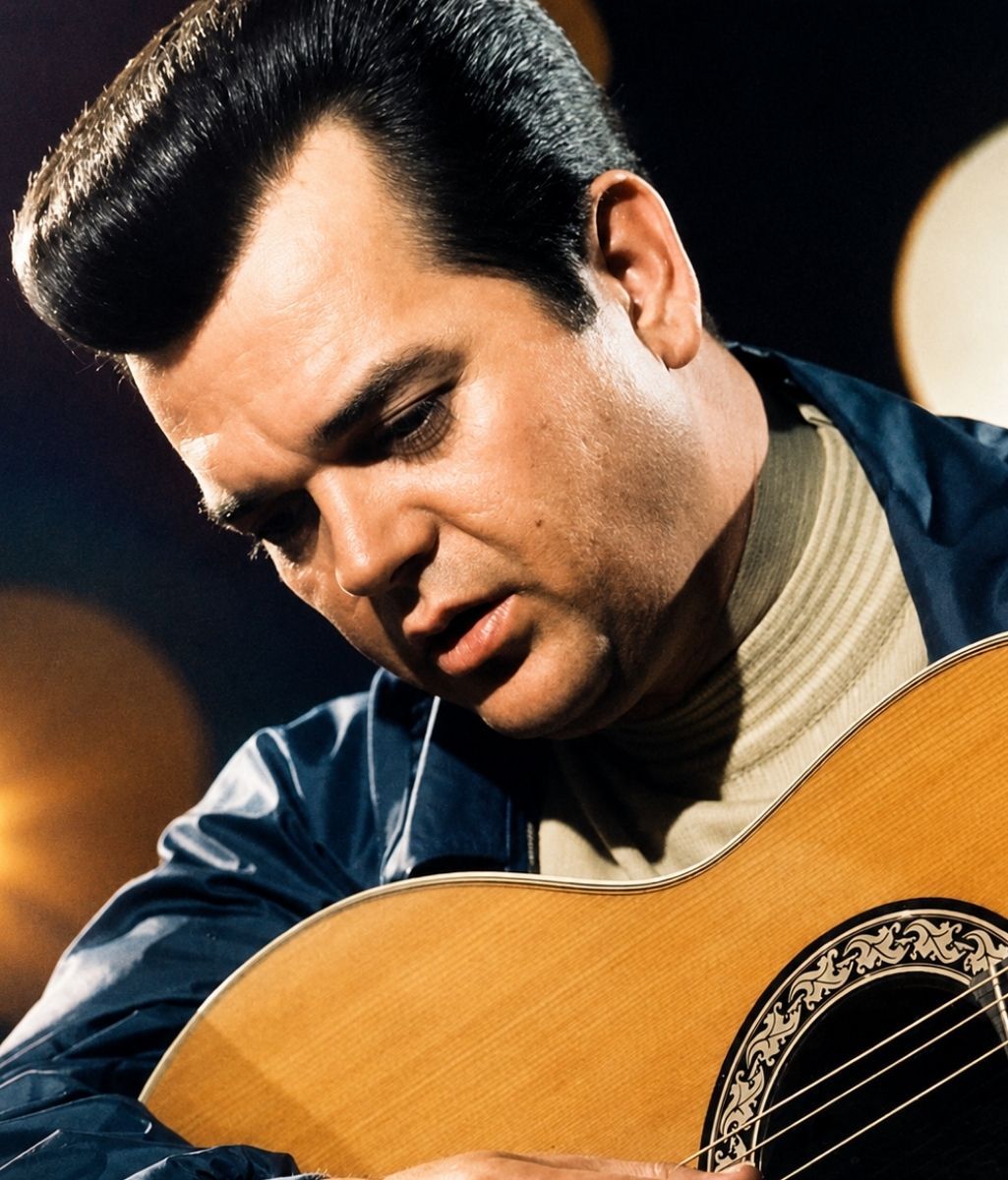
For most performers, reaching the top of one genre is the achievement of a lifetime. Few would willingly leave behind fame, financial success, and a loyal audience to begin again from the ground up. Yet that was exactly what Conway Twitty did in the mid-1960s. At the height of his Rock ‘n’ Roll career, when many believed his future had never looked brighter, he made a decision that puzzled music executives, disappointed some fans, and led critics to predict that his best days were already behind him. What no one could have imagined at the time was that this bold gamble would eventually transform him into one of the greatest legends in country music history.
Before becoming a country icon, Conway Twitty had already earned national and international recognition as a Rock ‘n’ Roll singer. His unforgettable hit “It’s Only Make Believe” became a worldwide success, proving that his distinctive voice could captivate millions of listeners. Concerts were drawing enthusiastic crowds, his records were selling well, and every sign pointed toward an even bigger future in popular music. From the outside, it seemed he had everything an artist could possibly want. But behind the applause and commercial success, Twitty felt an undeniable pull toward a different kind of music—the songs that had shaped his childhood and reflected the life he truly understood.
Unlike many performers who simply followed trends, Conway Twitty had grown up surrounded by the heartfelt storytelling of country music. Long before he became famous, those songs had spoken to him in a way that no other genre could. They told stories of ordinary people, family, hard work, heartbreak, resilience, and hope. As the years passed, the desire to return to those musical roots became impossible to ignore. He understood that following his heart would come with enormous risks, but he also knew that remaining where he was simply because it felt safe would never bring lasting satisfaction.
In 1965, Conway Twitty made the life-changing decision to leave Rock ‘n’ Roll behind and dedicate himself to country music. It was not a move that everyone celebrated. In fact, many within the music industry believed he had made a serious mistake. Record executives questioned whether country audiences would ever embrace someone known for rock hits. Radio stations hesitated to play his new recordings, uncertain whether listeners would accept such a dramatic career change. Critics argued that he was abandoning a successful career for an uncertain future, and some predicted that his popularity would disappear entirely within a few years.
The early days of his country career were far from easy. Success did not arrive overnight, and Conway Twitty quickly discovered that earning respect in a new genre required patience and persistence. Many country fans viewed him as an outsider who still needed to prove that his commitment was genuine. Instead of becoming discouraged, he worked even harder. He continued recording, toured relentlessly, and focused on delivering performances that reflected honesty rather than image. Every appearance became another opportunity to show audiences that country music was not simply a career move—it was where his heart had always belonged.
Slowly, that determination began to pay off. Listeners recognized something that critics had overlooked. Conway Twitty possessed a voice perfectly suited for country storytelling. Whether he was singing about enduring love, painful heartbreak, cherished memories, or life’s everyday struggles, he brought warmth, sincerity, and emotional depth to every lyric. His performances never felt forced because they came from genuine experience and heartfelt conviction. One successful recording led to another, and before long, skepticism gave way to admiration.
As the years passed, Conway Twitty accomplished what once seemed impossible. He became one of the most successful artists the genre had ever known, earning an extraordinary 55 No. 1 country hits during his remarkable career. That achievement placed him among the greatest recording artists in country music history and confirmed that his decision had been far wiser than anyone could have predicted. The very industry that had once questioned his judgment now celebrated him as one of its defining voices.
His success was never built solely on chart positions. Conway Twitty became beloved because his music connected deeply with ordinary people. His songs reflected real emotions, real families, and real experiences that listeners could recognize in their own lives. That authenticity created a lasting bond between the singer and his audience, ensuring that his recordings would continue to resonate long after they first appeared on the radio.
Another unforgettable chapter of his career came through his legendary partnership with Loretta Lynn. Together, they recorded some of country music’s most beloved duets, creating performances that demonstrated remarkable musical chemistry and timeless storytelling. Their collaborations remain treasured classics, continuing to introduce new generations of listeners to the golden era of country music.
Looking back today, it is difficult to imagine the history of country music without Conway Twitty. Yet his greatest legacy might not be measured only by awards or chart records. It lies in the courage he showed when faced with one of the most important decisions of his life. Rather than allowing fear, criticism, or public opinion to determine his future, he trusted his instincts and remained faithful to the music that meant the most to him.
His story continues to inspire artists and fans alike because it reminds us that the safest path is not always the most meaningful one. Sometimes the decisions that seem reckless in the moment become the very choices that define a lifetime. Conway Twitty walked away from the certainty of one successful career to pursue the music he truly loved, and in doing so, he achieved something far greater than fame. He earned a place among the immortal voices of country music, proving that true greatness often begins with the courage to follow one’s heart, even when almost everyone else believes it is the wrong decision.