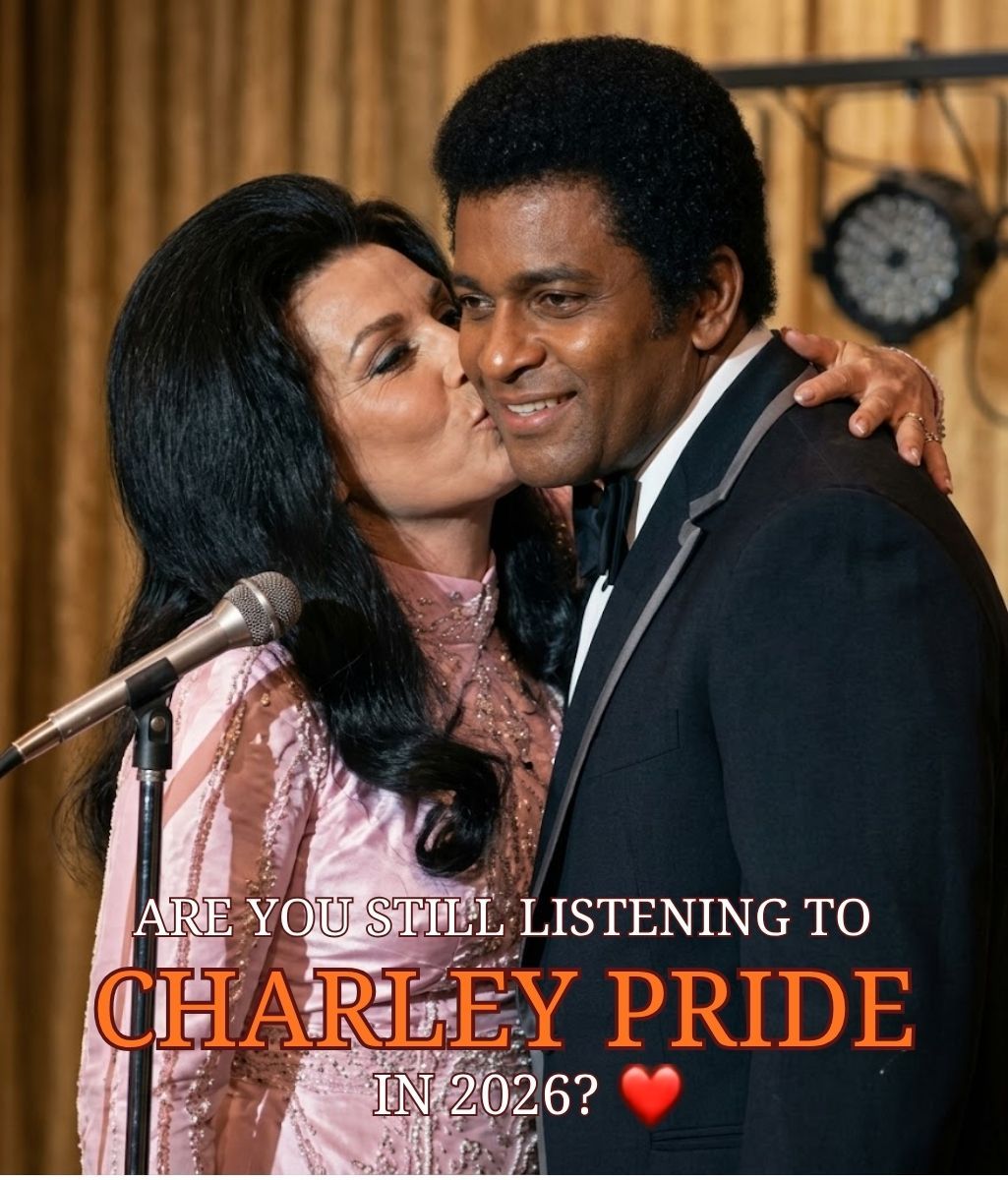
By the early 1970s, Loretta Lynn had already become one of the biggest names in country music. Her songs spoke honestly about marriage, motherhood, heartbreak, and the struggles of everyday working families, earning the admiration of millions of fans across America. Yet despite her extraordinary success, the country music industry remained deeply divided by traditions and social attitudes that many artists were reluctant to challenge. Some unwritten rules were understood without ever being spoken aloud, and crossing those invisible lines could carry serious professional consequences. Loretta knew exactly how quickly public opinion could turn against a performer, especially in the South, where even the smallest gesture could spark controversy.
Years later, in her autobiography Coal Miner’s Daughter, Loretta recalled one particular moment that revealed far more about her character than any hit record ever could. She remembered her father as a man who was “color-blind” in two different ways. He struggled to distinguish certain shades with his eyes, but more importantly, he never judged people by the color of their skin. To him, character mattered far more than appearance, and those values shaped the way Loretta viewed the world throughout her life. Growing up in rural Kentucky, she learned to respect people for who they were rather than how they looked, a lesson that stayed with her even after fame placed her under the brightest spotlight in country music.
As her career continued to grow, Loretta became close friends with Charley Pride, one of the most remarkable figures in country music history. Pride had overcome enormous barriers to become the first Black superstar the genre had ever embraced on such a massive scale. In 1971, he made history by winning the Country Music Association’s Entertainer of the Year award, proving that exceptional talent could challenge long-standing prejudices. Even so, racial tensions remained a painful reality across much of America, and many people within the entertainment industry still worried about how audiences would react to public displays of friendship between white and Black performers.
Before the Country Music Association Awards on October 16, 1972, Loretta received advice from people who believed they were protecting her career. They warned her that if she kissed Charley Pride on national television, country audiences—particularly in the South—might turn against her. They reminded her of another female singer whose career had reportedly suffered after she exchanged a simple on-camera kiss with a Black friend. The message was unmistakable: keep your distance, smile politely, accept your award if you win, but do nothing that might upset viewers watching at home.
For Loretta Lynn, those warnings produced exactly the opposite reaction.
Instead of making her cautious, they made her angry.
She could not understand why showing kindness or affection toward a friend should be considered controversial. The values her father had taught her left little room for prejudice, and she refused to let fear dictate how she treated someone she respected. If embracing a friend could damage her reputation, then perhaps that reputation was not worth protecting in the first place.
That evening, inside the historic Ryman Auditorium in Nashville, Charley Pride walked onto the stage to present the award for Female Vocalist of the Year. When he announced Loretta Lynn as the winner, she stepped forward with complete confidence. Rather than keeping a safe distance as others had advised, she wrapped him in a warm embrace and gave him a kiss on national television. There was no hesitation, no uncertainty, and no attempt to make a political statement. It was simply the natural gesture of one friend congratulating another in front of millions of viewers.
Loretta later admitted that she had already decided something else before taking that stage. If the kiss ended her career, then so be it. She famously wrote that she would simply return home to her children, “can some string beans and the heck with them all.” Those words perfectly captured the fearless attitude that defined her throughout her life. Fame had never mattered more to her than her principles, and she refused to compromise those principles simply to satisfy other people’s expectations.
What happened next surprised almost everyone.
Instead of damaging her career, the night became one of the greatest triumphs she would ever experience.
Only a few hours after that unforgettable moment, the Country Music Association announced the evening’s highest honor—Entertainer of the Year. Competing against legendary artists including Merle Haggard, Freddie Hart, Jerry Reed, and even Charley Pride himself, Loretta Lynn heard her name called once again. She became the first woman in history to receive the CMA’s most prestigious award, breaking another barrier in a genre that had long been dominated by men.
The irony could not have been more striking. Earlier that same day, some people had warned her that one kiss might destroy everything she had spent years building. Yet by the end of the evening, the very industry that had encouraged caution handed her its highest honor. Rather than rejecting her, country music celebrated her achievements in front of the entire nation.
Looking back today, that brief moment on stage represents far more than a simple kiss. It reflects the quiet courage that defined Loretta Lynn throughout her remarkable career. She rarely described herself as an activist, yet time and again she chose honesty over convenience and conviction over fear. Whether through the bold subjects of her songs or the simple way she treated the people around her, Loretta consistently demonstrated that respect and kindness should never depend on race, popularity, or public opinion.
Her decision lasted only a few seconds on live television, but its meaning has endured for decades. Fans remember the embrace not because it created controversy, but because it revealed the kind of person Loretta Lynn truly was. She understood that careers may rise and fall, awards may come and go, but integrity is something no audience can ever take away. In the end, the kiss that some believed would end her career became another unforgettable chapter in the extraordinary legacy of a woman who never allowed fear to decide what was right.