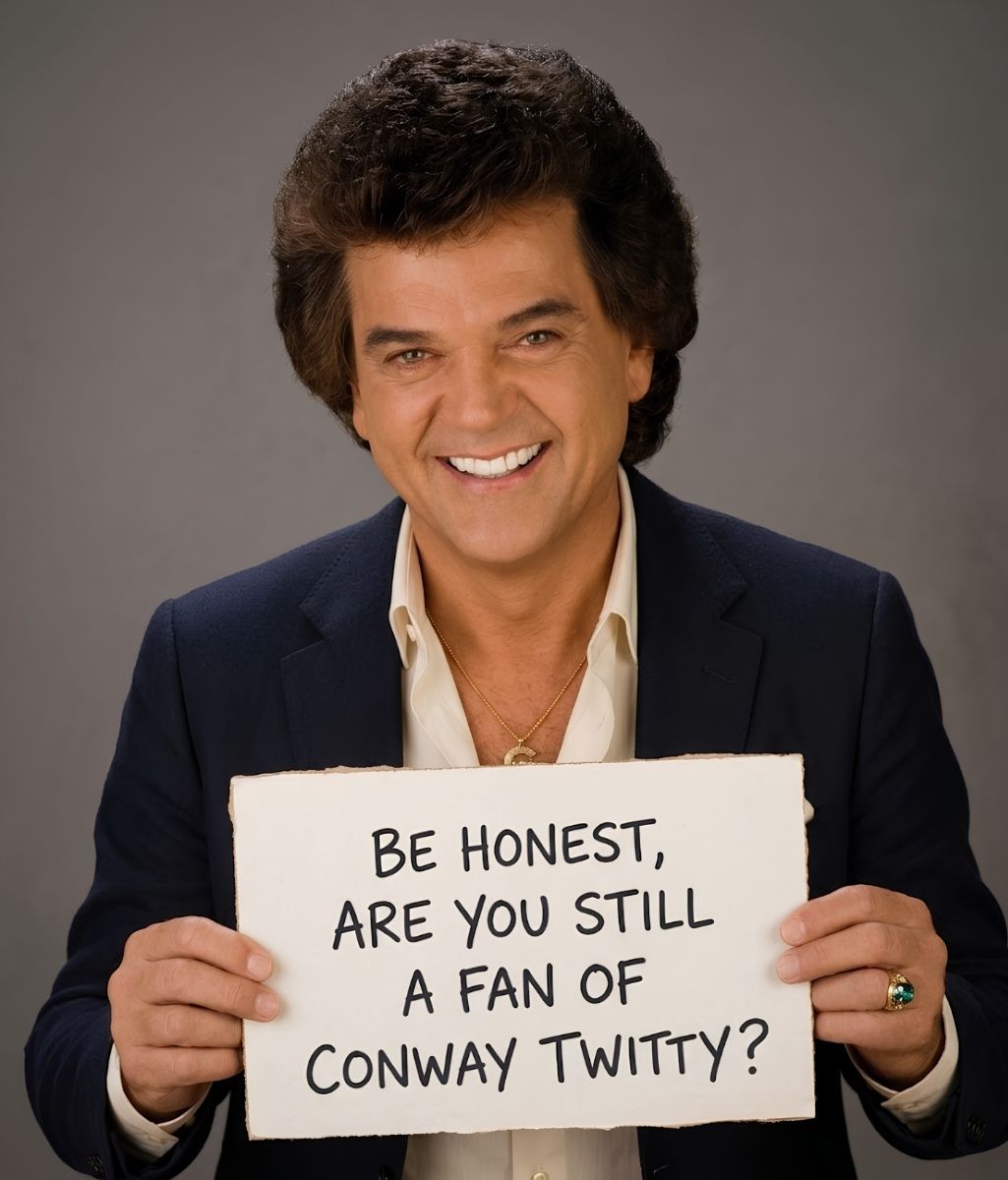
In the summer of 1958, Conway Twitty was still searching for the song that would define his career. Although he had already begun attracting attention as a promising young performer, no one could have predicted that his biggest breakthrough would begin not inside a famous recording studio, but in the quiet corner of a nightclub. During a tour stop at the Flamingo Lounge in Hamilton, Ontario, Twitty and his drummer, Jack Nance, found themselves with a brief break between performances. The audience was enjoying the evening, the lights inside the lounge remained low, and the two musicians simply sat together talking. There were no producers offering suggestions, no publishers demanding another hit, and no expectation that history was about to be made. What started as an ordinary conversation soon became one of the most remarkable songwriting moments in popular music.
As they exchanged ideas, a powerful emotion quickly emerged. Both men understood the pain of loving someone who could never truly return that love. The conversation naturally evolved into lyrics, and before either of them fully realized what was happening, words and melodies began flowing almost effortlessly. Inspiration seemed to arrive all at once. Rather than carefully revising every line, they trusted the emotion of the moment, allowing the story to unfold as naturally as their conversation. In approximately twenty minutes, the song that would become “It’s Only Make Believe” had been written from beginning to end. They folded the lyrics away, returned to the stage for the next performance, and continued the tour without imagining that those few minutes would change Conway Twitty’s life forever.
At the time, neither Conway Twitty nor Jack Nance believed they had created anything extraordinary. Songwriters often produced material during long tours, and many compositions never reached a recording session. This one felt deeply personal, but there was little reason to believe it would become anything more than another hopeful addition to Conway’s growing collection of songs. Yet what made “It’s Only Make Believe” different was its emotional honesty. Instead of relying on complicated storytelling, the song captured one simple but devastating truth—the heartbreak of pretending that love still exists when, deep inside, you know it never truly belonged to you. That universal feeling would soon resonate with millions of listeners around the world.
When Conway Twitty eventually recorded the song, his dramatic vocal performance brought every word to life. His soaring tenor expressed longing, vulnerability, and quiet desperation with remarkable sincerity. Audiences believed every lyric because Conway didn’t merely sing the song—he lived inside it. The emotion was unmistakable, allowing listeners to connect with their own experiences of love, loss, and disappointment. Radio stations quickly recognized the song’s unique power, and requests began pouring in from across the country. Before long, “It’s Only Make Believe” climbed the charts with astonishing speed, reaching No. 1 in the United States and several other countries. The recording transformed Conway Twitty from a promising young artist into an international star almost overnight.
Its success reached far beyond commercial achievement. The song established Conway as one of the most expressive vocalists of his generation and proved that genuine emotion could overcome any commercial formula. Decades later, “It’s Only Make Believe” remains one of the defining heartbreak ballads in popular music history, covered by countless artists yet forever associated with Conway’s unforgettable voice. Many listeners continue to discover the song long after its original release, finding the same emotional connection that captivated audiences in 1958. Its timeless appeal lies not in elaborate production or complicated arrangements but in the raw sincerity at its core.
Looking back, perhaps the most extraordinary part of the story is not the song’s worldwide success but the way it came into existence. Some compositions require months or even years of careful revision before reaching their final form. Others arrive in a single moment of inspiration, as though they have simply been waiting for the right people at the right time. For Conway Twitty and Jack Nance, those twenty minutes inside the quiet Flamingo Lounge became exactly that kind of moment. Without planning it, they captured an emotion that millions of people would recognize as their own. It serves as a lasting reminder that great music is rarely measured by the time spent creating it. Instead, it is born from honesty, inspiration, and the courage to express a feeling before the moment disappears forever.