Some songs are recorded to climb the charts.
Others are sung because the heart simply can’t let go.
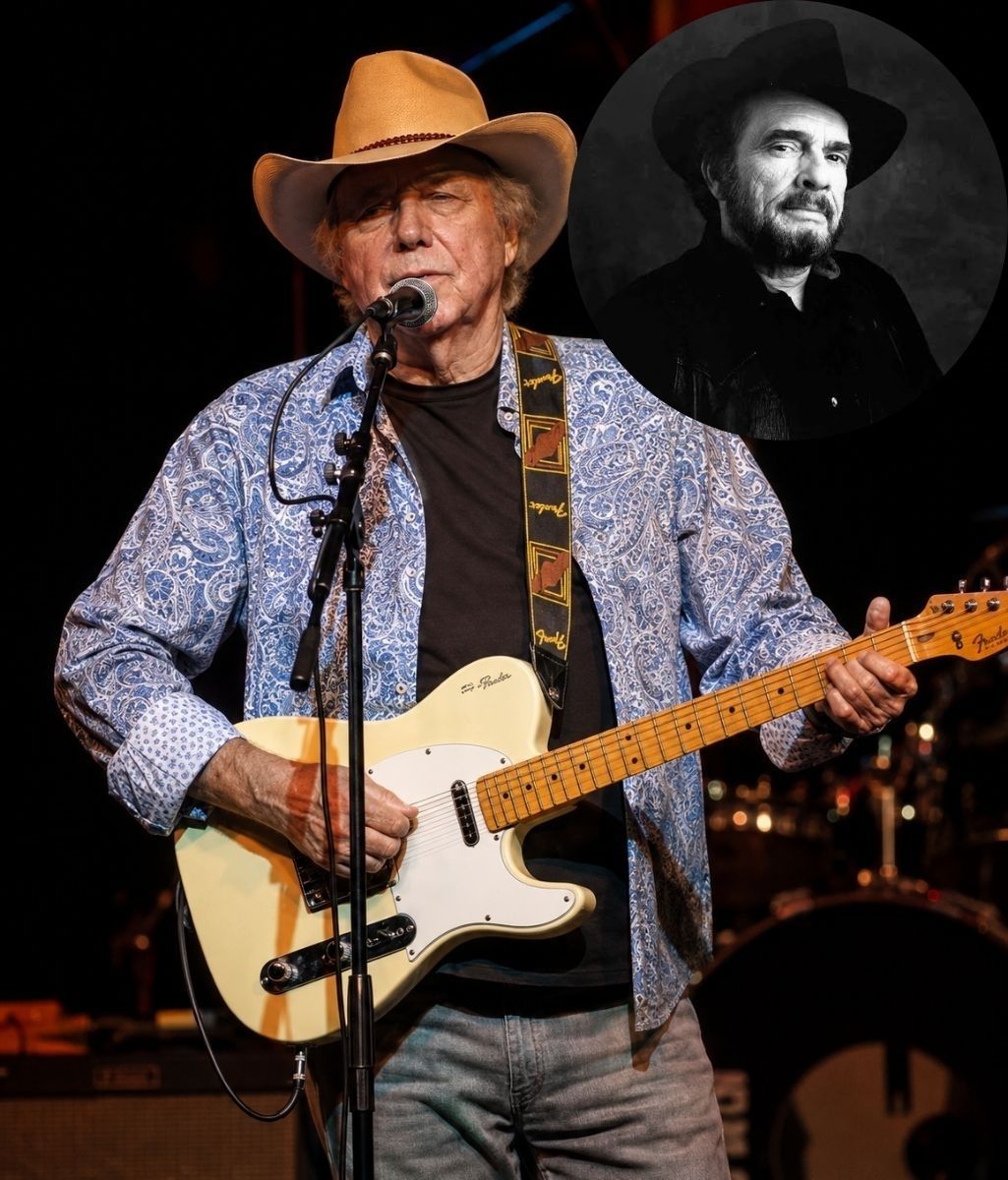
When Merle Haggard first released “Ramblin’ Fever” in 1977, it quickly became one of the defining songs of his legendary career. With its unmistakable outlaw spirit and restless sense of freedom, the song captured everything fans admired about Haggard—a man who lived life on his own terms and sang honestly about the road that forever called him home.
For decades, “Ramblin’ Fever” stood as an anthem for dreamers, wanderers, truck drivers, working people, and country music lovers who understood that some souls are simply born to keep moving.
But nearly forty years later, the song found an entirely different meaning.
Following Merle Haggard’s passing in April 2016, longtime friend and fellow country legend Bobby Bare stepped onto the stage during Country’s Family Reunion to perform the classic in tribute to the man who had helped shape an entire generation of country music.
It wasn’t introduced as a grand production.
There were no elaborate arrangements designed to overshadow the moment.
Instead, there was only a familiar melody, a seasoned voice, and a lifetime of shared memories.
From the very first line, it became clear that this was no ordinary cover.
Bobby Bare wasn’t simply singing one of Merle Haggard’s greatest hits. He was saying goodbye to a lifelong friend.
Bare’s unmistakable gravelly voice, shaped by decades of living and performing, carried an emotional weight that could never be recreated in a recording studio. Every lyric felt personal. Every pause seemed filled with memories. Rather than trying to imitate Haggard, Bare honored him in the most meaningful way possible—by singing as himself, with complete honesty and heartfelt respect.
For those watching, the performance was both beautiful and bittersweet.
It reminded everyone that country music has always been about more than polished vocals or commercial success. At its very best, it tells real stories, preserves real friendships, and gives voice to emotions that are often too difficult to express in conversation.
That evening, “Ramblin’ Fever” became more than a classic country song.
It became an unforgettable farewell.
Years later, when Bobby Bare’s version was officially released as a single in early 2022, listeners who had missed that emotional performance finally had the opportunity to experience it for themselves. The recording introduced a new generation of fans to a tribute that felt timeless—one that honored not only a legendary songwriter but also the enduring bond between two men who had traveled many of the same roads throughout their remarkable careers.
Listening today, it’s impossible not to hear the affection behind every verse.
There is no attempt to outshine the original.
No effort to reinvent a masterpiece.
Instead, Bare offers something far more meaningful.
He offers gratitude.
He offers respect.
And above all, he offers the quiet understanding that some friendships continue long after one voice has fallen silent.
Merle Haggard may no longer be standing at the microphone, but through performances like this, his spirit continues to echo across every stage where his songs are remembered. His music still speaks to those who believe in hard work, personal freedom, resilience, and the simple truths that have always defined great country storytelling.
Perhaps that is why Bobby Bare’s rendition continues to resonate so deeply.
It reminds us that the greatest tributes rarely come from perfect performances.
They come from people who truly knew the artist behind the songs.
People who shared the journey.
People who understood the victories, the struggles, the laughter, and the miles traveled together.
Some friendships are measured in years.
Others are measured in songs.
The friendship between Bobby Bare and Merle Haggard was blessed with both.
And every time “Ramblin’ Fever” is played, listeners are reminded that genuine friendship never really disappears. It simply finds another way to be heard.
Because true country music doesn’t just preserve melodies—it preserves memories.
And sometimes, the most unforgettable performance isn’t the one that earns the loudest applause.
It’s the one that quietly reminds us that real friendship never ends when the music stops. It simply changes its tune, living on in every heartfelt note that follows.