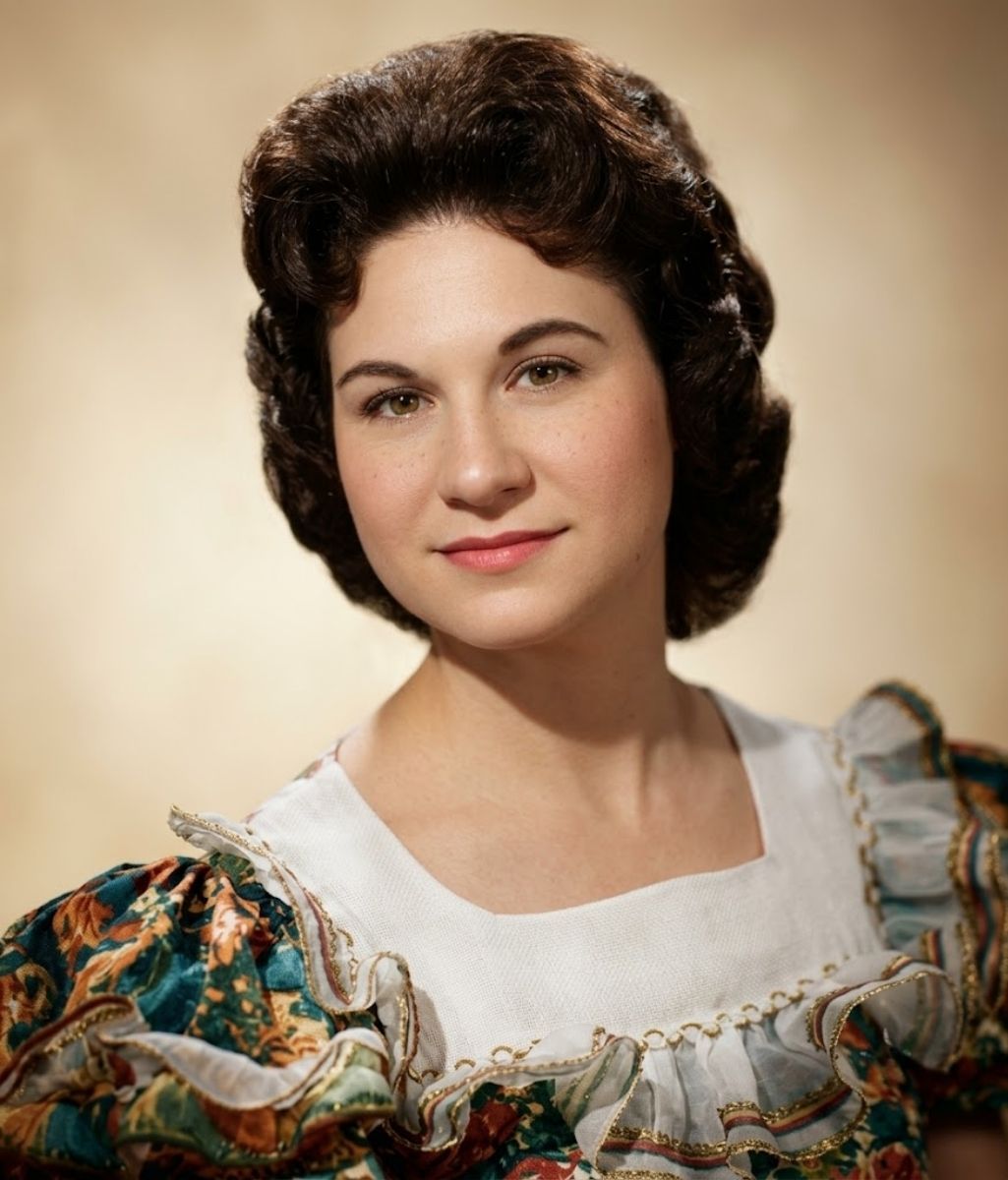
In 1952, when country music remained overwhelmingly dominated by men, Kitty Wells recorded a song that many believed should never have been heard. “It Wasn’t God Who Made Honky Tonk Angels” challenged long-held assumptions about women in country music, sparked controversy across the industry, and ultimately transformed the future of female artists forever.
Some songs become popular because they entertain. Others become legendary because they challenge the way people think. Kitty Wells’ groundbreaking recording belongs to the second category.
When Kitty Wells walked into a recording studio in 1952, she was not trying to start a revolution. She was a wife, a mother, and an experienced singer who had spent years performing without the widespread recognition enjoyed by many of her male counterparts. At the time, country music was largely controlled by men, both on stage and behind the scenes. Female performers were rarely viewed as headline attractions, and many industry executives believed women simply could not sell records on the same level as male artists.
Then everything changed with one song.
That song was “It Wasn’t God Who Made Honky Tonk Angels.” Written as an answer to Hank Thompson’s hit “The Wild Side of Life,” it offered something country music audiences had rarely heard before—a woman’s perspective. Rather than accepting the idea that women alone were responsible for broken relationships, the song challenged that narrative with honesty and remarkable courage.
For some radio executives, the message was considered far too controversial.
Several stations refused to play the recording, and NBC reportedly discouraged or prohibited it from airing on some of its affiliated programs because its subject matter was viewed as inappropriate for the era. Many industry insiders believed the song would disappear almost as quickly as it arrived.
Instead, listeners embraced it.
Despite the resistance, audiences responded with overwhelming enthusiasm. The honesty in Kitty Wells’ performance struck a chord with people who recognized the fairness of its message. Word spread quickly, record sales increased dramatically, and the song became impossible to ignore. Rather than fading into obscurity, it climbed all the way to No. 1 on the country charts, making Kitty Wells the first solo female artist to achieve that milestone in country music history.
It was more than a commercial success.
It was a turning point.
For the first time, record companies and radio stations were forced to acknowledge that audiences wanted to hear women’s voices—not simply as supporting performers, but as artists capable of telling powerful stories from their own perspective. The success of “It Wasn’t God Who Made Honky Tonk Angels” opened doors that had remained closed for generations.
Artists who followed, including Loretta Lynn, Dolly Parton, Tammy Wynette, Barbara Mandrell, Reba McEntire, and countless others, would each build extraordinary careers. While every one of them forged her own path, many historians agree that Kitty Wells helped make those journeys possible by proving that female country artists could stand at the very top of the industry.
Looking back more than seventy years later, the song’s influence extends far beyond its chart success. It demonstrated that country music could honestly address complicated human relationships without relying on only one point of view. It also reminded audiences that some of the most important changes in history begin with someone willing to ask an uncomfortable question.
The controversy that surrounded the recording now seems almost impossible to imagine. What some executives once considered dangerous is widely recognized today as one of the most important recordings in the history of country music. Rather than weakening the genre, the song strengthened it by expanding the stories it was willing to tell.
Perhaps that is why Kitty Wells continues to be remembered as the “Queen of Country Music.” She did far more than record hit songs. She changed expectations. She challenged barriers. And she gave future generations of women the confidence to sing their own truths without apology.
Today, “It Wasn’t God Who Made Honky Tonk Angels” remains one of the defining recordings in American music history. Not because it was banned or criticized, but because it proved that authentic voices cannot be silenced forever. Sometimes the songs that make people uncomfortable at first are the very ones that reshape an entire industry.
More than seven decades after its release, Kitty Wells’ courageous recording continues to remind us that true pioneers rarely set out to make history. They simply refuse to stay silent. And in doing so, they leave behind a legacy that inspires generations long after the controversy has faded.